Week 1: Introduction to the module
this week will be an Introduction to the trends of VFX module and we will do a series of activities to learn about the module.
First we will start with the Trends icebreaker ask.
- Understanding trends.
- What is a “trend” in VFX?
A trend is a general direction in which something is changing.
- How can we tell when a trend is emerging?
Because is a pattern that visually repeats consistently around many platforms.
- Do trends appear suddenly, or do they evolve from earlier technologies, techniques, styles, or workflows?
What I think is that trends normally could follow a past technology/ technique or style that is been made popular by people but also it could emerge from a new style/technology or technique.
2. Identifying Current Trends
- What are some of the latest VFX trends? Consider films, TV shows, video games, or other media.
For me the current trends are AI-powered visual effects, maybe interactive experiences like VR or AR and Visual recreating backgrounds.
3. Sharing Examples
- Share specific examples of current VFX trends on your digital sketchbook.
Here are some examples of current trends:
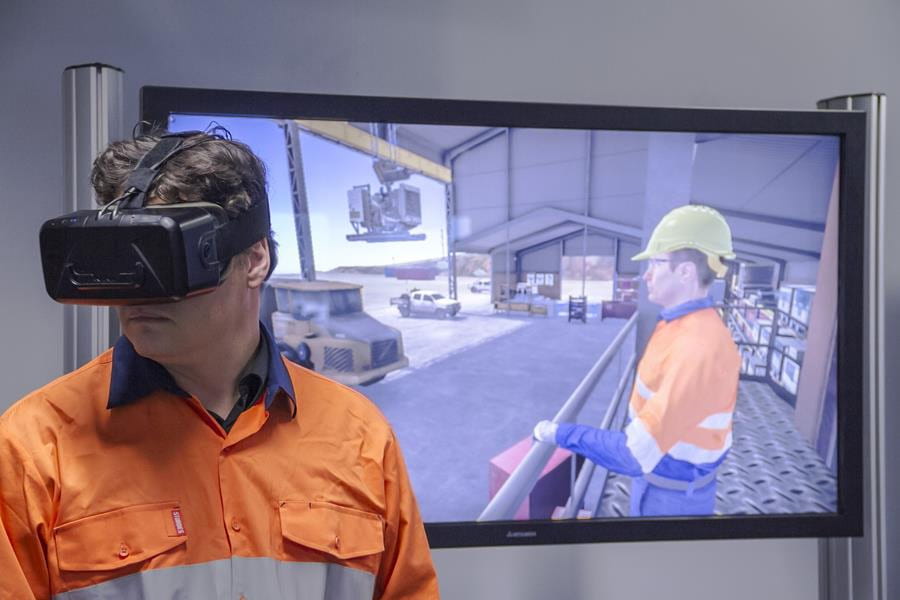
Simulations
Nowadays a lot of industry use simulation to help the training system.
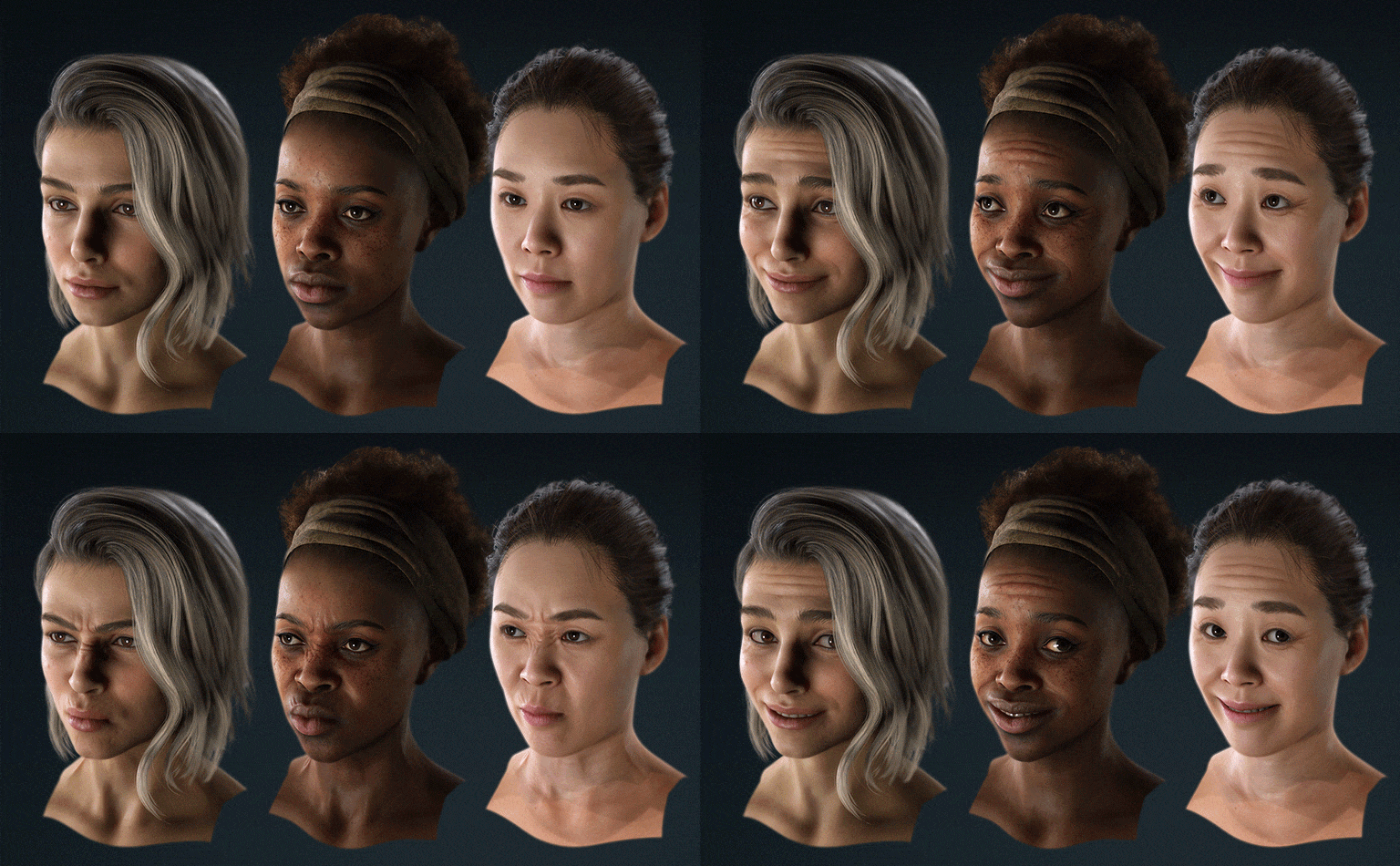
AI powered visual effects
Helping to make AI hyper realistic facial animations.
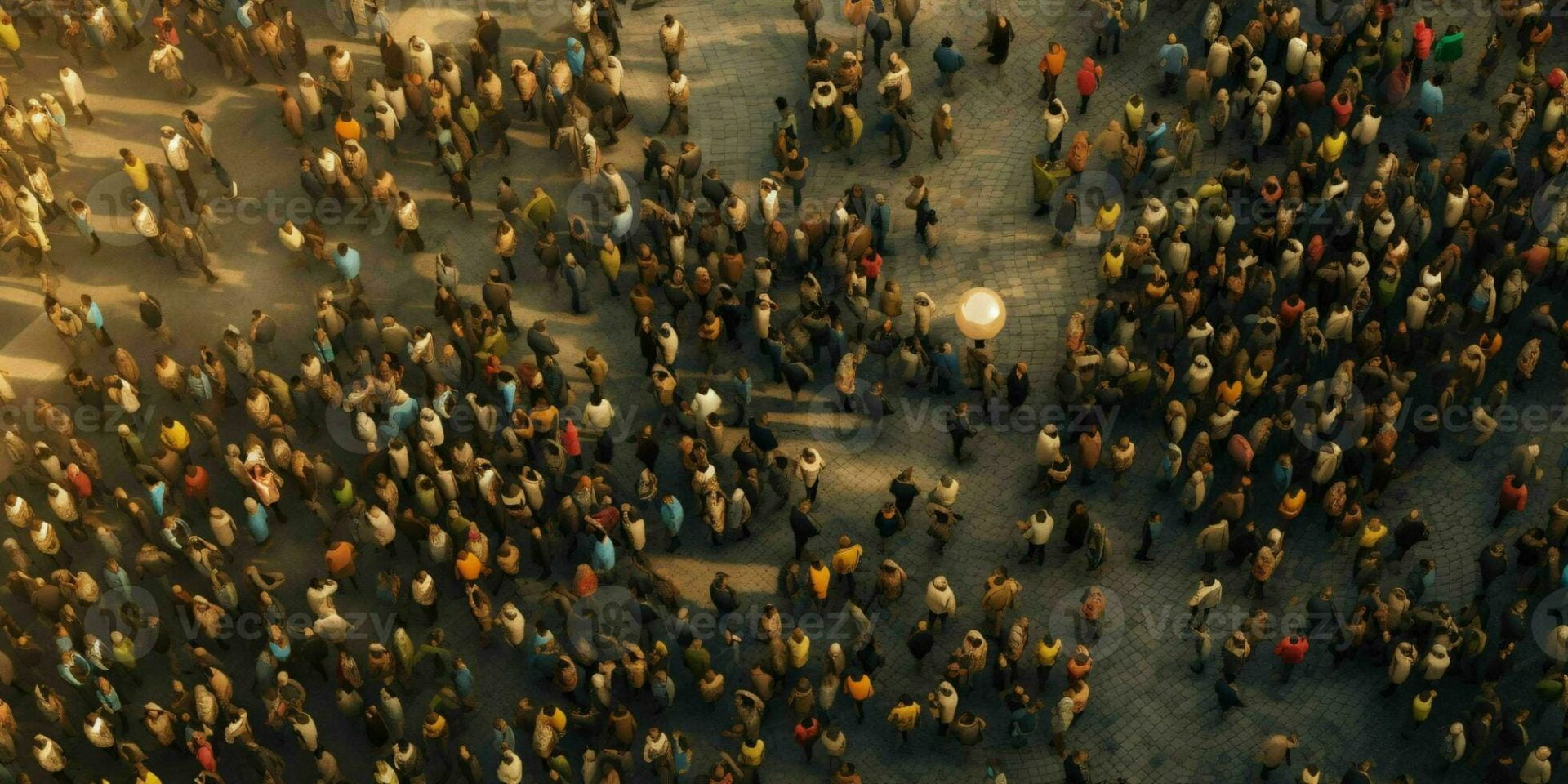
Background recreation
Helping to create for example crowded areas.
End of icebreaker task
Next in class we watched a segment of “the age of the image“.
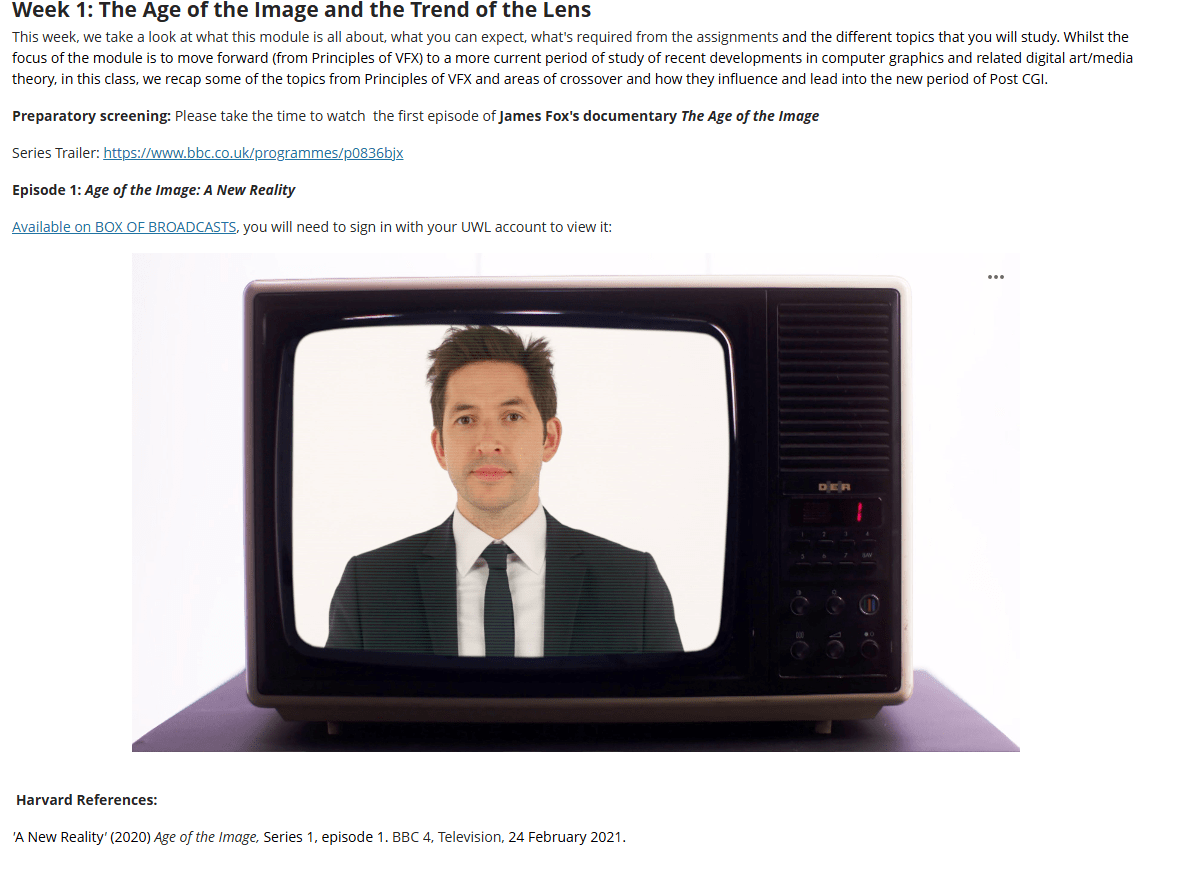
We then discussed in class a little about what is the documentary about.
And now we looked about the topic of this week which is ” The trend of the lens ”
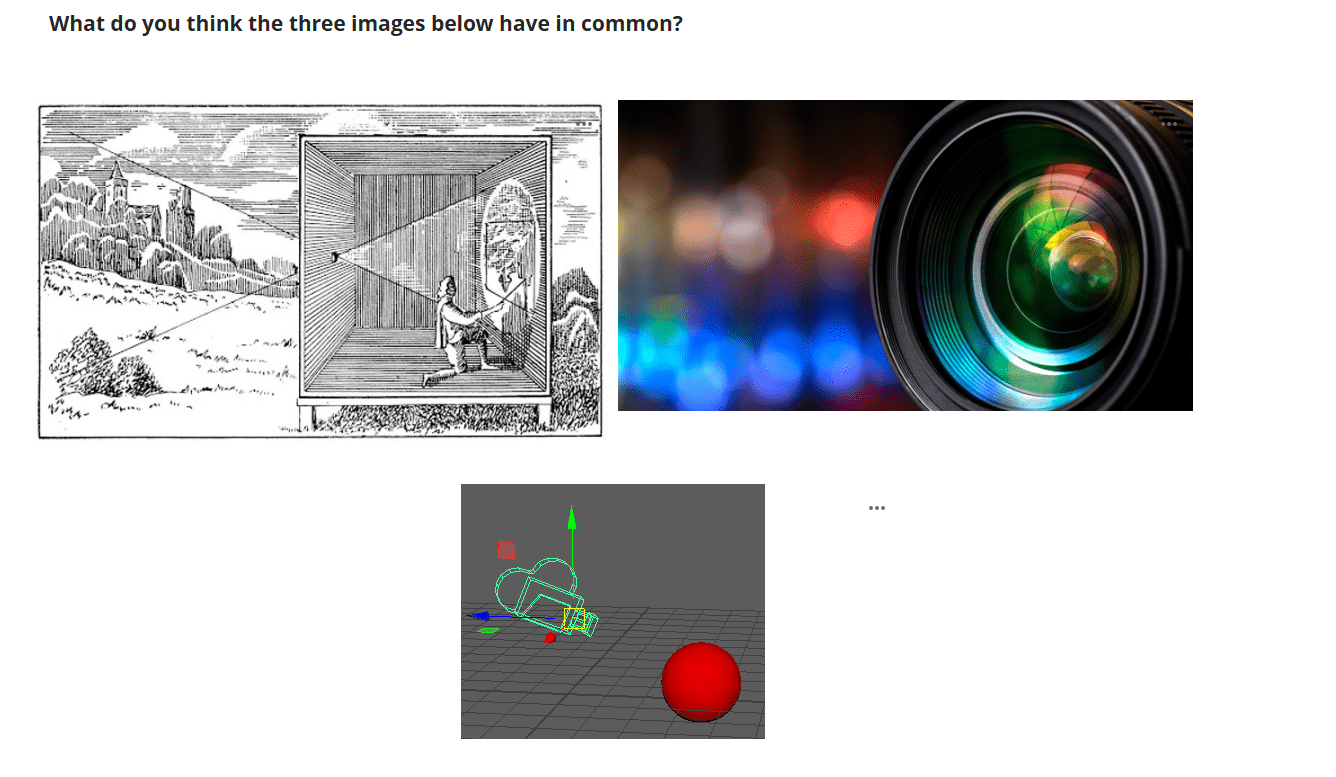
As we have seen before this on the age of the image segment Dr James Fox tells us that we are living on the age of the image and with that lenses have come to dominate how we capture the world.
The image above represents that all of the images in there are related to lenses.
On the first image we can see what is called a ” Camera obscura ” and early camera which is essentially a darkened box with a lens for projecting the image of an external object on to a screen inside.
On the second image we can see a modern camera lens which is widely used on modern cameras.
And finally we see what it looks like a scene in MAYA maybe, but here even digitally we have a digital camera which is controlled by a digital lens.
As we can see all of these have in common lenses. Which leads us for a later topic called The tyranny of the lenses.
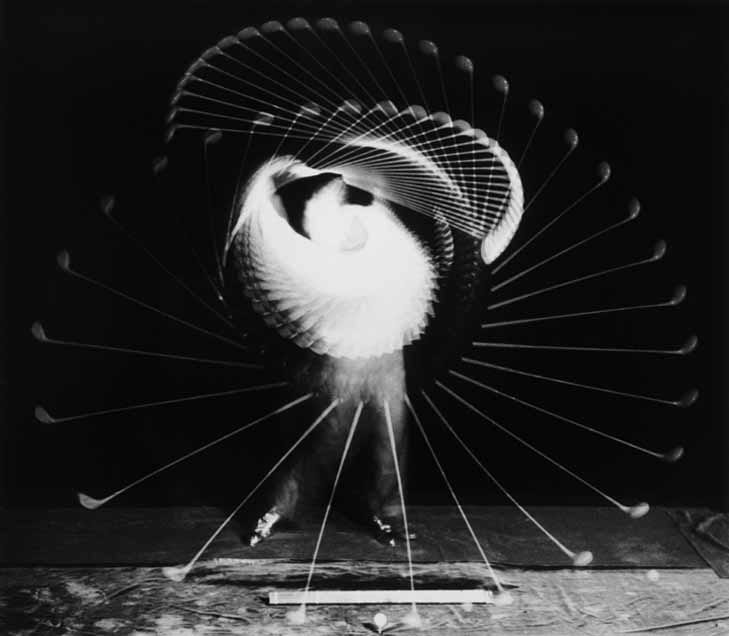
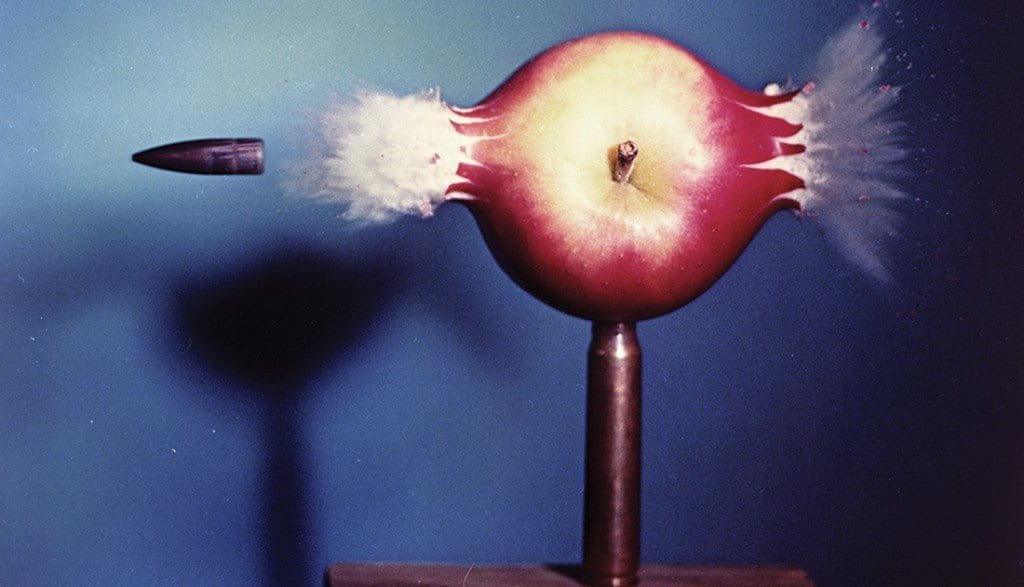
But first we are going to have a look at a person called Harold Edgerton who was an American scientist and researcher who used photography to experiment, but thanks to his experimentation with light strobes and a camera he managed to take different images that inspired thousands of people.
Here in this link we can find some of his most iconic images: http://edgerton-digital-collections.org/ .
Now I am going to put some of the iconic pictures from Harold Edgerton on my sketchbook.
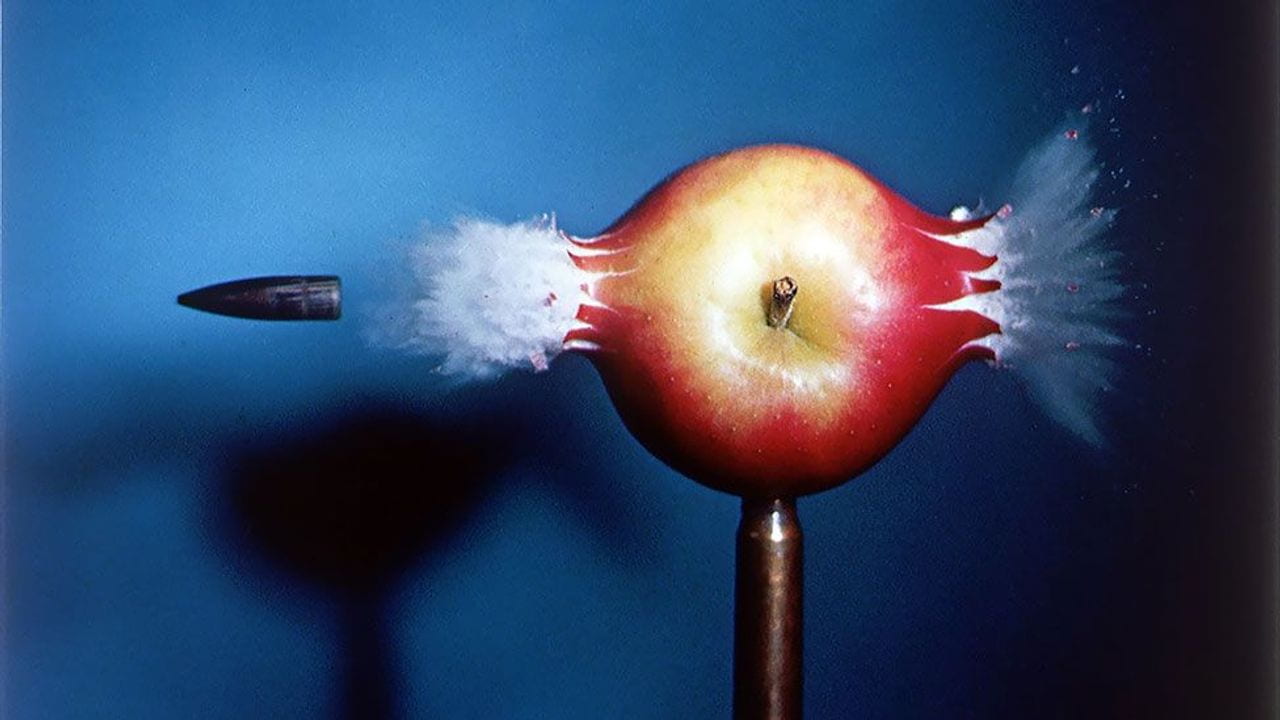
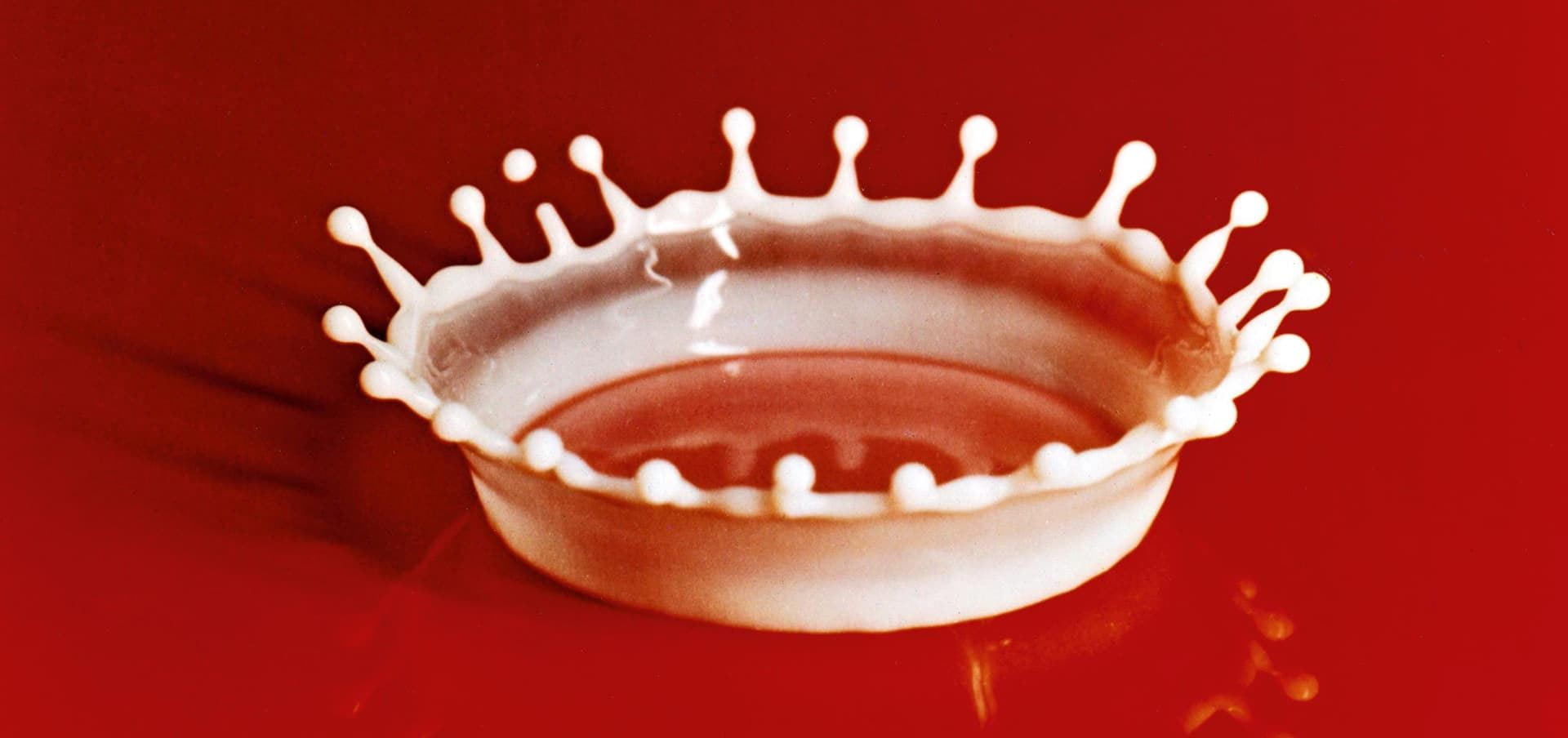
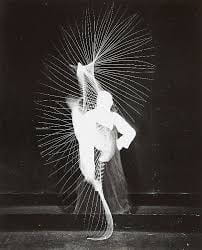
How do Edgerton’s techniques map onto modern VFX (time, motion, light, narrative effect)?
- Explore how Edgerton’s techniques continue to influence filmmakers and VFX artists in capturing and manipulating time and motion to create stunning visual experiences.
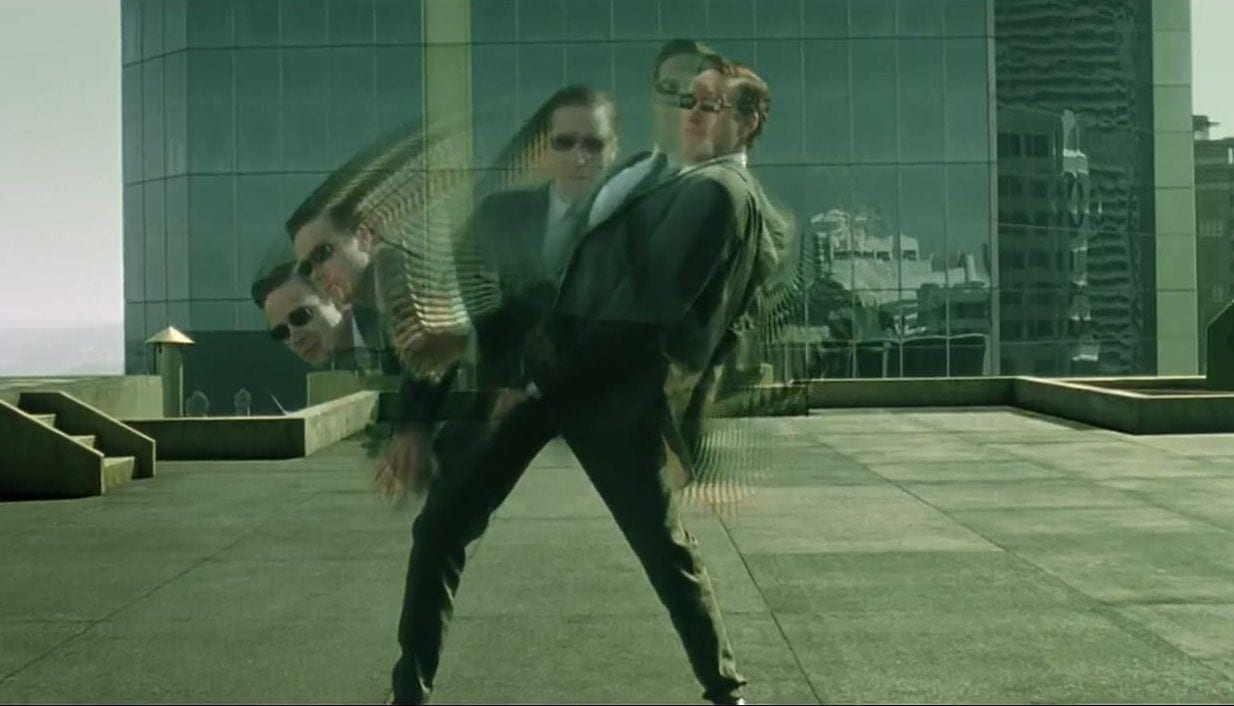
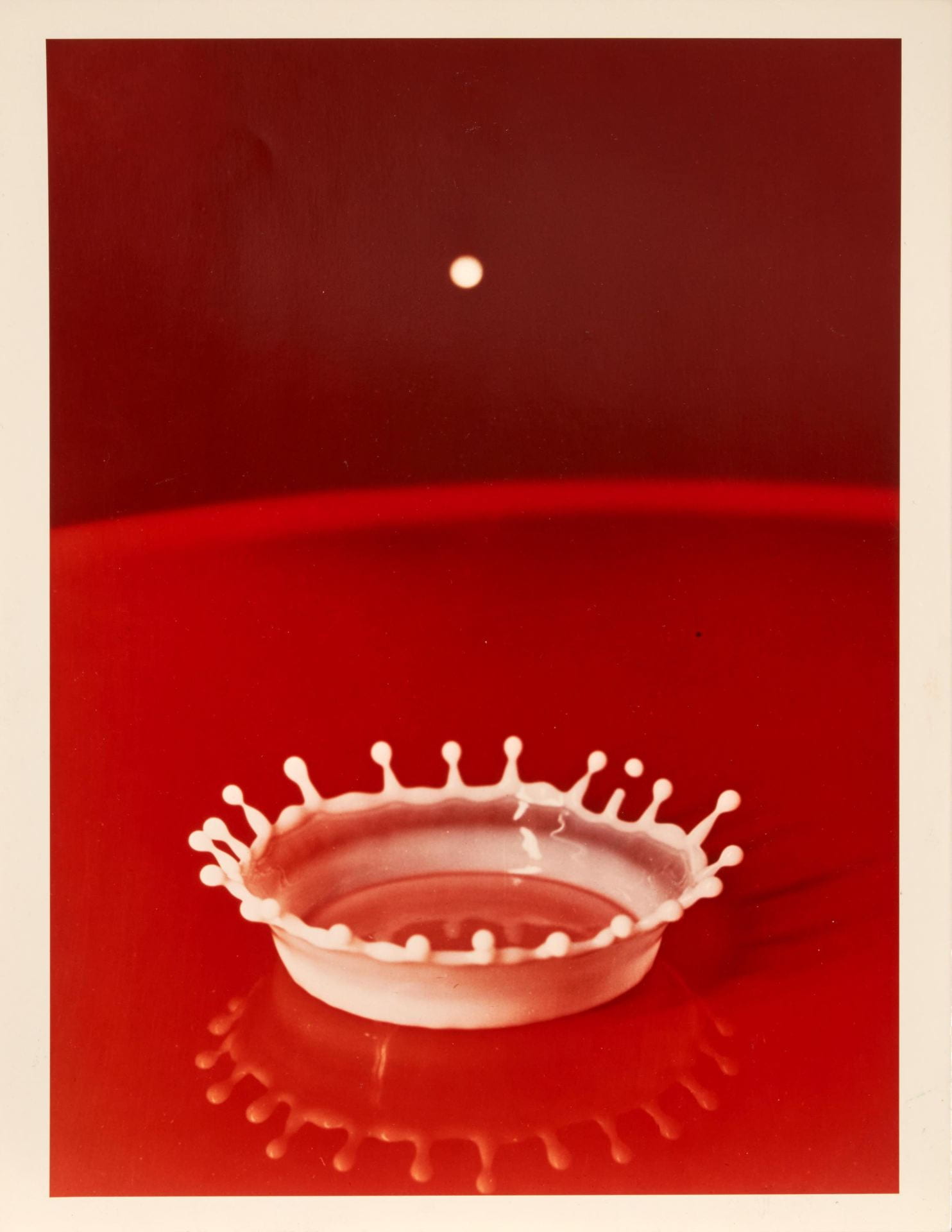
Here I will put some examples of Harold Edgerton influencing modern VFX.
The first example is from matrix which I think the parallelism is clear on this kind of echoed effect.
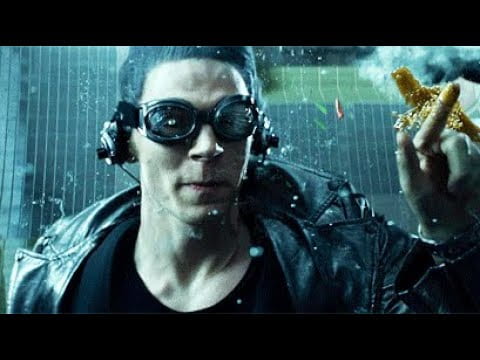
Next we have this character called the flash from DC universe that have this scene where everything is moving but froze on time such as the milk drop from Harold Photography.
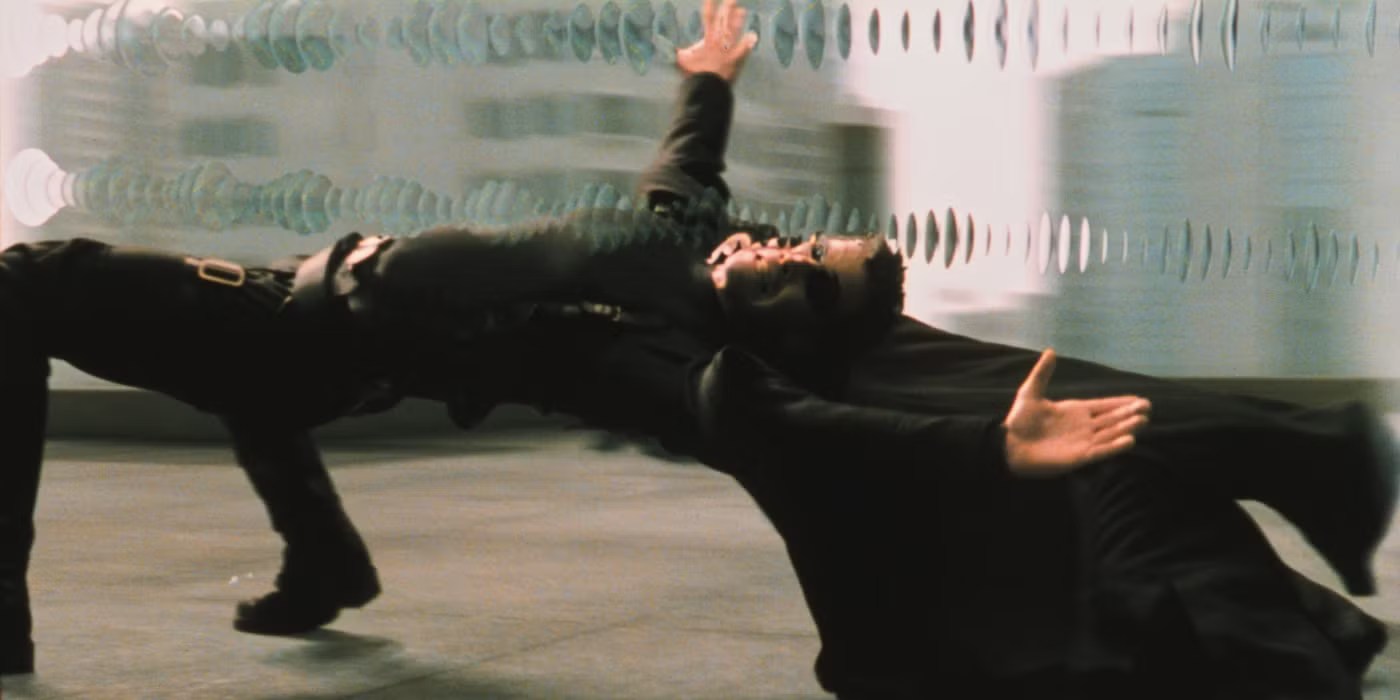
Next we have the bullet time scene again from matrix.
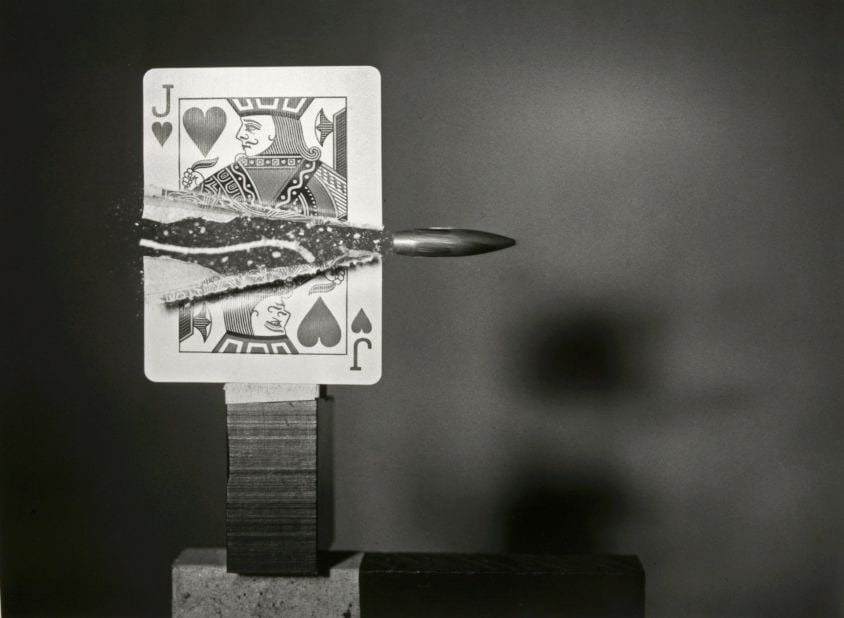
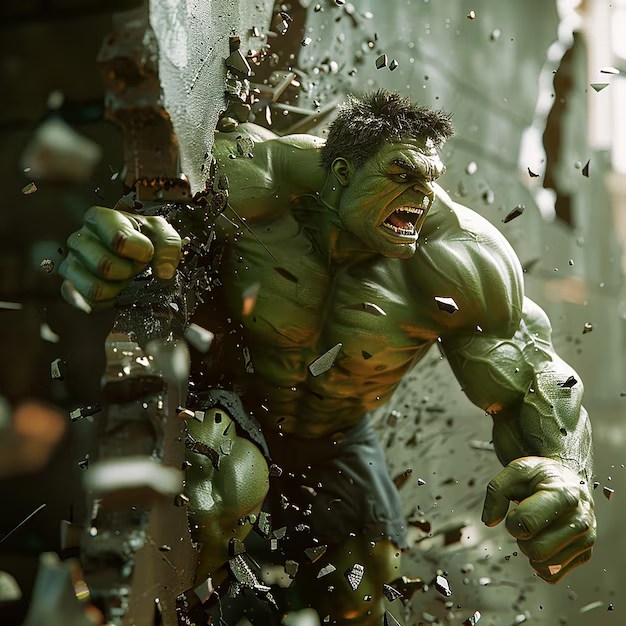
And finally Hulk breaking through a wall which for me all this kind of scene resemble to me of the image of the bullet piercing the apple.
Finally, in class as I mentioned before we are going to to talk about a statement which is “ Visual effects are a slave to the lens“.
Now in class we argued about this statement. I argued in favour.
I think that this statement is true for the next reason, nowadays mostly of the imaginary is linked to a lens since we use cameras to take photos and videos. But not only that whenever we render something in software we usually use a virtual camera with lens that replicate effects as real life to have a preview and final product. Even when we are getting inspired to model an object we use images as a reference and to making textures for models.
End of class week 1
Homework Week 1.
What does Dr James Fox mean by “The Age of the Image”?
This Week’s Prompt:
- Watch the first episode by Dr James Fox “The Age of the Image”. Then, in 250-300 words, answer:
- What does Dr James Fox mean by “The Age of the Image”?
- Why does he use this phrase to describe how images function in our current age?
In this post I am going to talk about the first episode of Dr James Fox “The Age of Image” series and in my own words explain what Dr James means by “the age of image”, which in my opinion is a very interesting topic to write about.
I vaguely had an idea of what Dr James could mean by this phrase, “the age of image”, because it is a very intuitive phrase, but after carefully watching the episode, now I can really give my full opinion on the topic with all the information gathered. Dr James refers to this age as the age of image for a couple of reasons. The first one is that, as he mentions, nowadays mostly everyone has access to mobile phones with cameras and cameras in general that make it easy to take pictures compared to the last century, where cameras were reserved for professionals who used photography as a resource to study different areas. He also mentions that photography is used as proof of existence, a form of expression and a piece of memory. With all the social media going on nowadays, people use images to influence other people all the time and even manipulate the images to influence even more, which is a statement that I agree with.
In conclusion, images have become a really important part of our culture as a tool, proof and influence; this leads to the actuality where we use images to entertain and express ourselves.
End of week 1
Week 2: The photographic truth claim
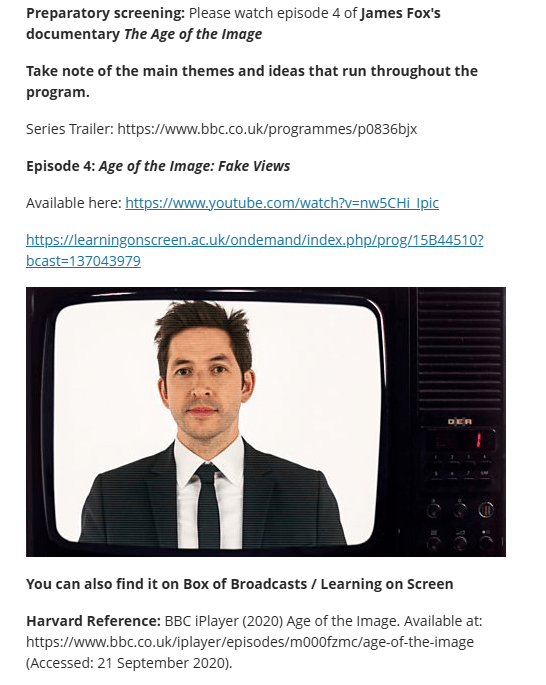
this week we look at “The Photographic Truth Claim” a topic that questions u s if we can believe what we see. We examine the photographic theory of Indexicality—the idea that a photograph is an imprint of reality, a trace of something that existed before the lens. We’ll explore how this “truth-claim” is challenged by digital manipulation and what that means for visual effects. Preparatory viewing: Watch Episode 4 of The Age of the Image.
To begin with we are going to investigate about this theory and view the key points of it.
Key points:
- Photos seem real –People trend to believe that photos show the truth because they are similar to reality.
- Cameras are machines –Since cameras are mechanical machines is considered a neutral tool.
- Photos are chosen –The photos that we see have been chosen and framed by the photographer.
- Photos can be edited –Nowadays since we are in a digital era is not very difficult to manipulate photos with software.
- Meaning can change – Also each photo is subject to interpretation and context.
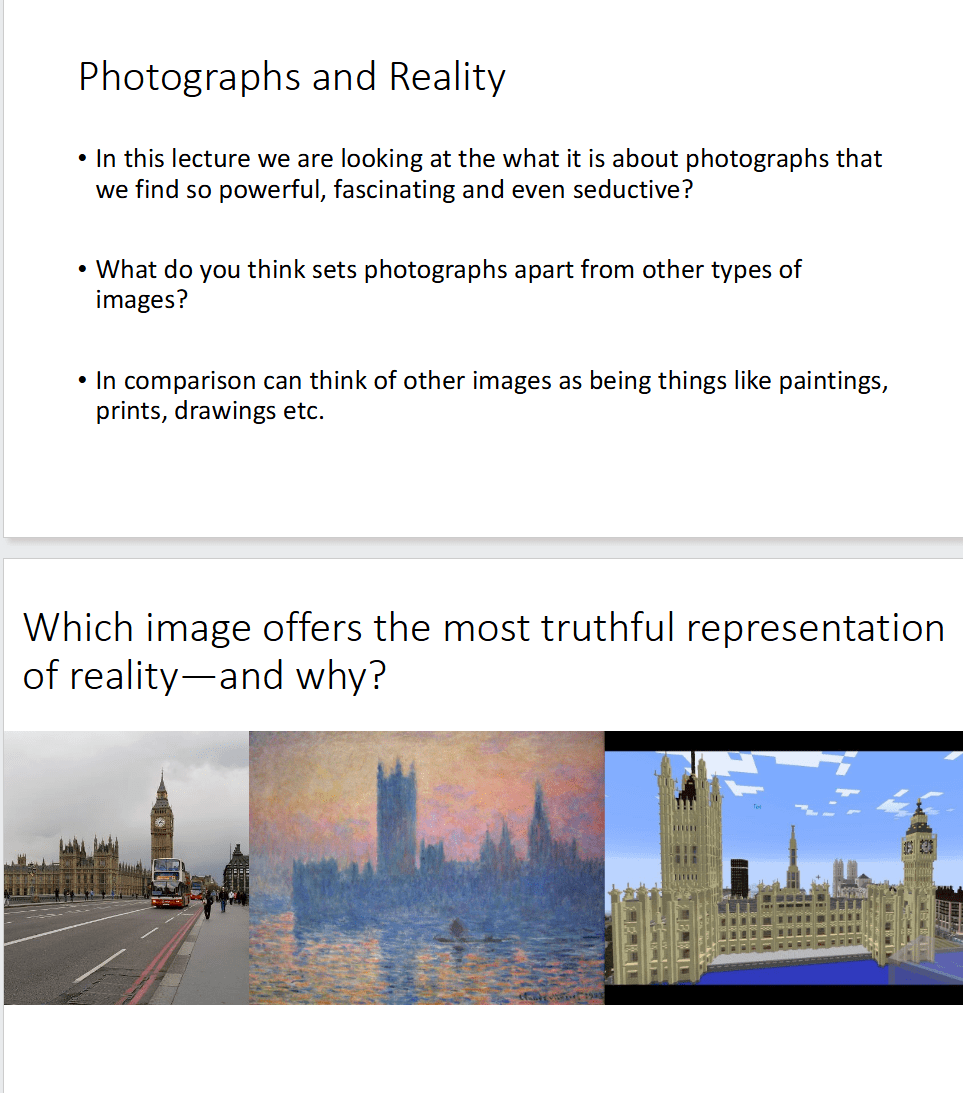
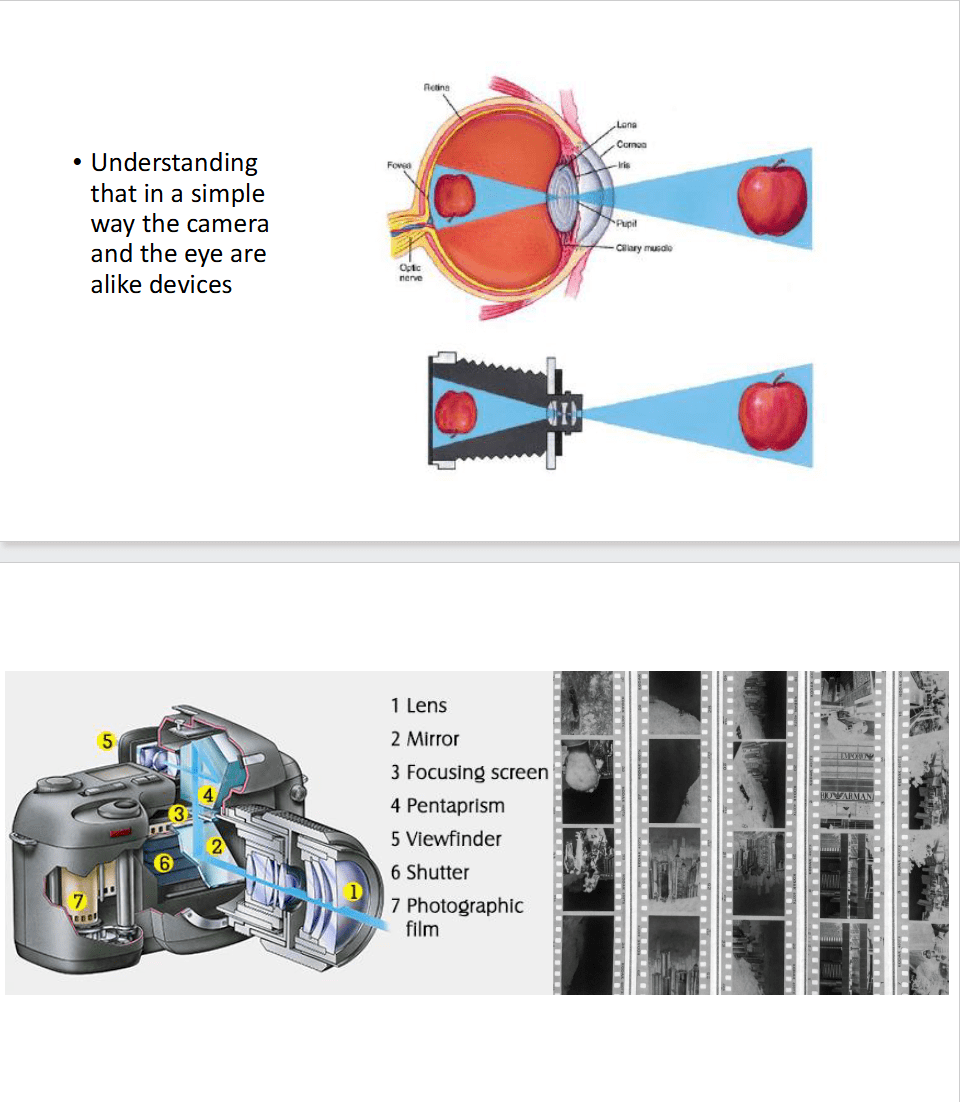
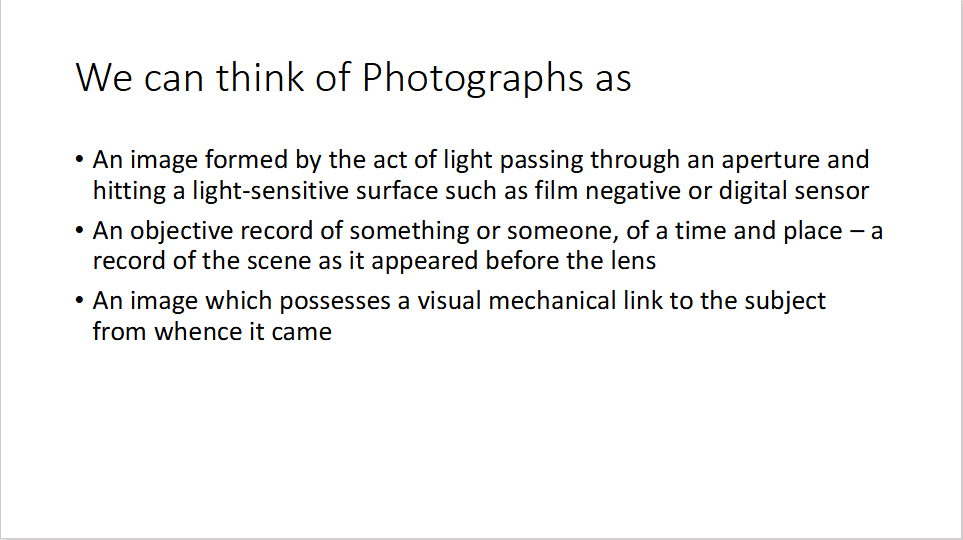
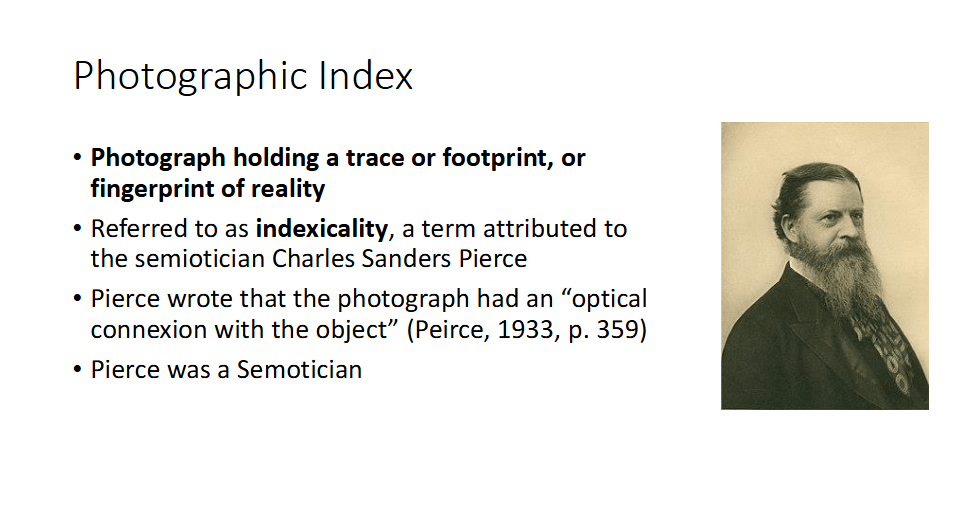
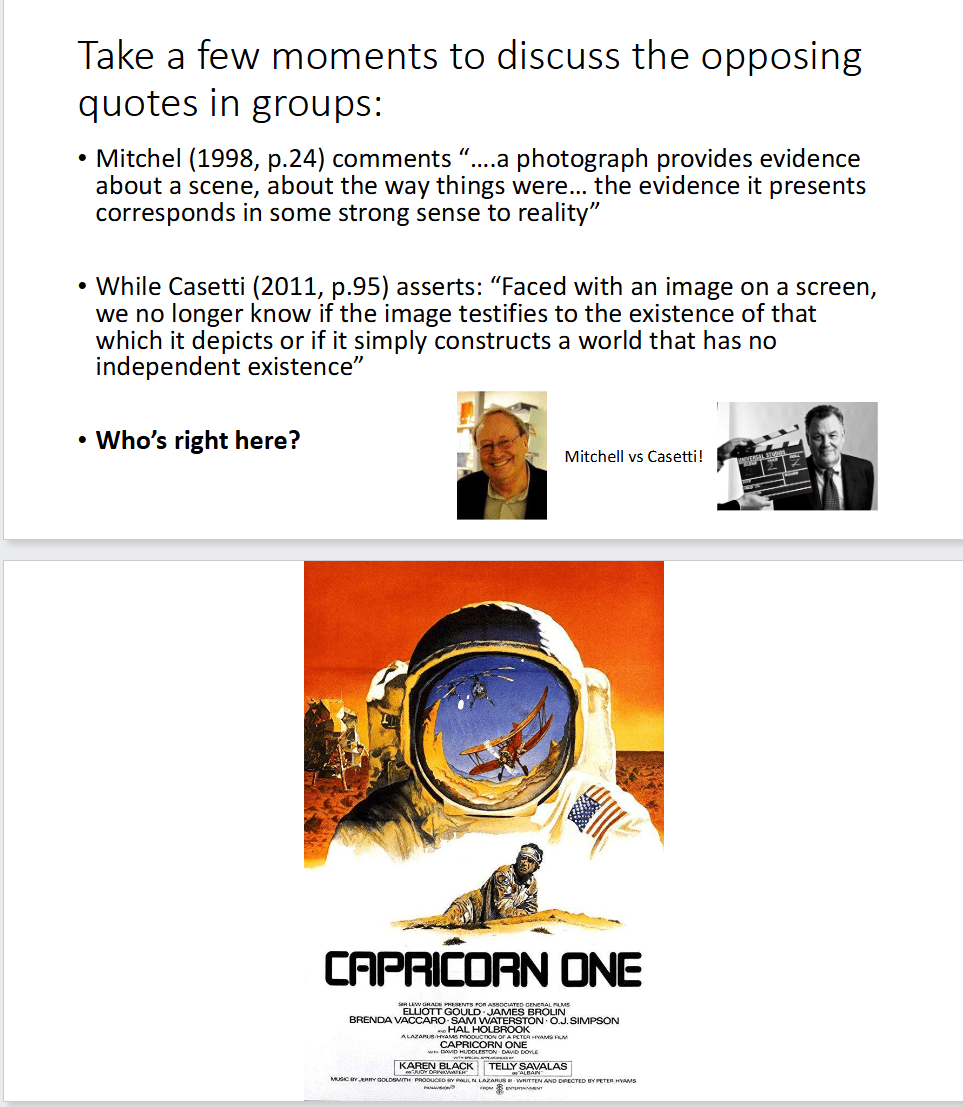
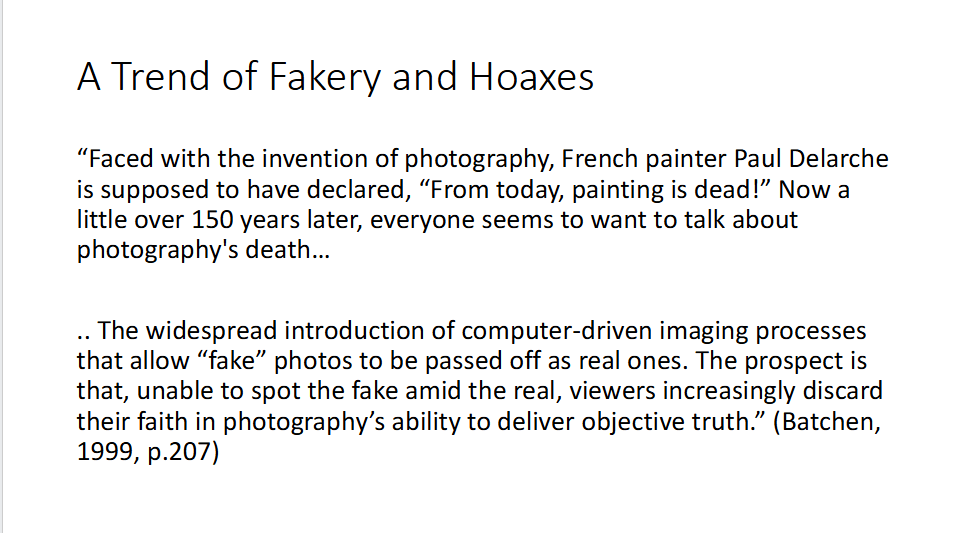
This week we take a look at the Photographic theory known as ‘Indexicality’ or the ‘Photographic Truth-Claim’. We will study how the photographic process itself is a record that something – a scene, existed before the lens when the photo was taken and how it then follows that the photograph is an imprint of reality. With digital imaging manipulation this ‘truth’ is now questioned and we look at what that means for visual effects.
We are now watching a segment of the episode 4 from the Dr James Fox “Age of the image: Fake news” as an introduction to the topic.
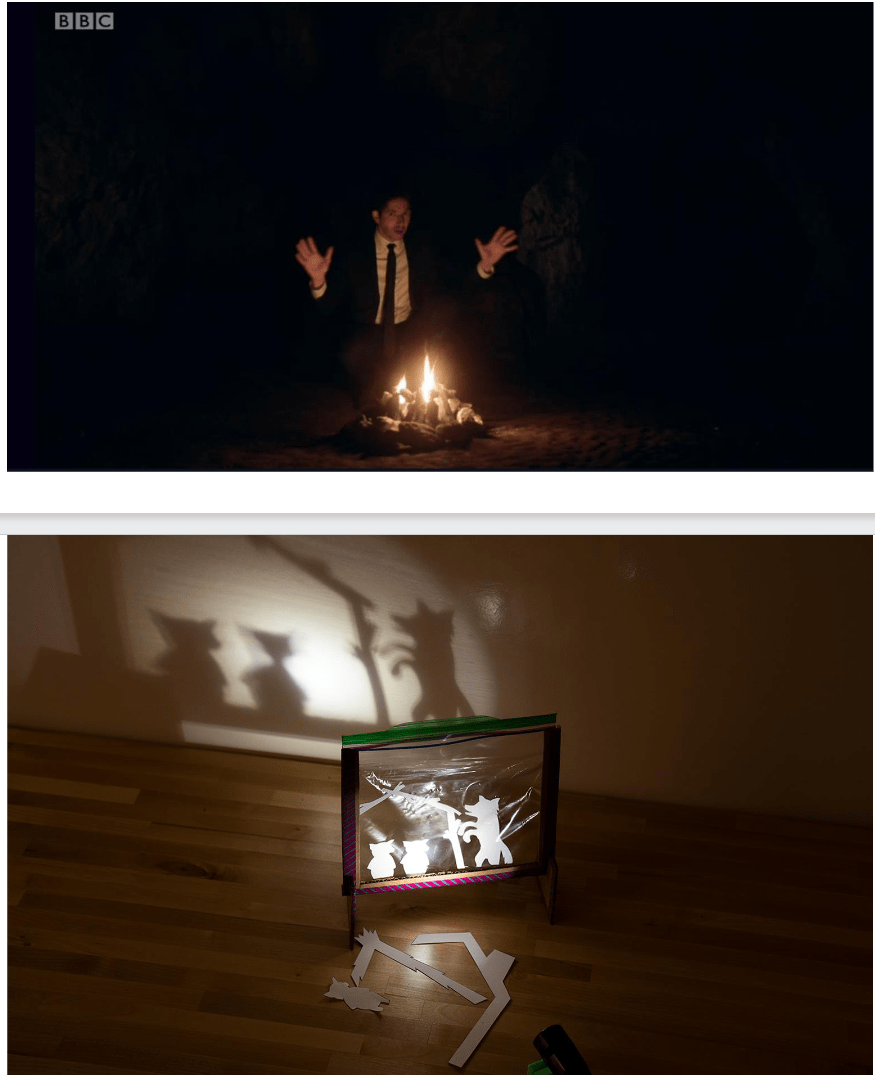
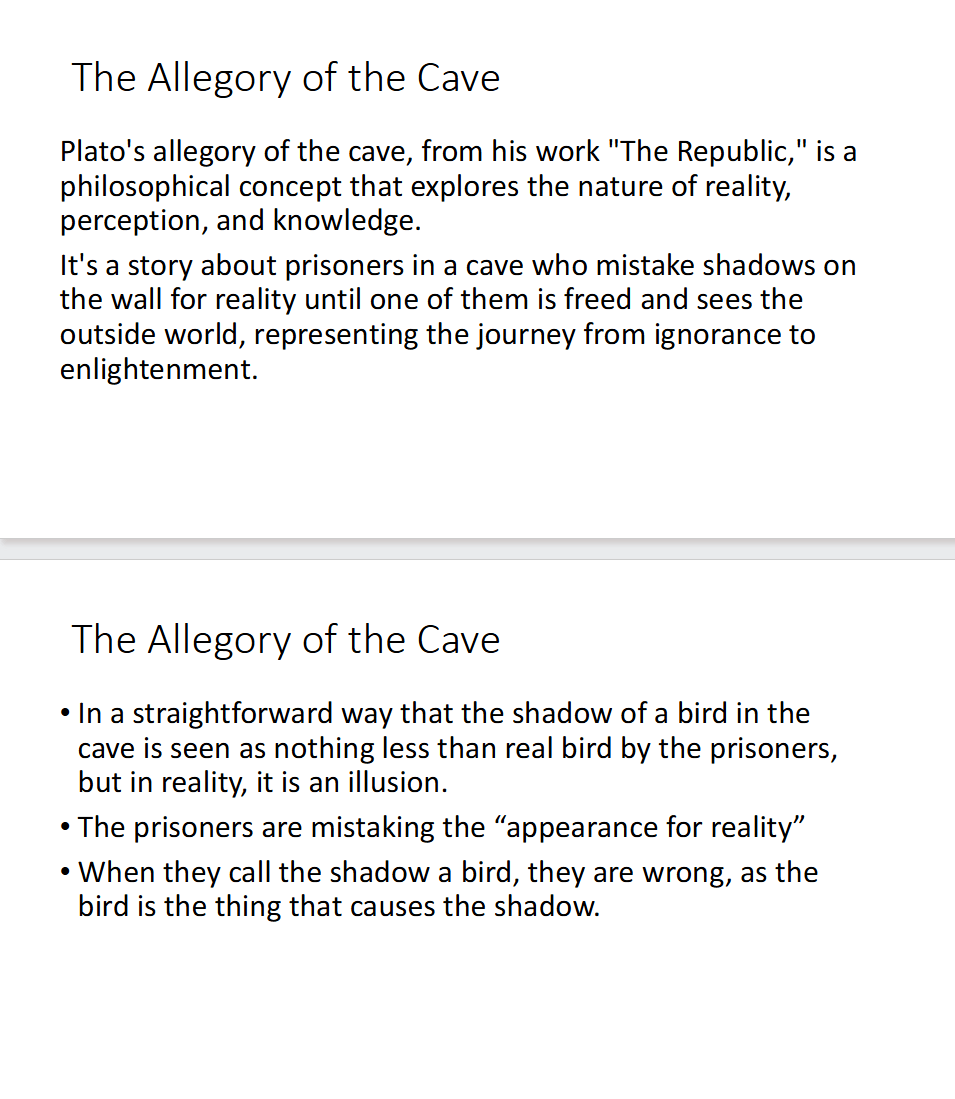
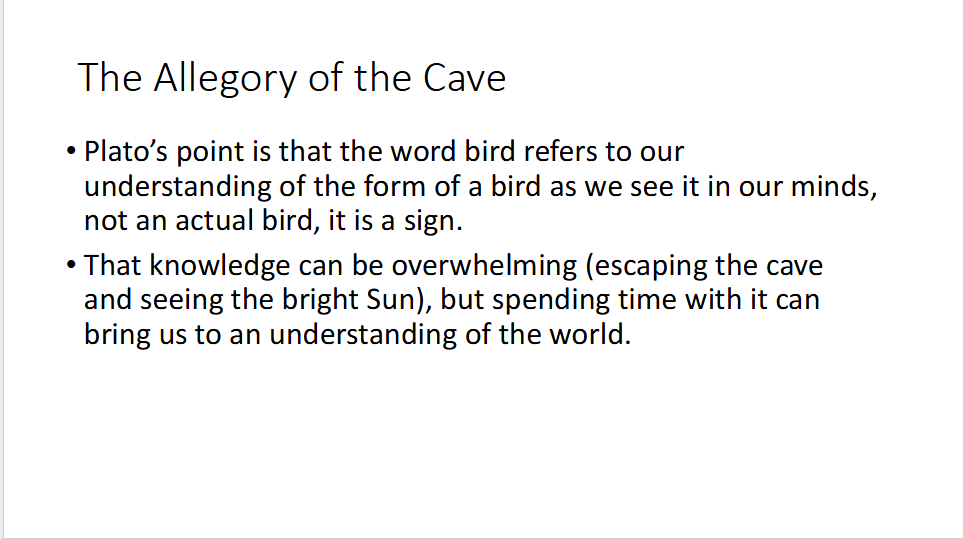
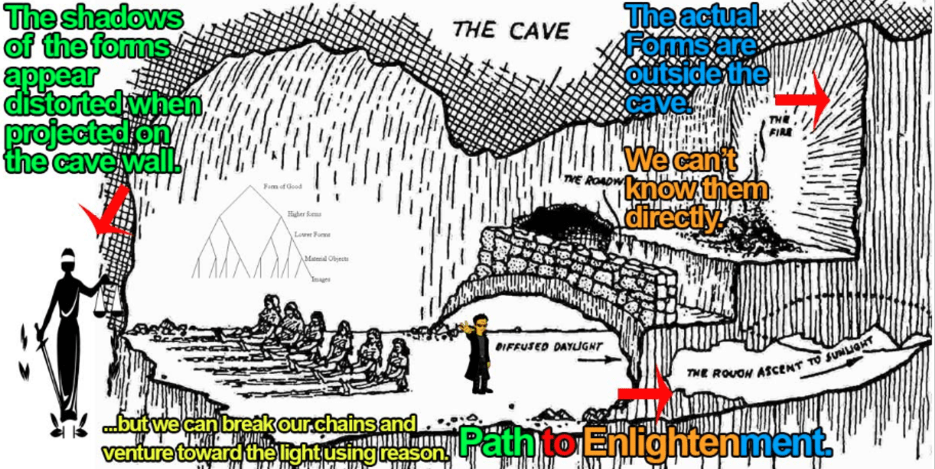
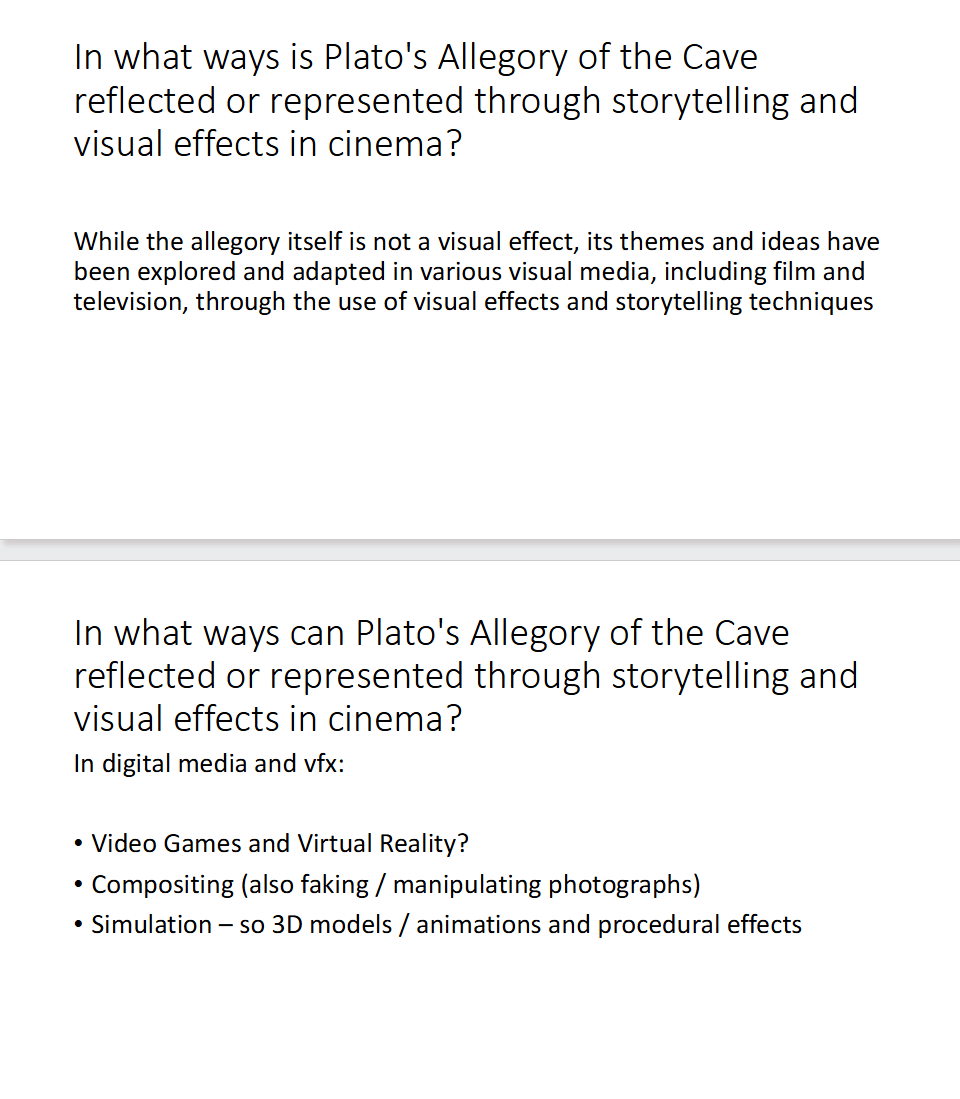
Now we are looking into the PowerPoint that we looked in class today so we can have a better understanding on the topic.
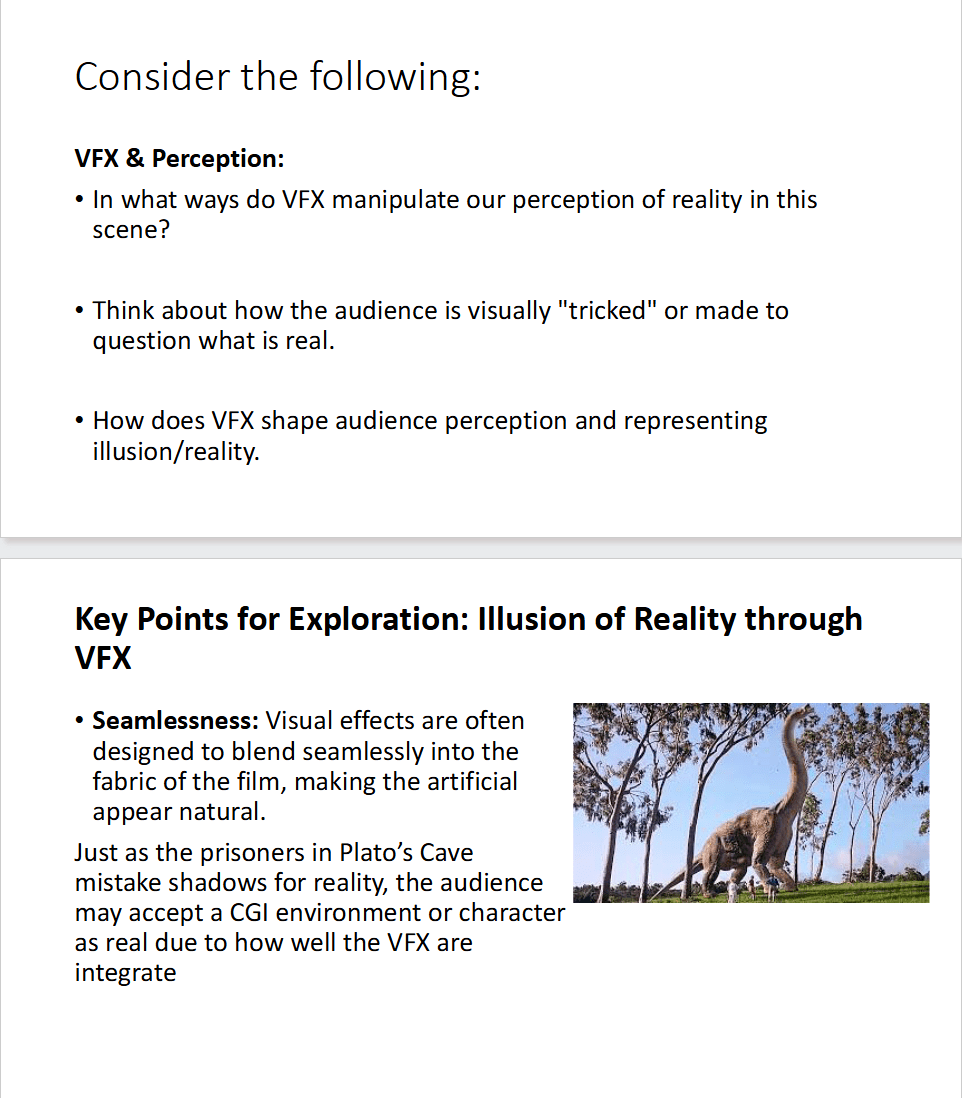
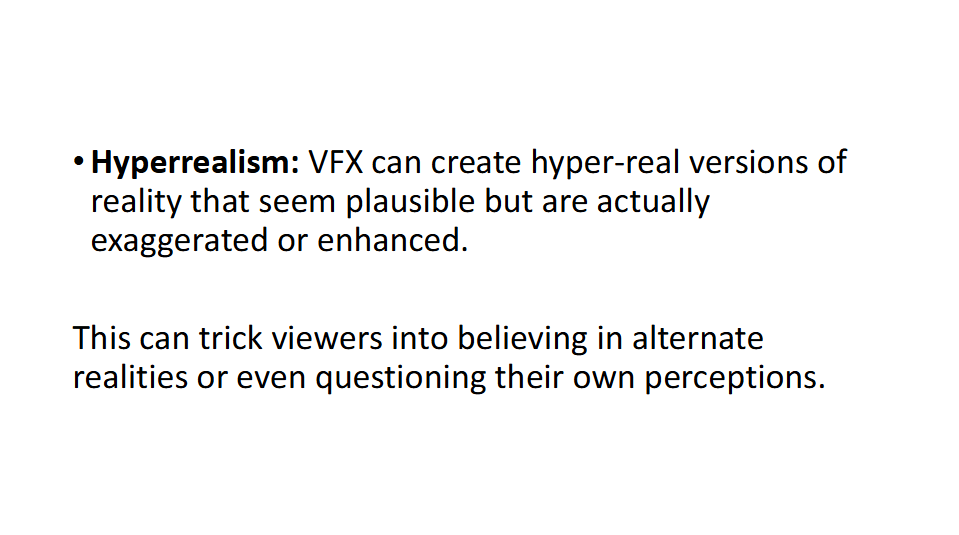
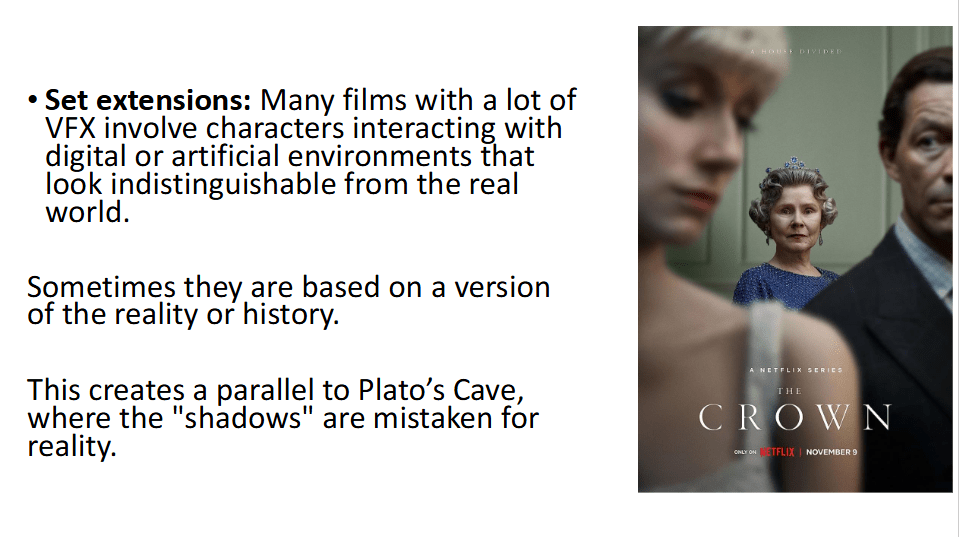
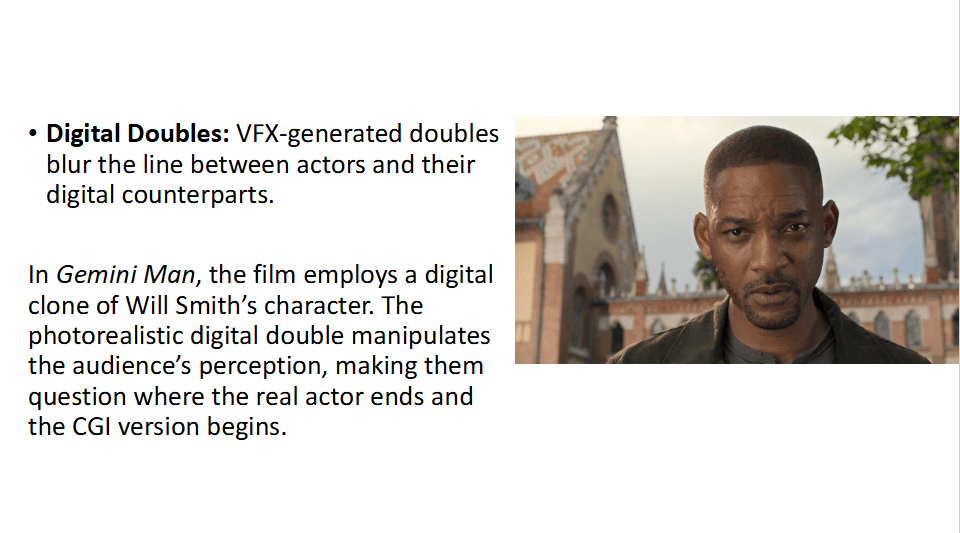
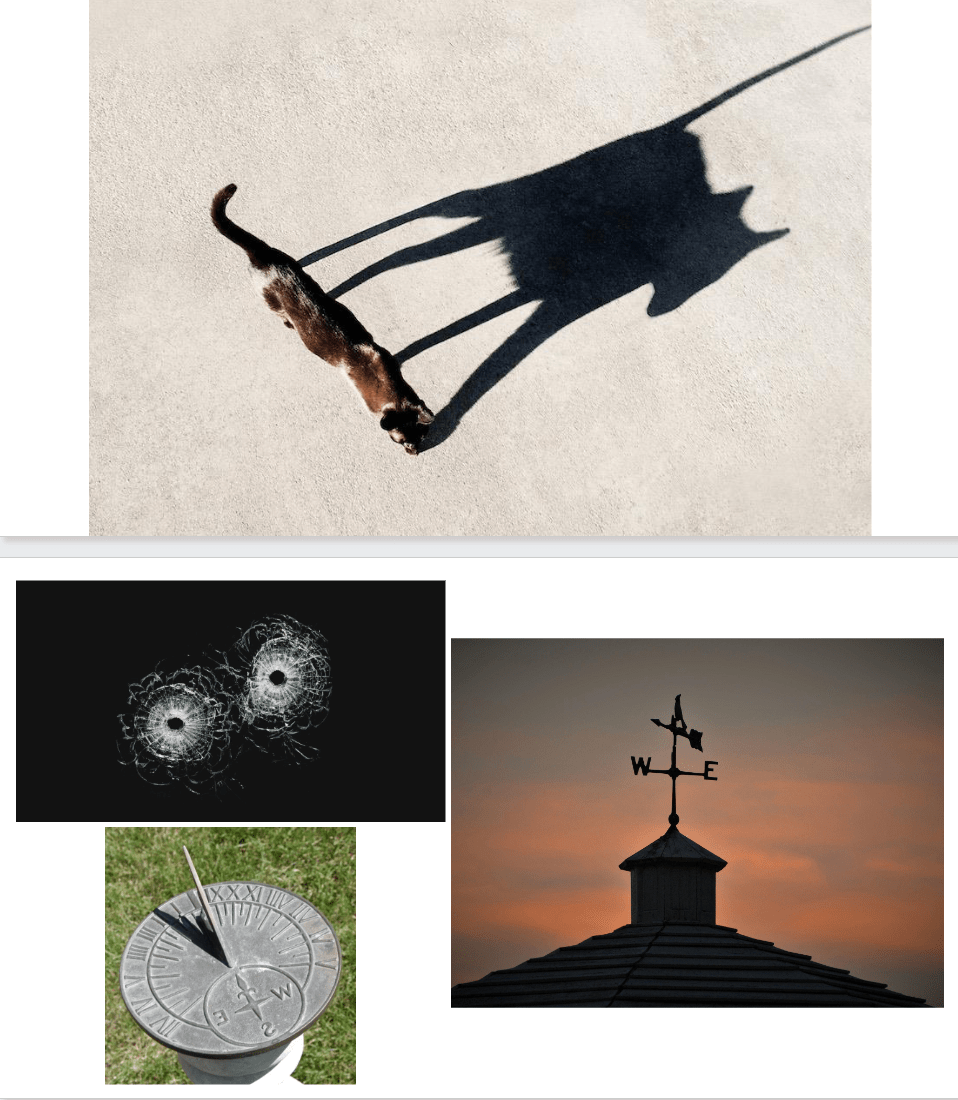
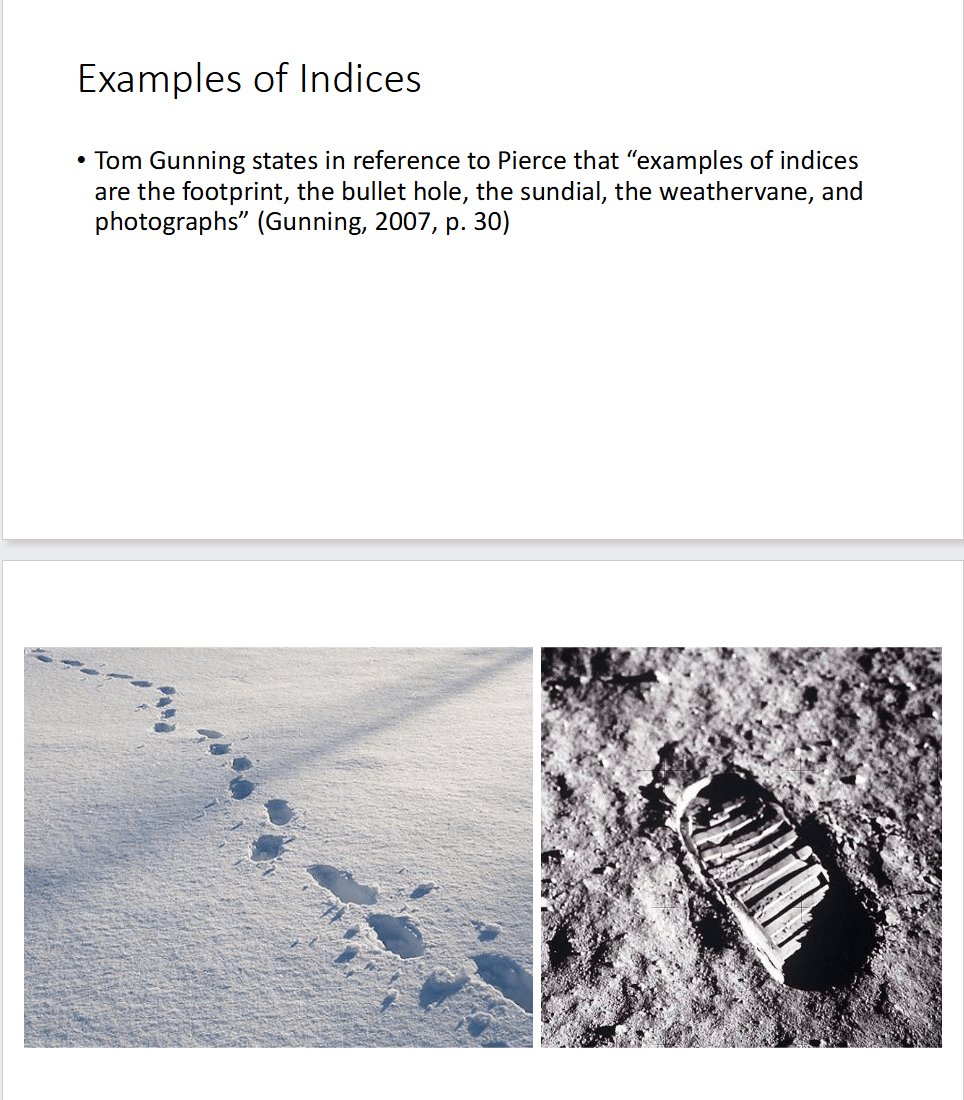
Understand how visual effects (VFX) can blur the line between reality and illusion.
Analyse a VFX image for the following:
Indexicality: Are there traces of the real world, or is it fully fabricated?
Iconicity: Does it resemble reality convincingly, or is it clearly fictional?
Photographic Truth: Does it claim to represent reality, and how does this challenge traditional truth claims?
Find an image that heavily uses VFX. This could be:
A film still (sci-fi, fantasy, etc.)
An advertisement or social media post
News/documentary footage with digital reconstructions
Analyse the image using the following semiotic concepts:
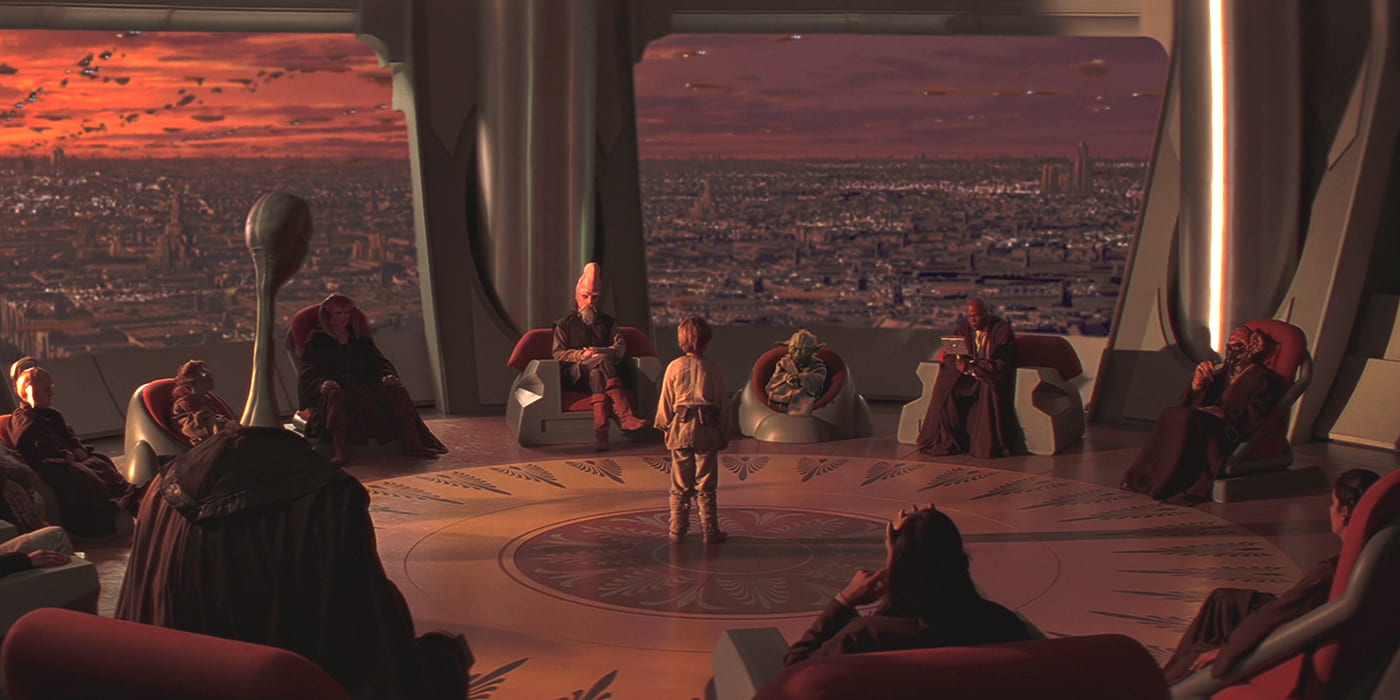
This is the film that I chose:
Star wars
Homework week 2.
Consolidate activity: On your digital sketchbooks please write a short post (around 200 words) on what you think is meant by the theory: The Photographic Truth-Claim?
- You can refer to the lecture notes and reading, or do your own searches on the topic.
- Outline and define what the truth-claim is.
- As an extra, you may also wish to add a reflective sentence or two on how visual effects uses the original photographic (or film) image. Where it is used and in what technical/software processes: Do these VFX processes somehow alter or make use the ‘truth’ of the image?
Attached to this is a guide on how to write a paragraph that I mentioned in class. If you need help with the writing then it is worth looking at this guide.
In this post I am going to write about what I think is meant by the theory “The Photographic Truth-Claim” and my opinion on the topic with some examples.
After examining the content in class and doing some research, I can confidently say that the photographic truth claim is the belief that traditional photos provide an accurate record of reality because they are created by a neutral machine, in this case a camera, that shows a subject. This claim is backed up by two factors. The first is the indexicality of photography, where the subject has a direct link to the image, and the second is the iconicity, where the image resembles its subject. In my opinion, this claim is challenged by the fact that photos can be easily manipulated, framed and captioned in ways that change their meaning.
In conclusion, the theory is not absolute since it is usually true that to take a photo is often evidence that something has existed, because something had to be in front of the camera this image can be subtly altered, and this can change the whole context of the image.
End of week 2
Week 3: Faking photographs
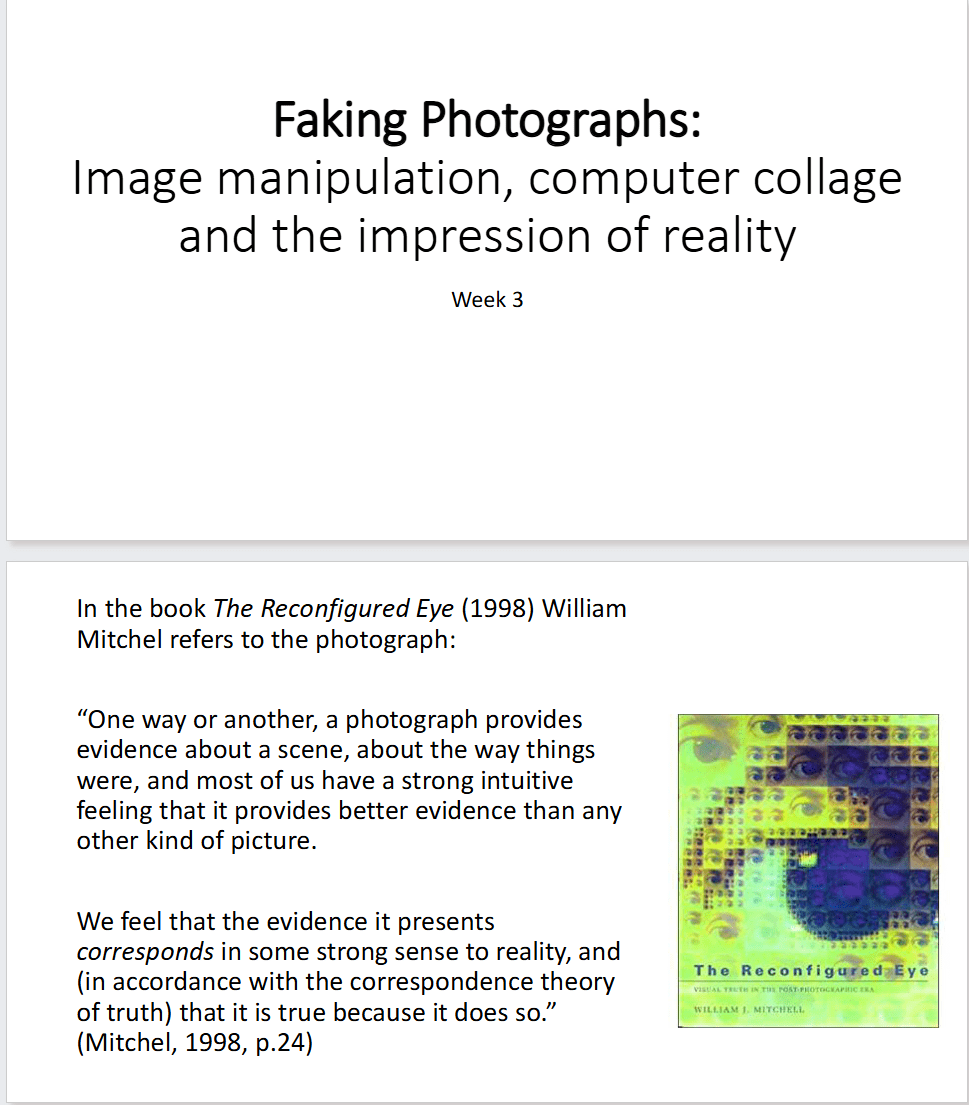
Search Task 1 – Can you find examples of Faked Analogue Photographs?
Research early photographic fakery before the advent of digital tools.
Task: Look for pre-digital examples of photographic manipulation
- Collect at least four famous fake analogue photographs (e.g. Cottingley Fairies, Spirit Photography, Loch Ness Monster, Lincoln portrait).
- Reflect on how they were made and why people believed them. What kind of images are these?
- Under each image, write notes explaining what they are
These are my examples of analogue fake photographs:
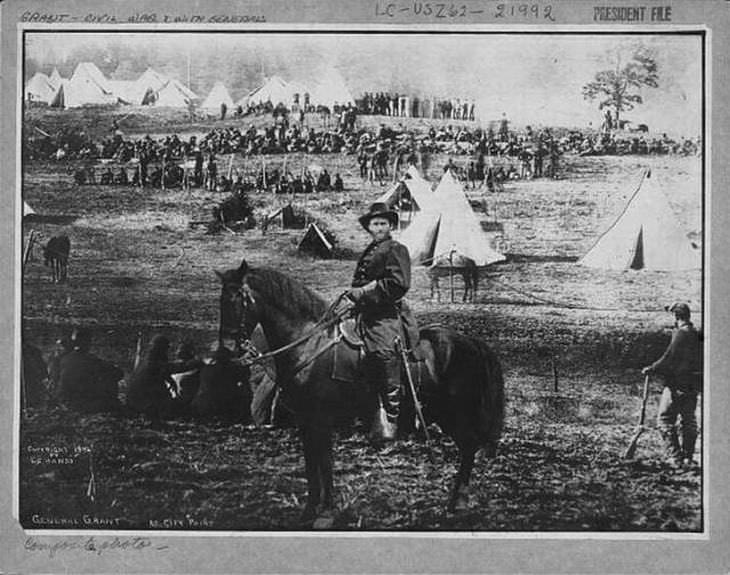
This photo actually consists of three different photos that have been put together to form the image you see above. Many years later, the Library of Congress discovered that it was actually a photo of Major General Alexander M. Cook (the horse and the body), a different photo of General Grant in order to use his head, and a background image of prisoners captured during a battle.
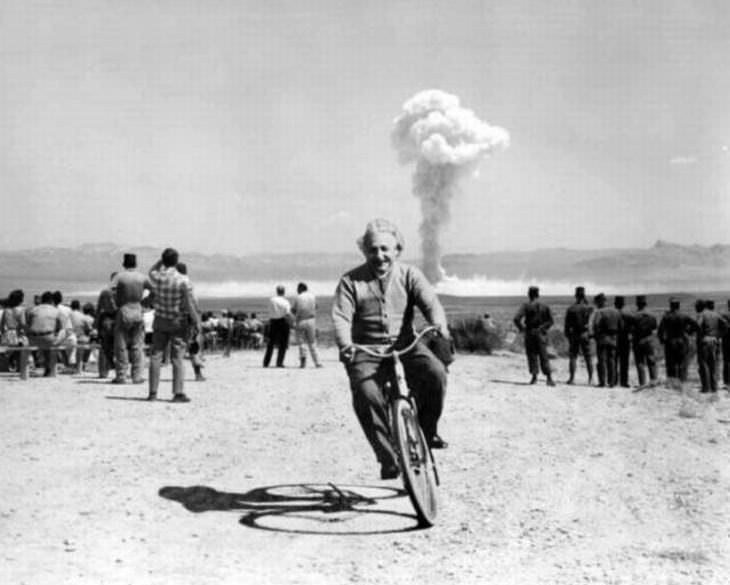
Albert Einstein isn’t actually riding away from a nuclear test on a bicycle while laughing – it’s two separate images that have been spliced together. The editing is so flawless, however, that it’s a very believable image.
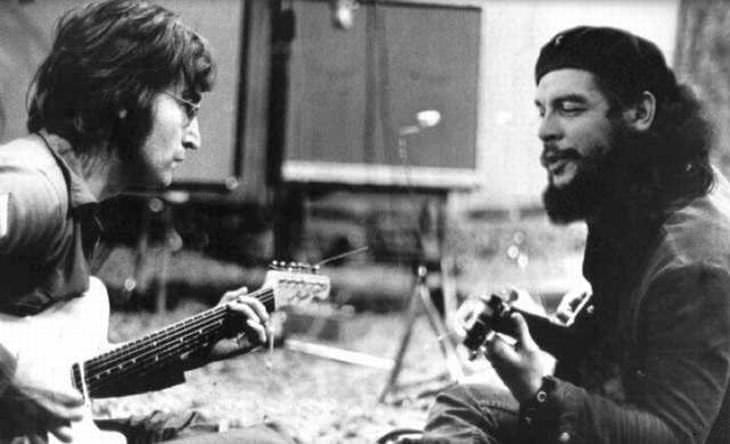
John Lennon and Che Guevara never actually sat across from each other and played guitar together. This photo is actually a real photo of Lennon playing guitar with Wayne Gabriel, with Guevara’s head put in place of Gabriel’s.
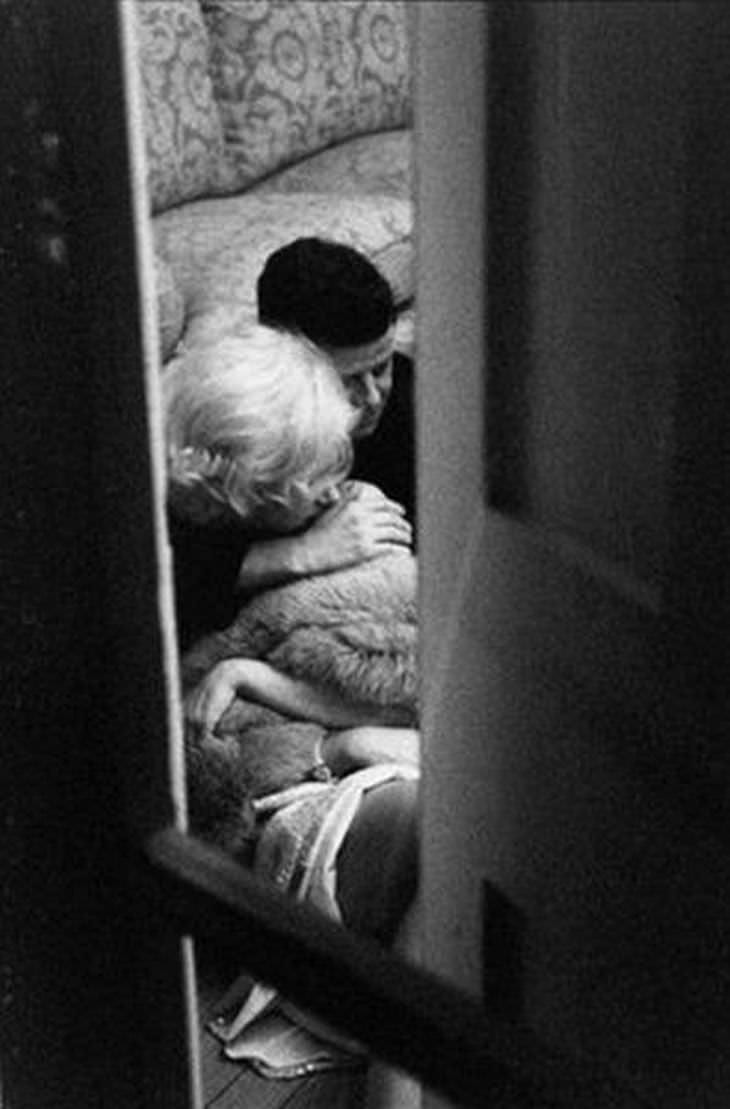
Alison Jackson became notorious for staging photos of famous people using actors, and this is one of her most famous. She captured this scandalous shot using lookalikes, managing to fool many people into thinking that it was real in the process.
As we have seen all this photos has been manipulated or staged.
Search Task 2 – Can you find examples of Fake Digital Photographs?
Explore digital manipulation and Photoshop-era deception.
Task:
- Collect at least four well-known digital fakes (e.g. Shark vs Helicopter, Tony Blair selfie).
- Reflect on how digital tools have changed the nature of photographic manipulation and trust in photography.
- Do you think these fakes are similar to VFX composites? How are they different? What is the end goal here.
These are my examples on digital manipulation:
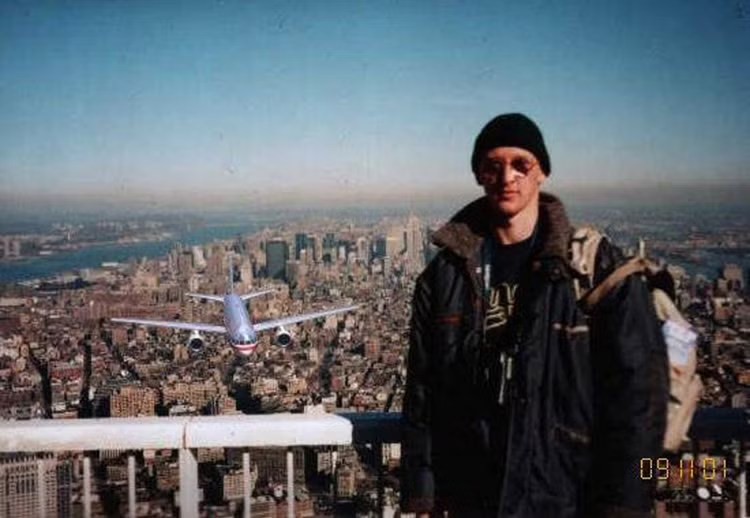
In quite possibly one of the worst attempts at a manipulated photo we’ve seen (and in poor taste too) this one depicts a tourist atop the World Trade Center on 11 September 2001 just before the hijacked planes struck the towers.
It was later revealed that Péter Guzli had taken the image and doctored it for friends.
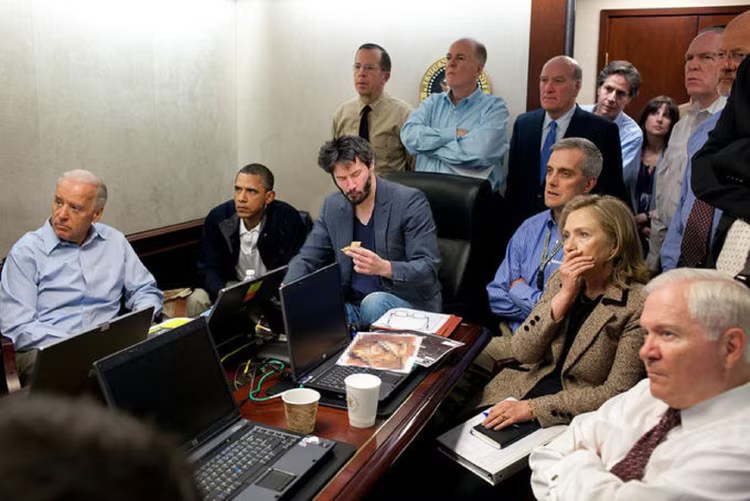
The Situation Room was a photograph originally taken in the White House showing various members of the National Security Council including Barack Obama, Hilary Clinton and others watching the events unfolding around the special forces mission to capture Osama Bin Laden.
The photo was later Photoshopped heavily across the internet after being posted to the White House’s official Flickr account and included such joy as Sad Keanu being inserted.

In an attempted show of military might, this photo was released in 2013 by the Official Korean Central News Agency, apparently showing military manoeuvres being carried out by North Korea.
Closer inspection shows some of the hovercraft to be clones with inaccurate wakes, possibly to make the force appear more intimidating.
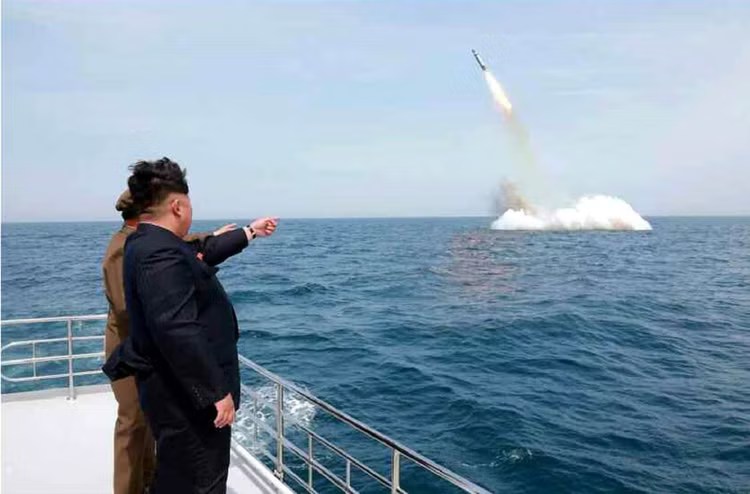
Photos released in 2015 show Kim Jong-un watching a test-firing of a ballistic missile from an underwater submarine – posing a serious threat to America and the rest of the world.
At the time its authenticity was questioned as the photos appeared to be heavily modified and included discrepancies with the reflections of the missile exhaust flame on the water below.
Search Task 3 – Faked Visual Effects as “Documentary” Footage
This is where VFX comes in. Do these trends of image fakery predate VFX?
- Study how VFX can mimic factual footage.
- Find four examples of VFX presented as filmed real events(Forrest Gump, The Crown, etc.).
- What kind of VFX was used here, do you think? How was the image manipulated?
- Discuss how VFX techniques enhance believability and blur truth.
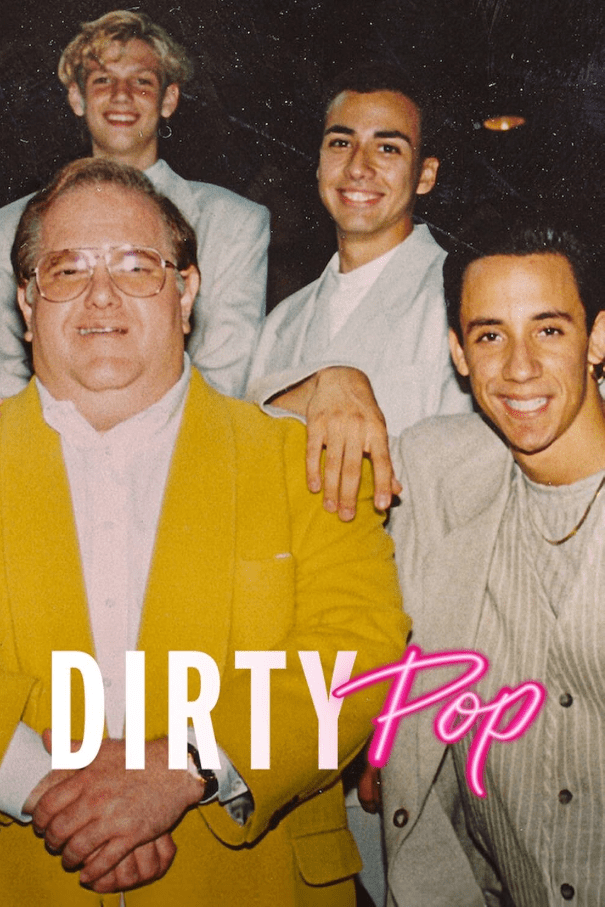
I Found this Netflix series called “dirty pop”. which uses deepfake to create realistic but fabricated scenes with deceased or unavailable people, and AI-generated animations of historical photos to add movement to archival footage.
The Poughkeepsie Tapes This mockumentary creates the illusion of real documentary evidence by presenting staged, gruesome videotapes from a fictional serial killer as if they were discovered by the police.
homework week 3.
Write a definition of VFX compositing. What is it and how does it work?
In this post I am going to write about the definition of compositing, how it works and its implications.
To begin with, we are going to define compositing in VFX. Compositing in VFX is a process of combining separate visual elements such as footage, CGI and digital backgrounds. Using all these key components, we integrate all of them together using different techniques such as motion tracking or keying into one final image. Compositing influences audience perception by creating a sense of reality through the integration of visual elements, building fantastical worlds that give filmmakers the power to create entirely new realities, or establishing a specific mood or tone by changing the colour grading or atmospheric effects.
In conclusion, the overall purpose of composites in VFX is to combine separate visual elements into a single final image to create otherwise impossible scenes, altering reality.
End of week 3
Week 4: the trend of Digital Photoreal trends in visual effects
This week we will explore Photorealism—what it means, how it’s achieved, and how it varies across film and animation.
To begin with we are going to watch a TED talk about the power of visual effects.
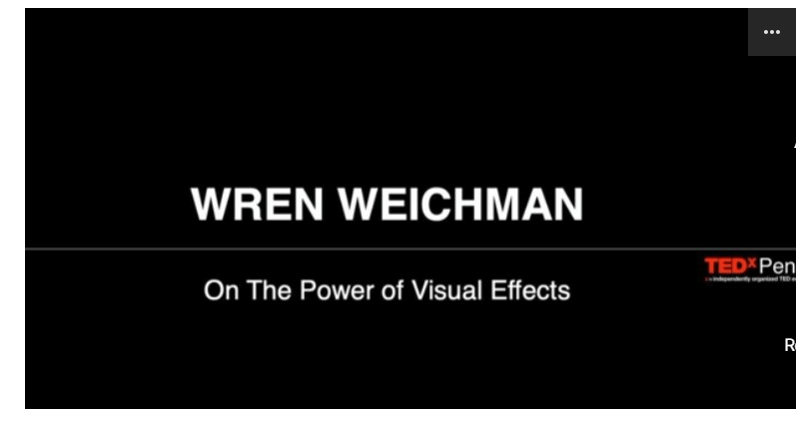
This TED talk explains that the best effects are often invisible, a result of a complex pipeline that prioritizes realism and is limited by time and budget.
The main point on this video is that even with advanced technology, many visual effects are poor because the best ones are the most invisible, the effects you don’t notice are often what makes the effects successful.
It also speaks about the reason of poor effects which involves many steps from conception to final render, is constrained by time and budget. Rushed projects can lead to less polished results.
And finally the role of the VFX artists that are skilled craftspeople who work within these constraints to create believable worlds and moments, but the pressure a deadline can compromise the quality of the final product.
The trend of Digital Photorealism
We will see that Photorealism can mean different things for film shots and computer-generated imagery, including digital characters and creatures. While the term photorealism might be used to describe the most realistic-looking of 3D renders, it can also be used to categorise visual effects compositing practices which allowed for seamless integration of lens-based acquisition and digitally simulated 3D models. Photorealism is a complex subject, and we must take some time to think about what it is and how it is made.
After watching the video and research a bit about digital photorealism we are going to do a series of exercises in class, and also looks at the PowerPoint presentation from this week.
Here is attached some important slides we looked in class.
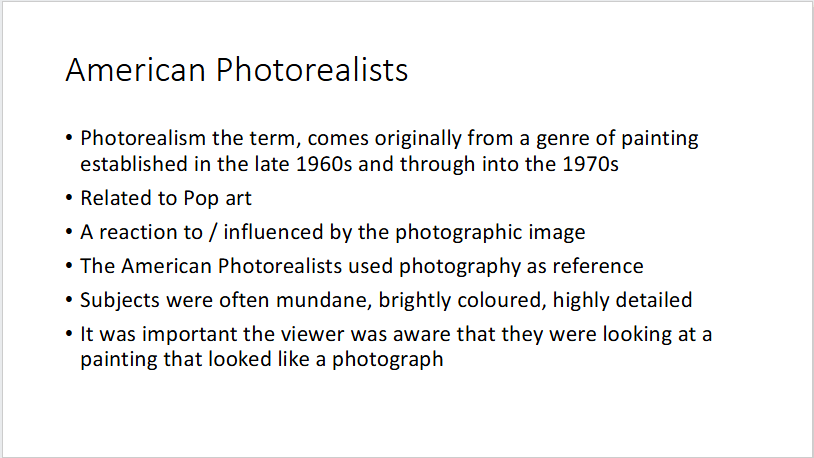
We are going to Define photorealism and talk about characteristics and qualities that makes an image or visual effect look realistic:
Photorealism makes images seem realistic by creating computer-generated images and effects that are indistinguishable from a real photograph, this is achieved by recreating and blending digital elements into real footage, which is a process that of combining artistic talent with other details like realistic lighting, shading, and high-resolution textures. In conclusion The final goal is to produce a final shot that looks like it was captured naturally with a camera.
After doing this task we continue looking at the slides.
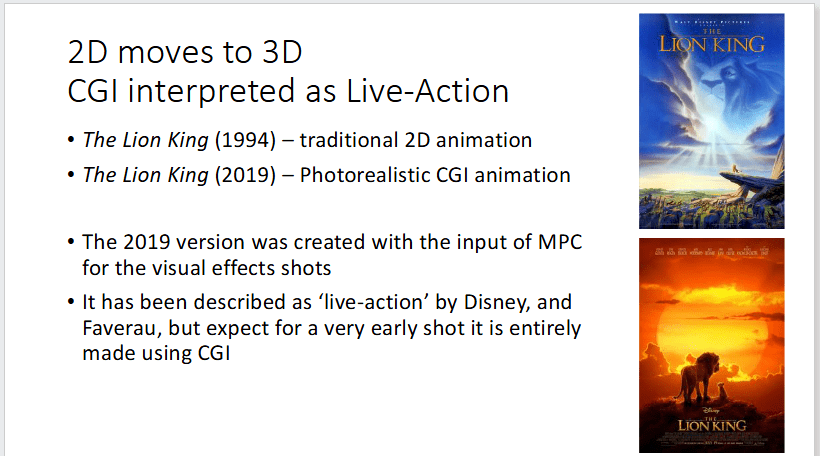
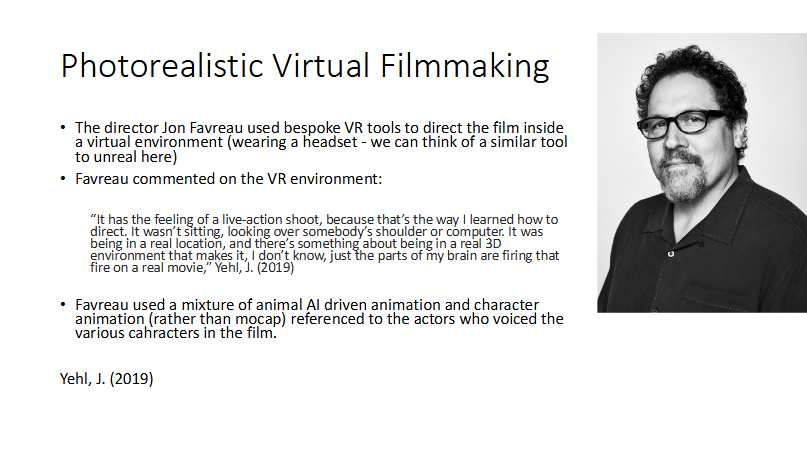
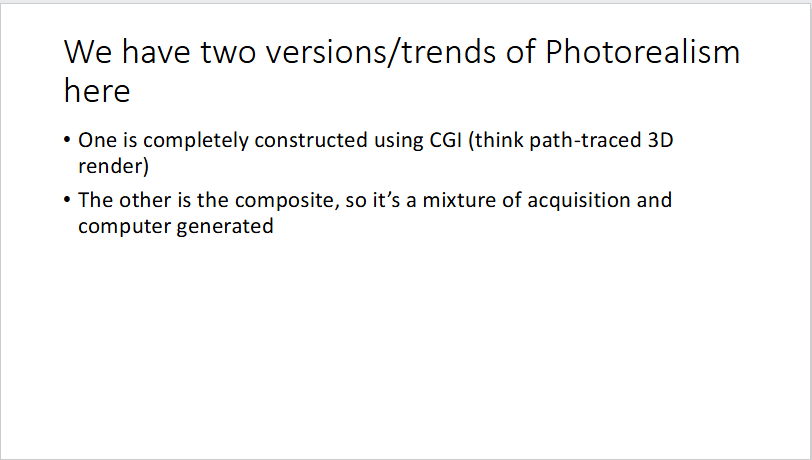
We head up to our second task in class:
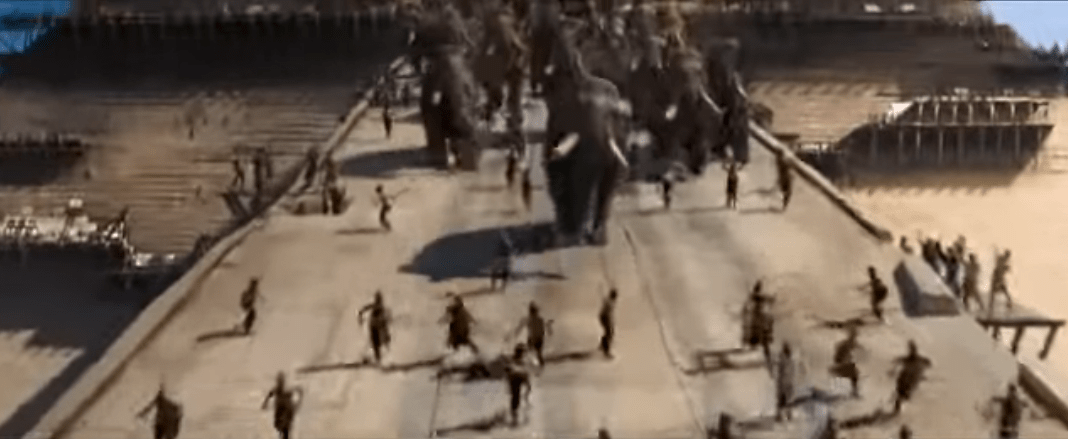
- Blade Runner 2049 (2017)
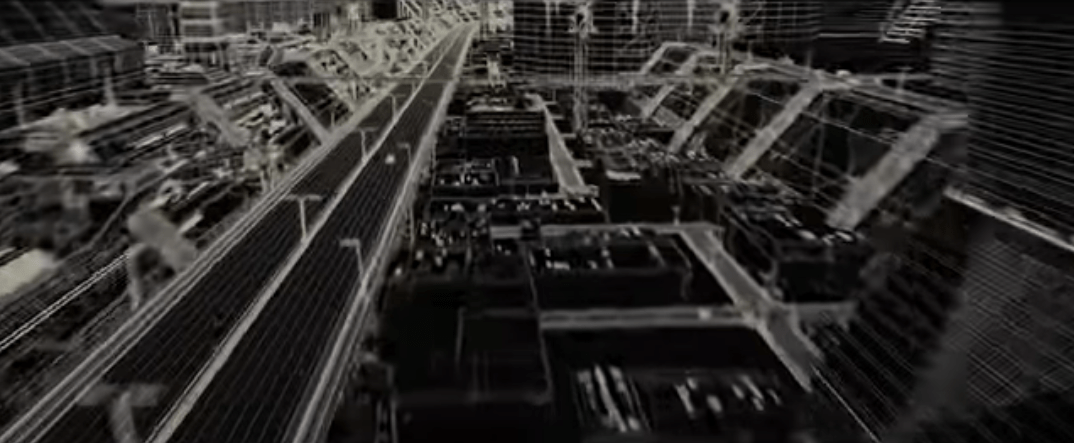
These two scenes look visually photorealistic because both are using accurate simulation of real world physics, realistic light effects, materials and details to mimic reality and seamlessly mix with the live action footage.
Then we have this scene from detective Pikachu.
- Detective Pikachu (2019)
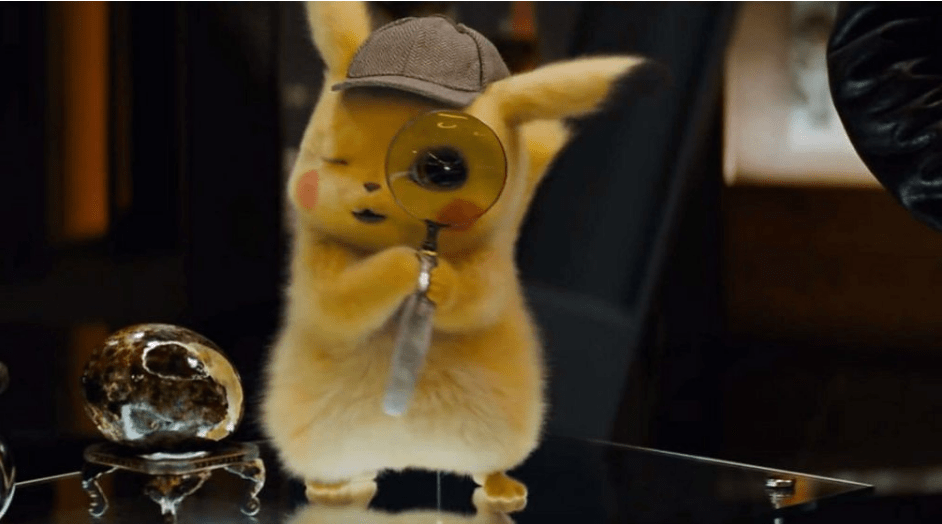
This scene even if uses realistic lighting and simulation, visually looks a bit uncanny and you can clearly differentiate the CGI from the actual footage.
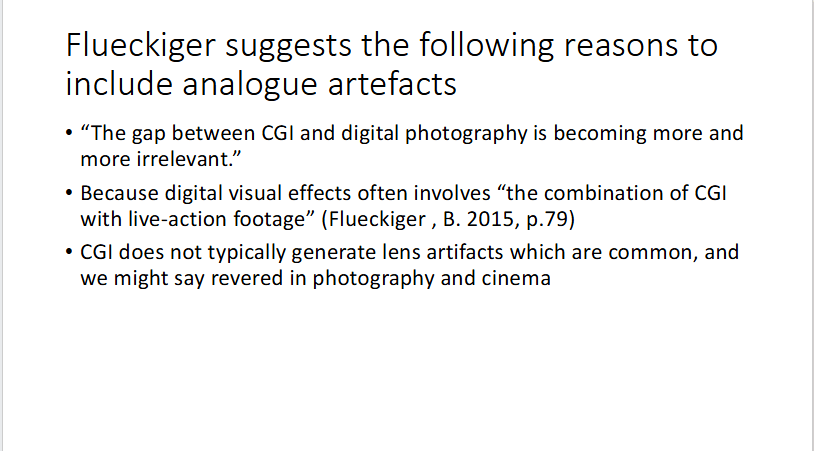
Lastly we task about analog artifacts in VFX:
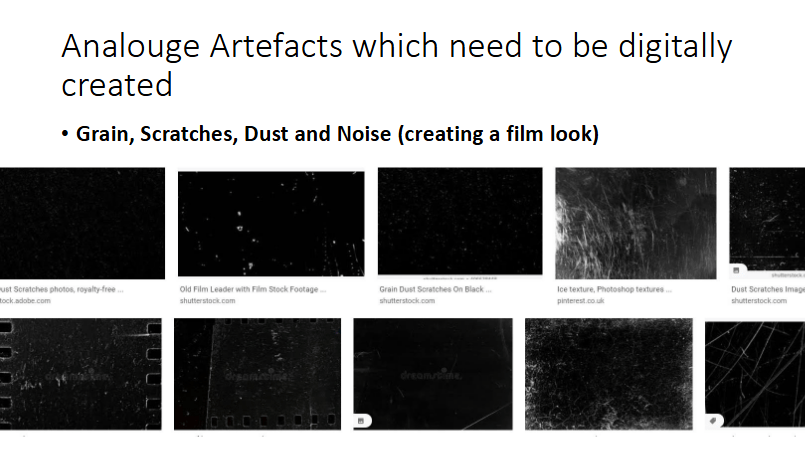
In VFX, an analog artifact refers to imperfections or distortions that originate from the original analog capture process of film or video, such as scratches, film grain, or static on videotape. These artifacts are either faithfully reproduced in digital effects to give a vintage look or are digitally created to mimic the authentic feel of old film and analog video.
These are some examples from the slides in class:
Write a post on a type of Digital Photorealism
This week’s homework consolidate activity asks you to please write a written post on photorealism in VFX. In class, we looked at two dominant types or trends of photorealism in VFX.
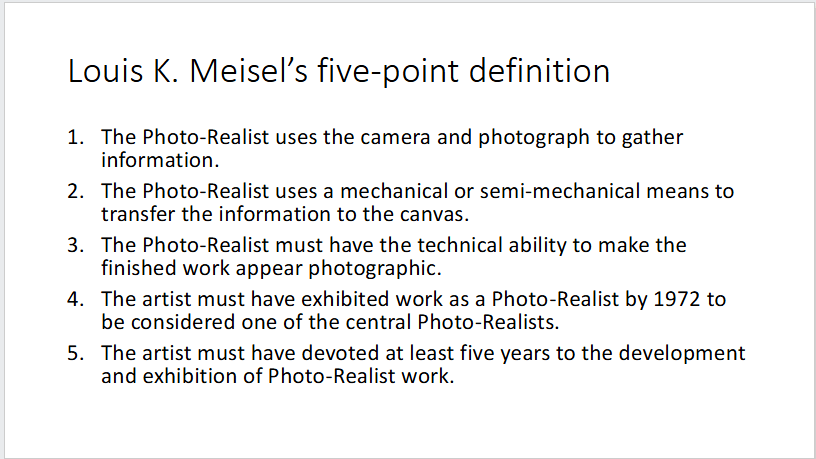
Whilst you can write generally on what you think Photorealism in VFX is, you may wish to consider the different types of Photorealism that we looked at in class. You might want to develop a set of bullet points/definitions, as we saw with Meisel’s five-point definition of photorealism in painting example. You may choose to focus on Photorealism in one area, either ‘Composite Photorealism’ or ‘Computer Generated Photorealism’ (3D Render). You could describe how you think Photorealism works and is constructed for one of these scenarios:
- Photorealism in composites
- Photorealism in CG renders
Visual examples:
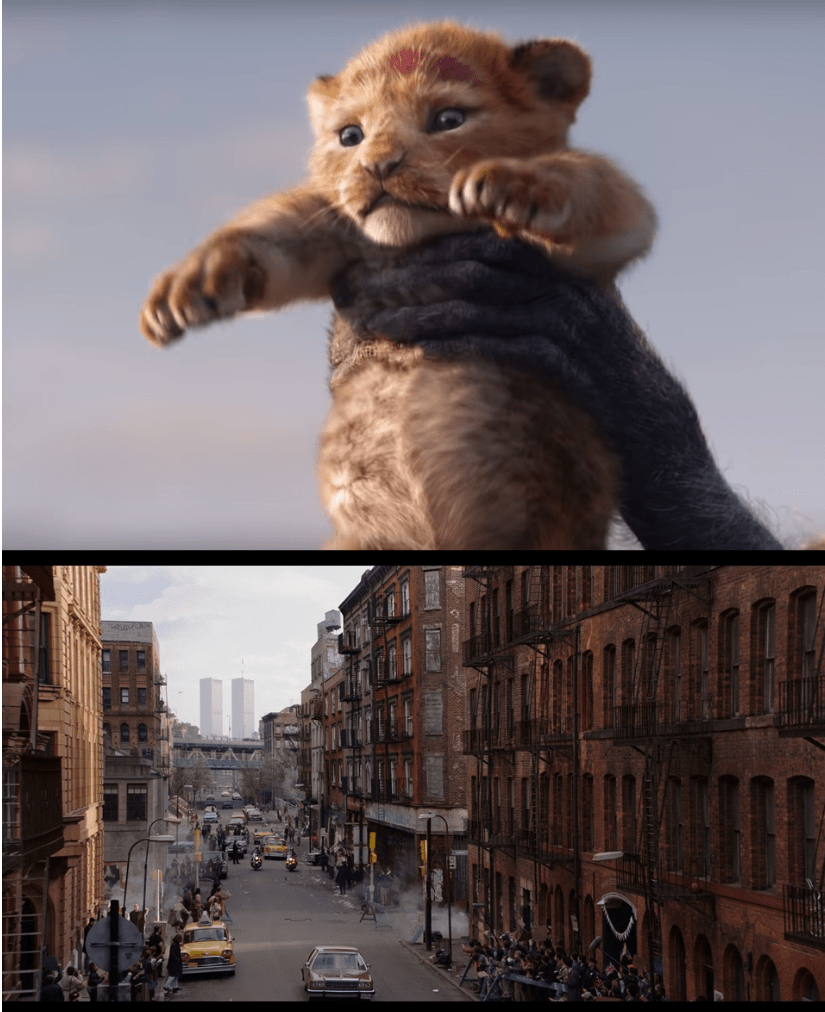
In this post I am going to write about the general definition of photorealism in VFX, and I am going to focus on describing how photorealism works and is constructed in composites.
To begin with, photorealism in VFX is the creation of computer generated imagery and effects that look indistinguishable from real footage, producing visual effects so realistic that they blend with live action shots, fooling the viewer into believing that the CG elements are part of the real scene. In this case I am going to be describing how I think photorealism works in a composite.
Photorealism in compositing is blending various elements to create a final image that looks indistinguishable from the real world photography, to achieve this, lighting consistency is essential and CG elements must match the direction, intensity, and detail of the light in the real footage. Good shadow matching and reflections are also important to add objects into the scene naturally. Another important point is the camera integration that ensures the virtual camera settings match the real one, creating a proper perspective. Techniques such as camera tracking help achieve this, we also have colour grading, contrast, and saturation to ensure that all the elements are matching to the scene, and lastly but not least, we also need analogue artefact noise, grain, or atmospheric effects to match the real footage, as it is very important to include digital characteristics of analogue film in a digitally generated scene.
In conclusion, photorealism in compositing requires attention to light, texture, camera effects, and physical interaction between elements, looking for that perfect balance and believable final result. The main goal is to make all digital components appear as if they were naturally part of the scene and transmit the emotion to the viewer.
End of week 4
Week 5: Digital indexicality and the capture of movement
This week, we will explore how, where, and why indexicality manifests in digital media—particularly through the capture of movement. While visual effects are often regarded as the art of artifice, they can still contain indexical references. CGI characters, as 3D models, are inherently iconic; they bear no direct connection to real actors or people. Yet, does the trend of motion capture technology imbue these digital figures with indexical traces of human movement?
Digital indexicality
Digital indexicality – the capture of movement for computer animation.
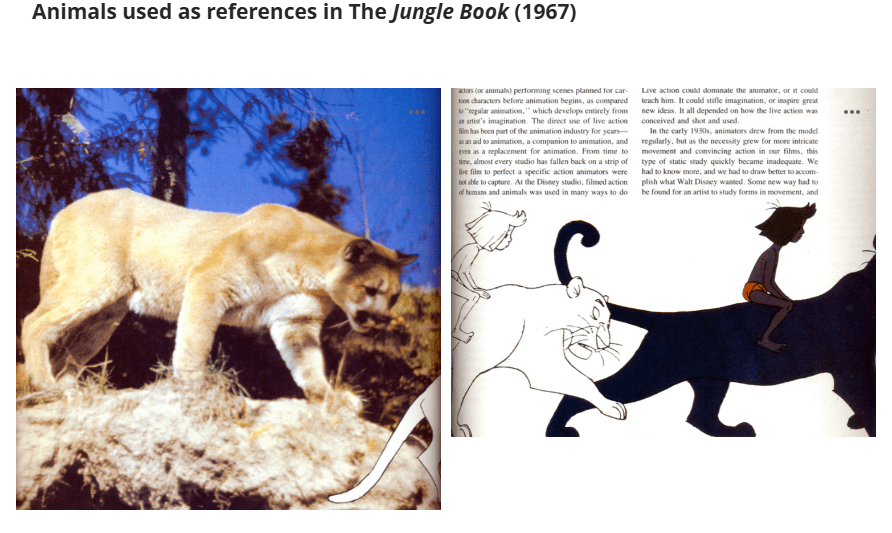
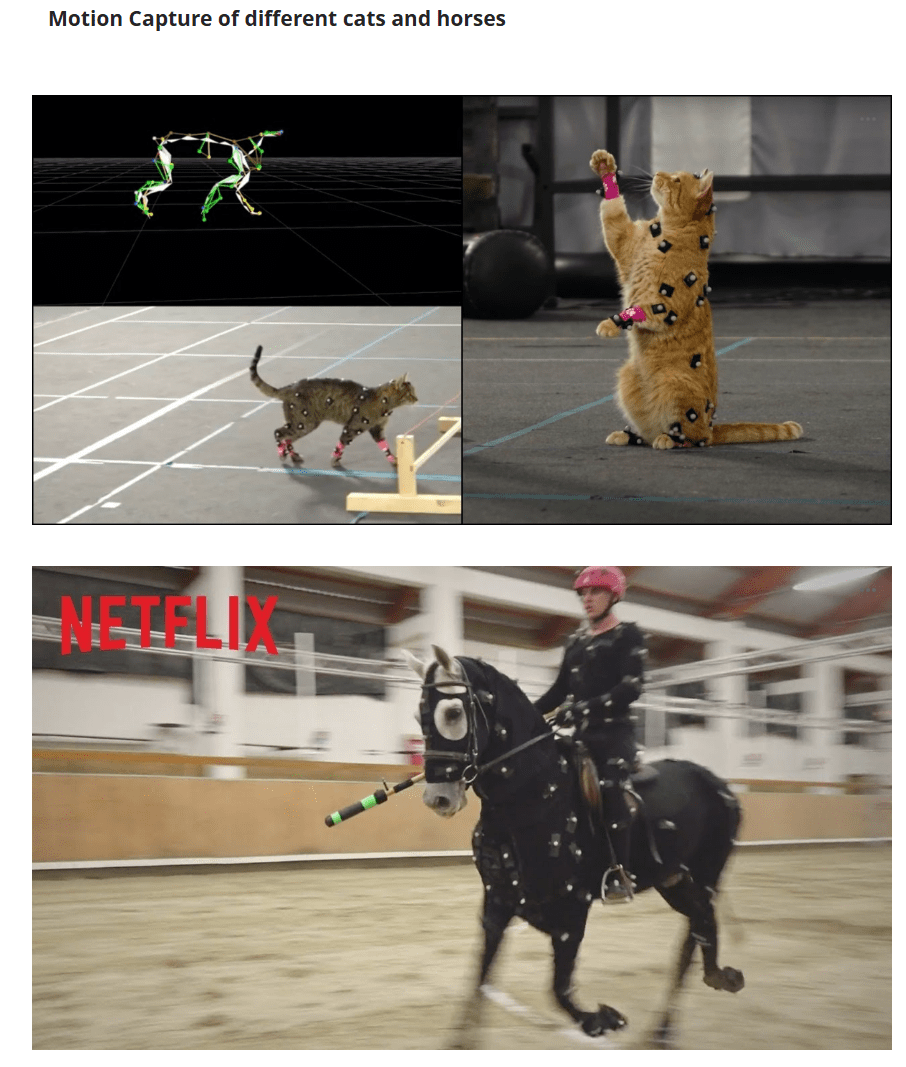
To start with the understanding of the topic we are going to watch the interview with Andy Serkis – war for the planet of the apes (2017).
This is an interview about War for the Planet of the Apes, Andy Serkis discussed playing Caesar’s final journey, emphasizing the film themes of empathy loss and the human condition viewed through an ape’s eyes. He detailed the evolution of performance capture technology, which allowed for more realistic, location based shooting, and his own physical preparation for the role, noting the emotional weight of playing Caesar from birth to maturity.
now we have a better understanding on the topic so we are going to have a look at the slides in class:
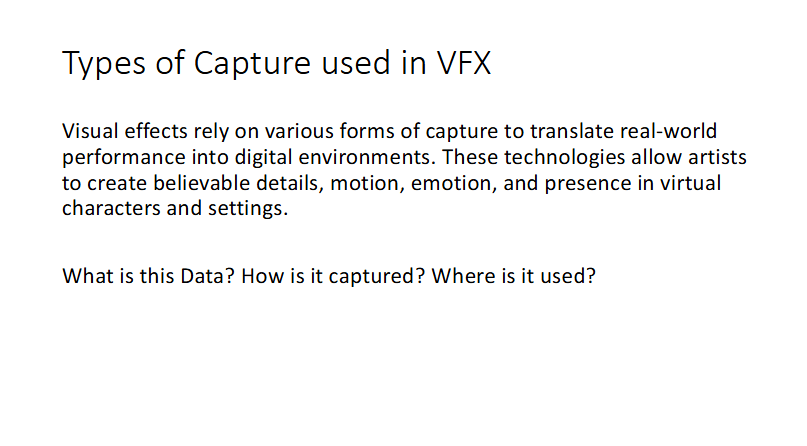
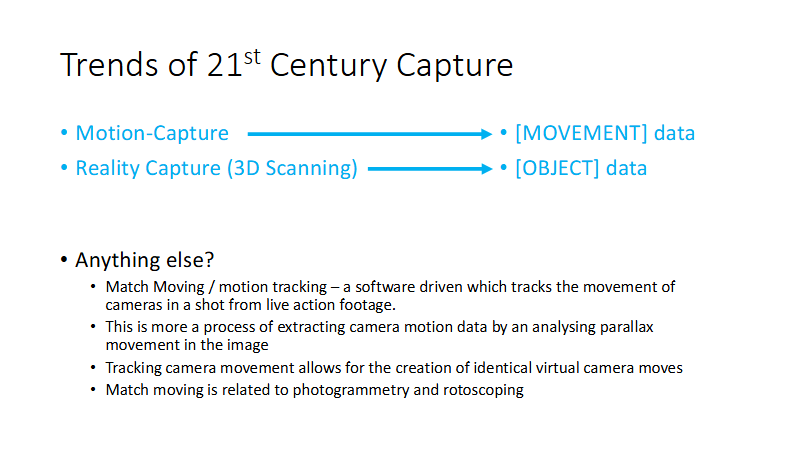
motion capture: used to create realistic and fluid digital characters. And is indexical.
facial capture: used to create realistic expressions. And is indexical
motion tracking: used to digitally analyse movement. And is indexical.
LIDAR scans: used to create precise 3D models and maps. And is iconic.
Photogrammetry: used to create 3d models with greater visuals and details. and is iconic.
Task 1: Compare the types of movement and animation in these animated features
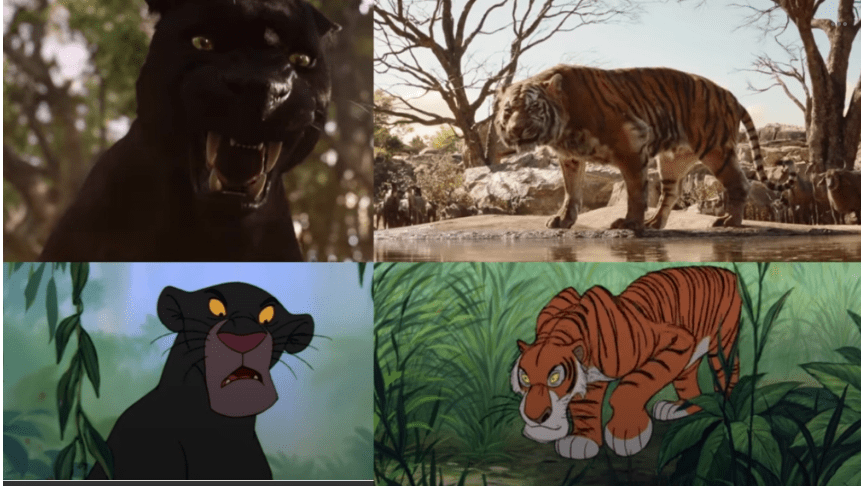
Select scenes from The Jungle Book (1967) and The Jungle Book (2016).
- Identify how movement is created in each version—hand-drawn vs digitally captured.
- Analyse: How do Baloo and Bagheera move differently across versions?
- Is the motion stylised or realistic? How does that affect viewer engagement?
- Which version feels more “alive” or expressive—and why?
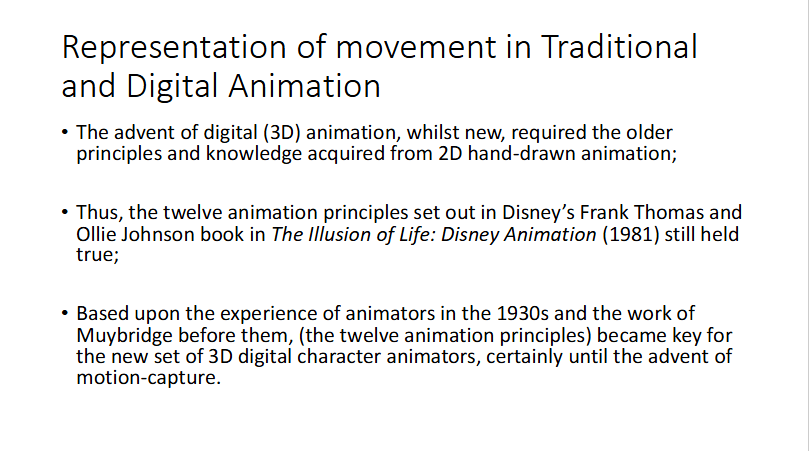
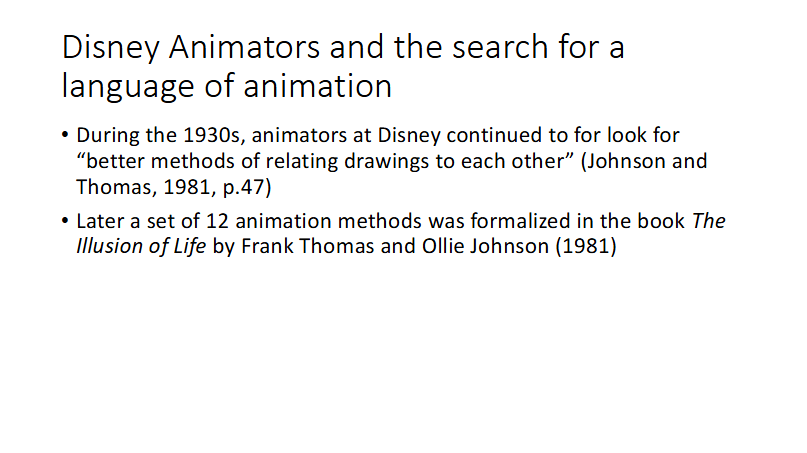
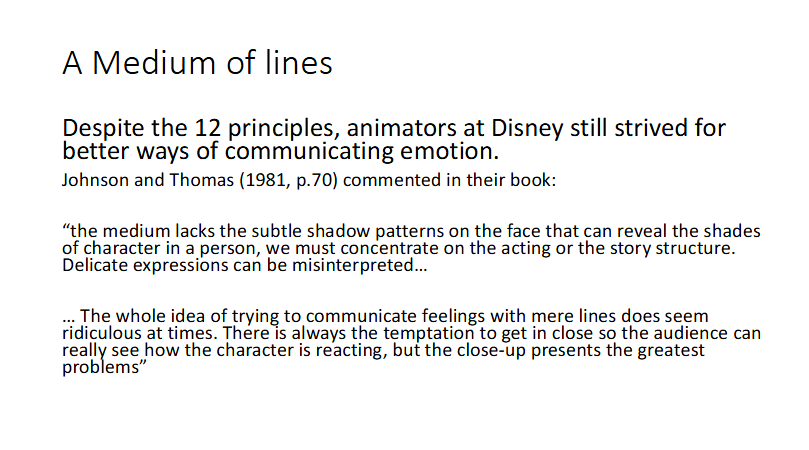
The main difference between the two films is that one is live action and the other is animated. This is especially noticeable in the way the emotions are showed. In the live action version, it is easier to connect with the animals because their emotions are more resembled to reality, thanks realistic CGI used. With the animation, it is harder to capture the same level of emotional expression due to the stylized character, as they are limited by the art style and hand drawn animation techniques.
The live action offers more creative freedom, allowing for a richer storytelling experience, it feels more engaging, who people may find the realistic animals and modern visual effects more attractive. While the original animated film still has its good points, its older style might not be compatible with audience today..
In conclusion, the live action film feels much more dynamic, because the animations is based in real movement, this version allows for a modern way to enjoy the story, making it feel more relatable.
End of week 5
Week 6: Reality capture (LIDAR) and VFX
In the second part of two lectures and seminars. This week we will examine if, how and where indexicality can be found in the digital, specifically through a look at the the practice and tech of 3D scanning. Visual effects is sometimes seen as the art of artifice, but contained within it are indexical references. CGI characters as 3D models are typically purely iconic, having little direct connection to real people, but now with Reality Capture they can be formed from detailed scans of actors. Similarly scans can be made of buildings and places which augment VFX production as well as documenting them to create virtual replicas.
The evolution of 3D systems, from representation to Reality Capture (3D scanning) and VFX
Task 1: Explore three significant types of 3D scanning used in VFX and document one real-world project example for each.
Your Task: Find one example project for each of the following scanning methods:
- Depth-Based Scanning
- Laser Scanning (LiDAR)
- Photogrammetry
For each scanning type: Find a real-world project online that uses the method
- Save one image from the project
- Upload the image to your sketchbook webpage
- Add a caption below each image: Project Title (bold or heading style) One-line description of what the project does
Your goal is to showcase one example project for each primary type of 3D scanning. For each, include an image and a short caption on your sketchbook page.
Depth-based scanning
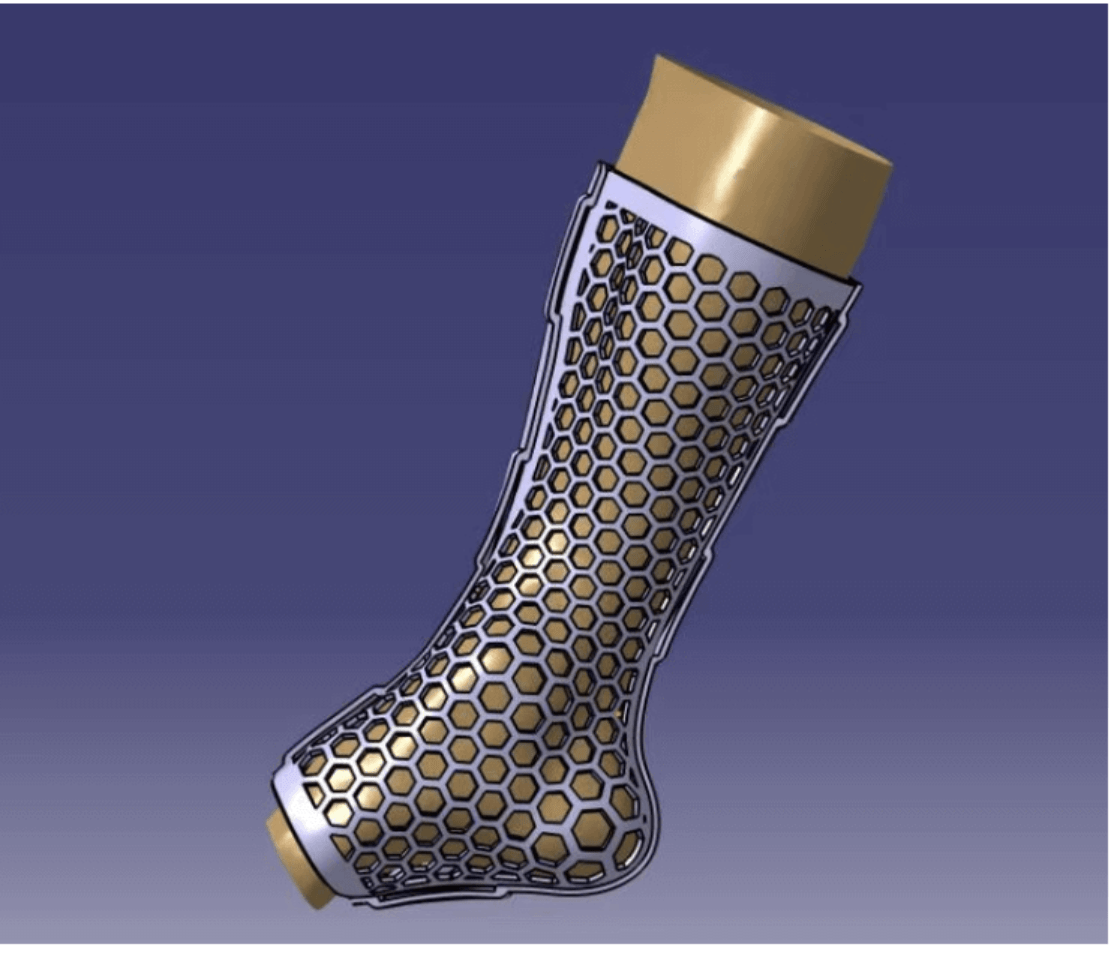
in this example the patient’s Achilles tendon was ruptured when playing basketball. After the treatment, the 3D model of his injured leg was captured firstly, and then an orthopedic gear was made through design.
Laser scanning
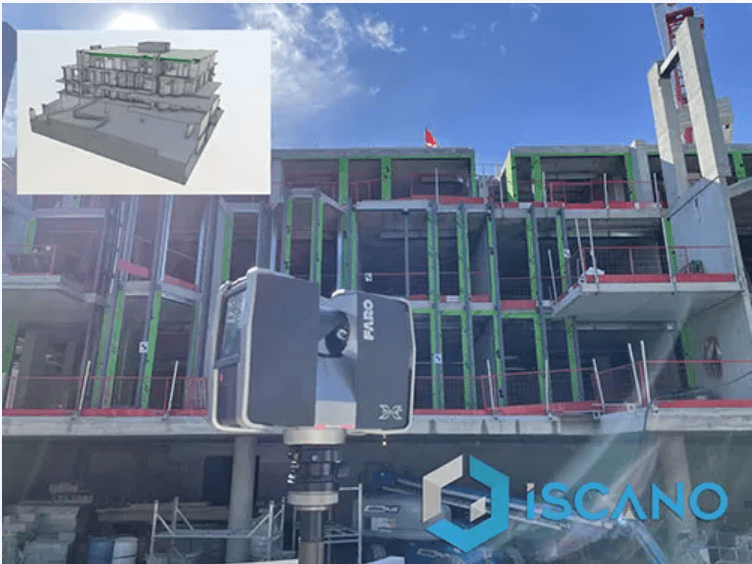
This case study is a mega construction project in downtown New York City. In this case, a team of experts from iScano deployed point cloud data with laser scanning technology to enable successful renovation at many levels of a building complex.
Photogrammetry

It is often useful to have an accurate 3D reconstruction of an accident or crime scene, especially in cases where position, distance, and perspective are important.
LIDAR, captures three-dimensional (3D) spatial data by emitting laser pulses and measuring how long it takes for the light to bounce back after hitting an object. LIDAR creates a “point cloud” that represents the surface of objects, giving detailed measurements of shape, size, and depth. Unlike traditional photography, LIDAR doesn’t capture colors or textures, but instead focuses on mapping the precise location of objects in space.
What makes the laser scans visually and technically distinct?
A laser scan doesn’t capture light in the way a camera does. It generates 3D data by sending laser beams out and measuring the time it takes for those beams to return after hitting an object. This data forms a point cloud, which is essentially a collection of 3D coordinates that represent the surfaces of objects.
What architectural or spatial features are highlighted that you wouldn’t usually notice?
Cracks, Deformations, and Warping. Surface Roughness.
What is the Creative or Emotional Impact? How does this method change your perception of the city or its history?
The creative and emotional impact of LIDAR technology on our perception of a city or its history is profound, as it offers a radically different way to experience and engage with space, it has the potential to reshape how we see, and emotionally connect to urban environments.
For this week’s homework / consolidate activity I would like you to write 250-word case study on Reality Capture.
What is a Case Study?
“A case study is an in-depth study of a single example. If offers a chance to analyse one case – such as a single person, group, company event or geographical area – as an example of a general type. It allows you to look at something in much more detail than is typical of other research methods.” (Cottrell, 2019, p.370)
Case studies generally cover the following:
- They look in detail at a situation, technology or company
- Give real-world examples of application / impact
- Draw details of a situation from real life
- Show examples of good and bad practice
- Illustrate how something works and break-down what it is
- Throw new light on a topic
Through the case study try to address the following:
What is Reality Capture, how does it work, and where is it used?
In this post I am going to do a case study on ScanLab projects.
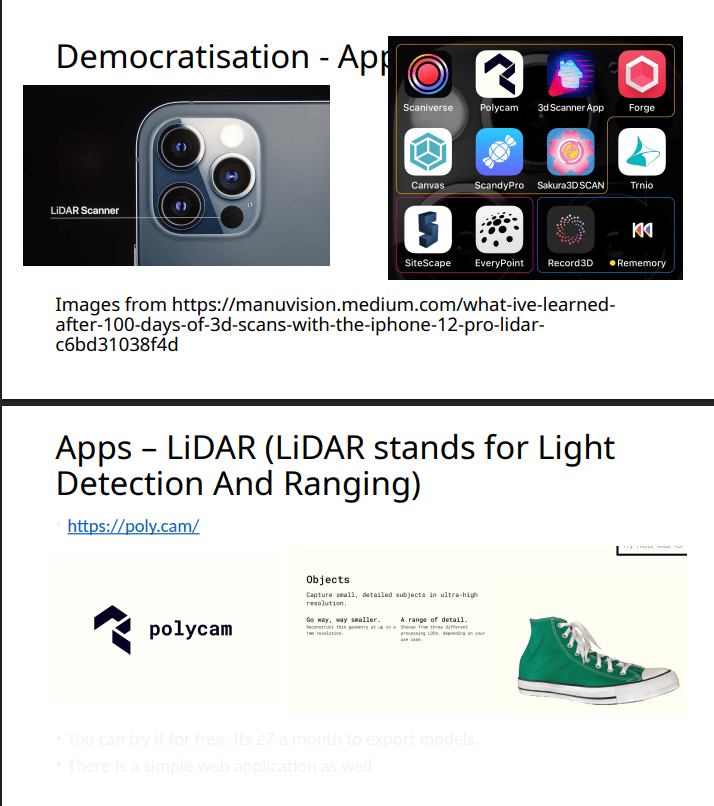
Recently, reality capture technology has become more accessible, with even smartphones now capable of performing capture techniques such as basic photogrammetry. There are many companies working in the reality capture field, but today I am going to write about ScanLAB Projects, a company whose speciality is using LiDAR scanners to capture 3D models of real world environments, ranging from small buildings to entire cities. ScanLAB goes beyond images, they create immersive video content using the 3D environments they map. An example of this is their contribution to the documentary series “Ancient Invisible Cities”, produced for BBC. In addition to the programme, ScanLAB released different 360 degree videos allowing viewers to explore historic sites in Cairo, Istanbul, and so on. These videos allow people a chance to understand the design and atmosphere of these locations from the comfort of their houses. The technique makes reality capture a useful tool, since many old structures are gradually eroding due to weather and time. By creating maps of these places, future researchers can create digital records, allowing the preservation of the structure through the passage of time. LiDAR scan works by using laser light to measure distances and create detailed 3D maps of the environment, and LiDAR technology is improving every year, allowing for more complex scans and projects.
In conclusion, the future of LiDAR is incredibly bright since, as technology improves, the cost becomes cheaper, and we will see it integrated into more industries, from urban planning and infrastructure to environmental conservation and historical preservation. The precision to capture data in hard conditions will continue to make it an indispensable tool for research.
End of week 6
Week 7: Reality Capture (Photogrammetry) and VFX
This week, we continue to look at the variety of tends in 3D Scanning and Digital Replicas (Facsimiles). Photogrammetry, as a scanning method. will be covered, along with the associated theories of realism.
What is Photogrammetry?
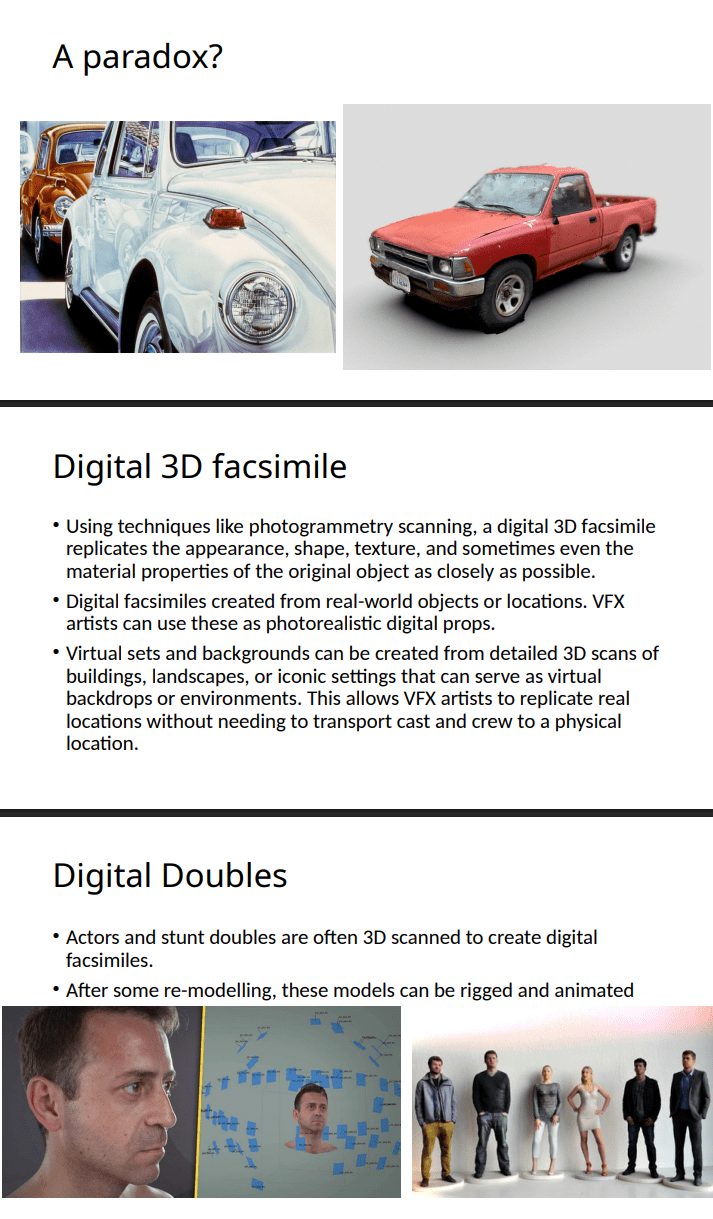
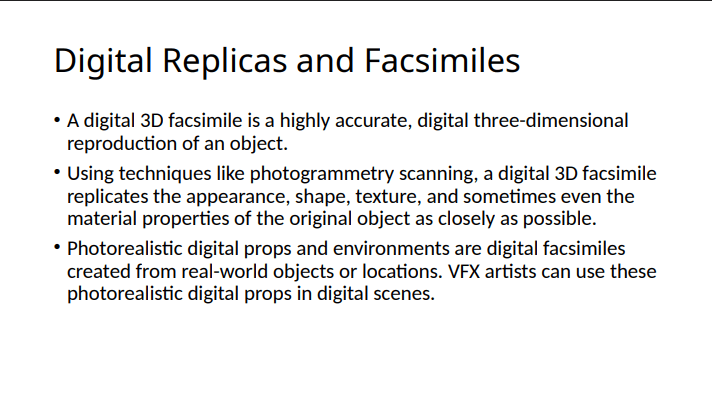
Photogrammetry is a 3D scanning technique for creating 3D digital models from photographs by stitching multiple overlapping photos taken from different angles. Photogrammetry software analyses these images to reconstruct the shape and texture of real-world objects or scenes on the computer.
To begin with we are going to watch a video as a preparation to this topic:
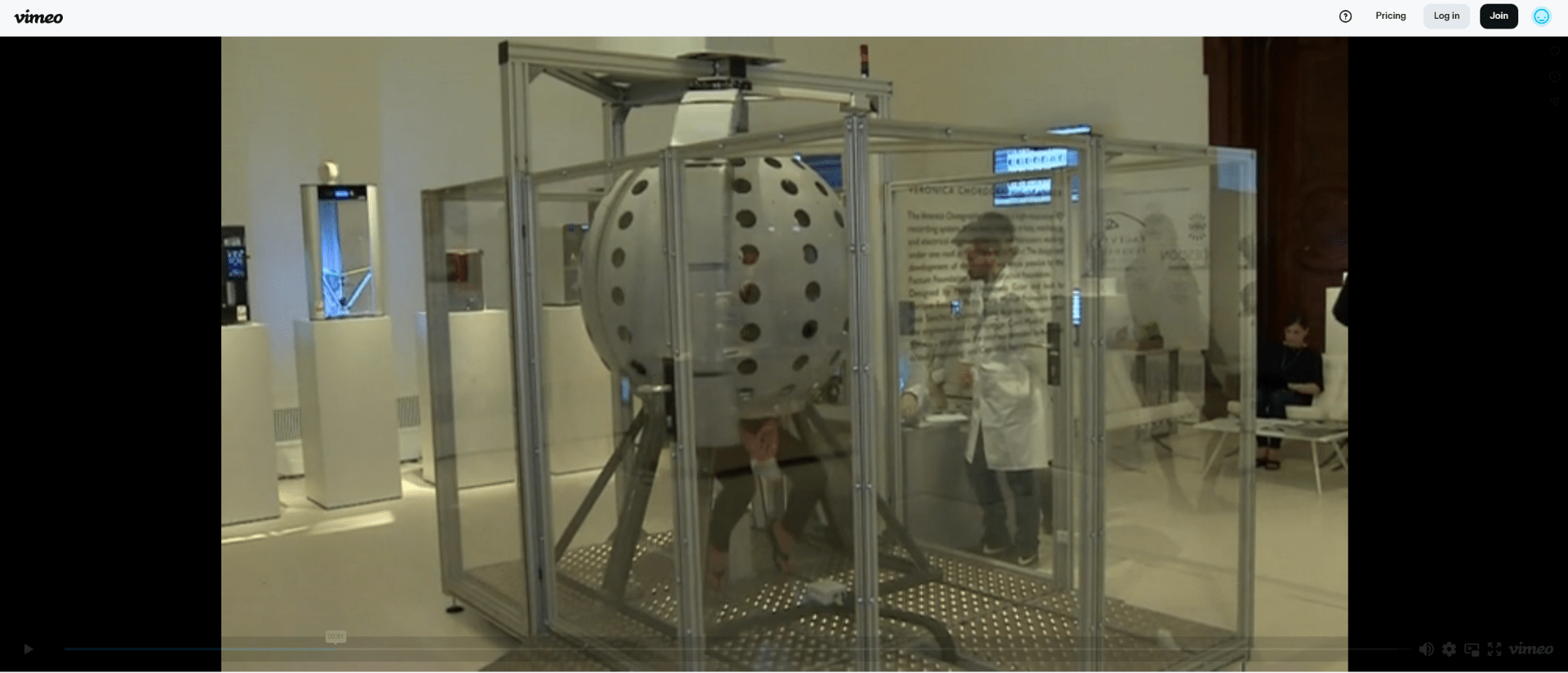
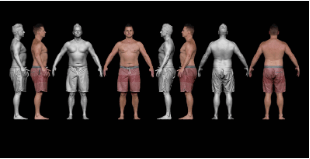
the video talks about the Veronica Scanner: Live 3D Portraiture is at the Royal Academy in London, The Veronica Scanner is a project by Factum Foundation, works by generating a feature map through aligning fixed points from many different high-resolution images of a subject taken with commercially available cameras. The points to be aligned are extracted from the colour data of the photographs.
After watching and analysing the video now I have a better understanding on the matter, so I can now look at the slides we carefully watched in class.
Here are some of the most important points:
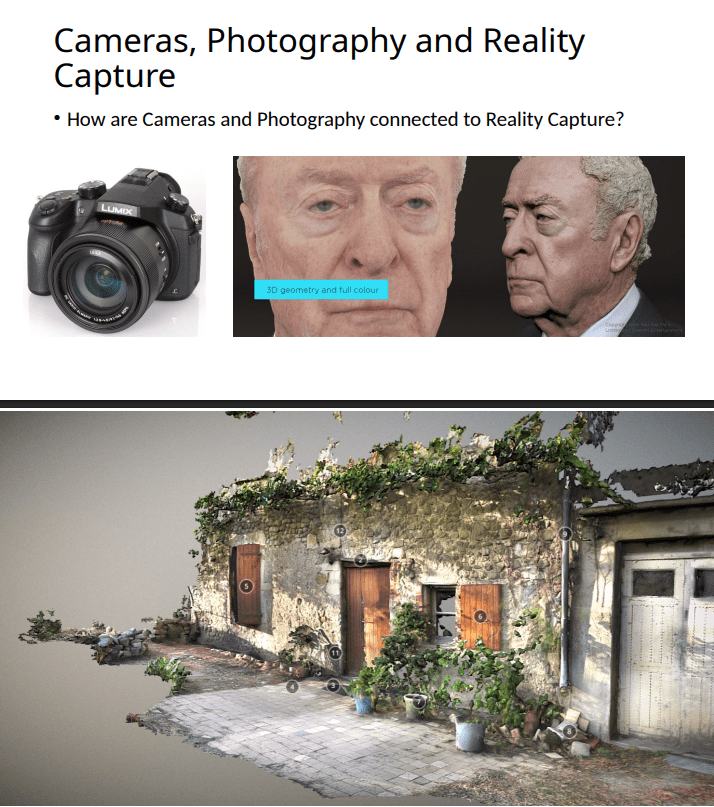
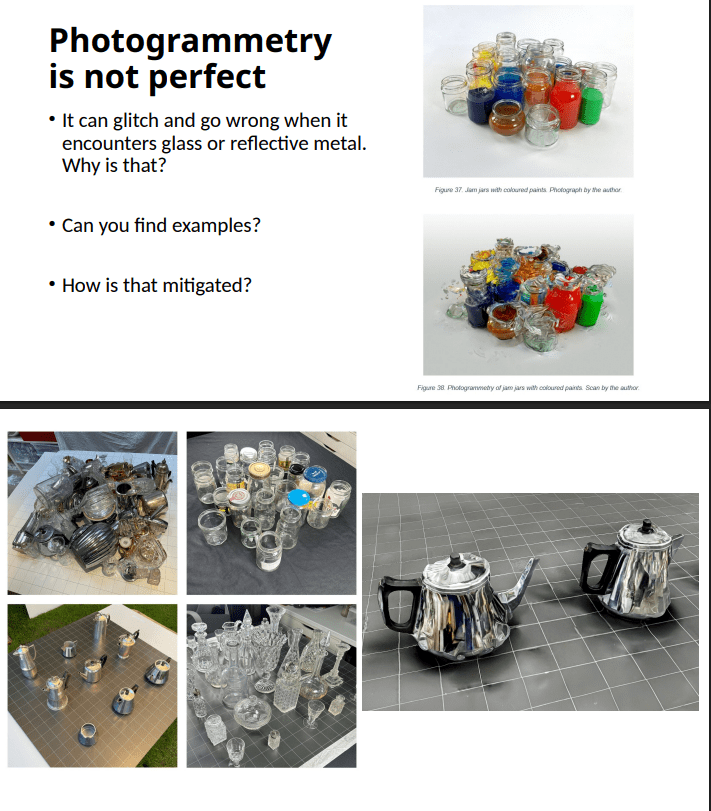
Task 1: Let’s start by evaluating some Photogrammetry 3D scans
Critically assess the quality and usefulness of a photogrammetry scan, considering its technical accuracy, visual realism, and potential application in visual effects workflows.
Have a look at this example below:
Compare two scans: one high-quality and one with visible flaws.
Discuss how errors affect believability and how they could be corrected.
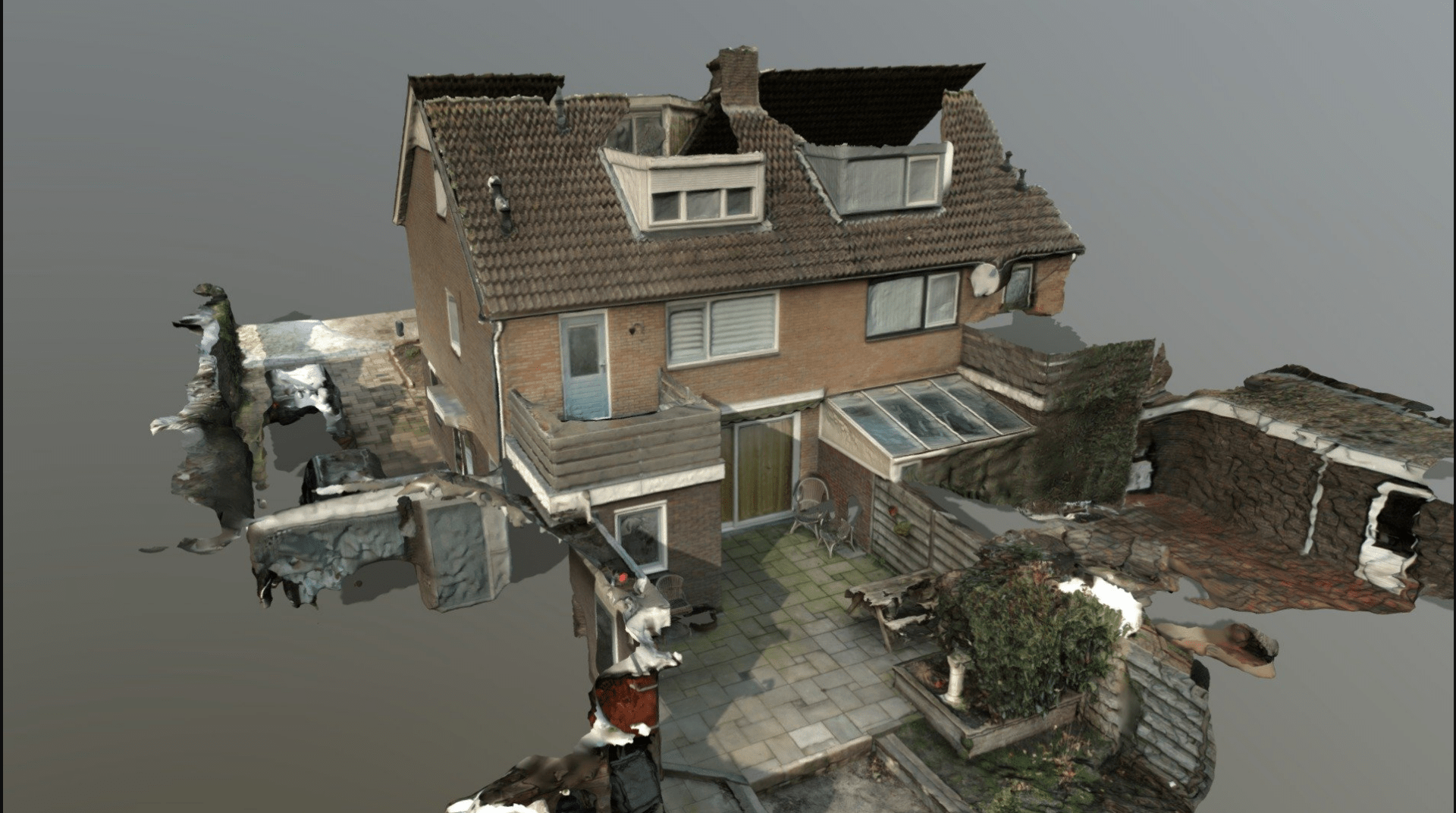
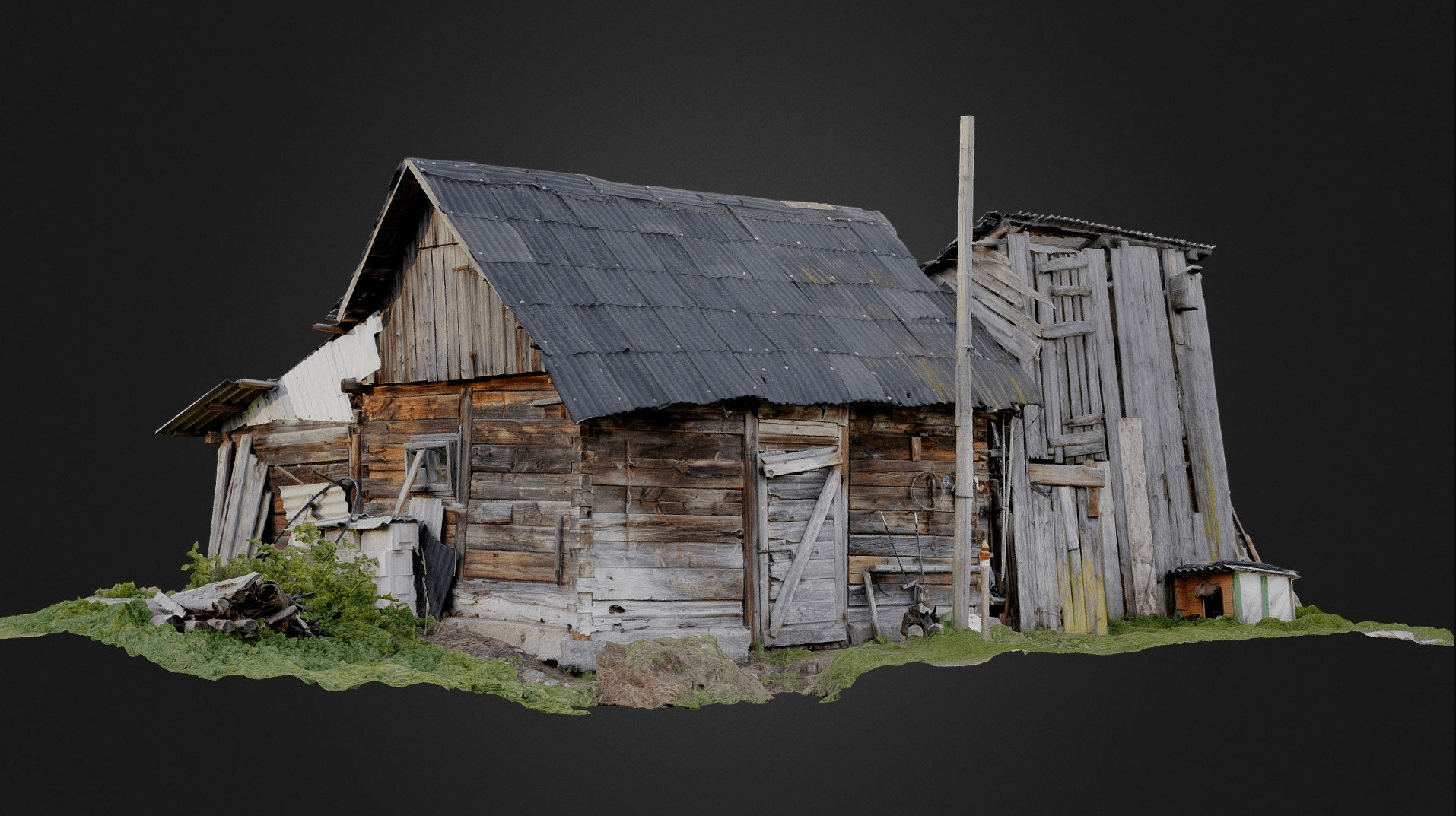
The first image has visual artifacts it has a certain degree of detail , the quality of the texture is low, there are errors and the scan is not completely clean, it resembles the original structure up to some point, but it can be used a test 3D model, to be completely usable it should be texture cleaned up and it needs a better retopology. this scan reveals even the smallest details compared to photography, because is mostly three dimensional. The second scan is has better visuals and detail, the texture is very hight quality and it resembles to the original structure, it is production ready, it shown better detail as the first compared to photography because is three dimensional.
Look for different uses of Photogrammetry scanning
- Find four photogrammetry examples.
- Find two related to VFX and two related to cultural heritage,
- Is there anything the scan can tell you about the subject that a photograph may not?
- How does the photogrammetry in these projects help VFX or other industry workflows and practices? Whats the purpose of these scans?
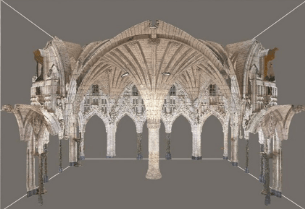

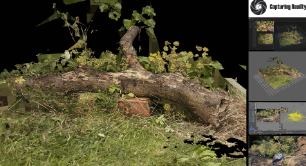
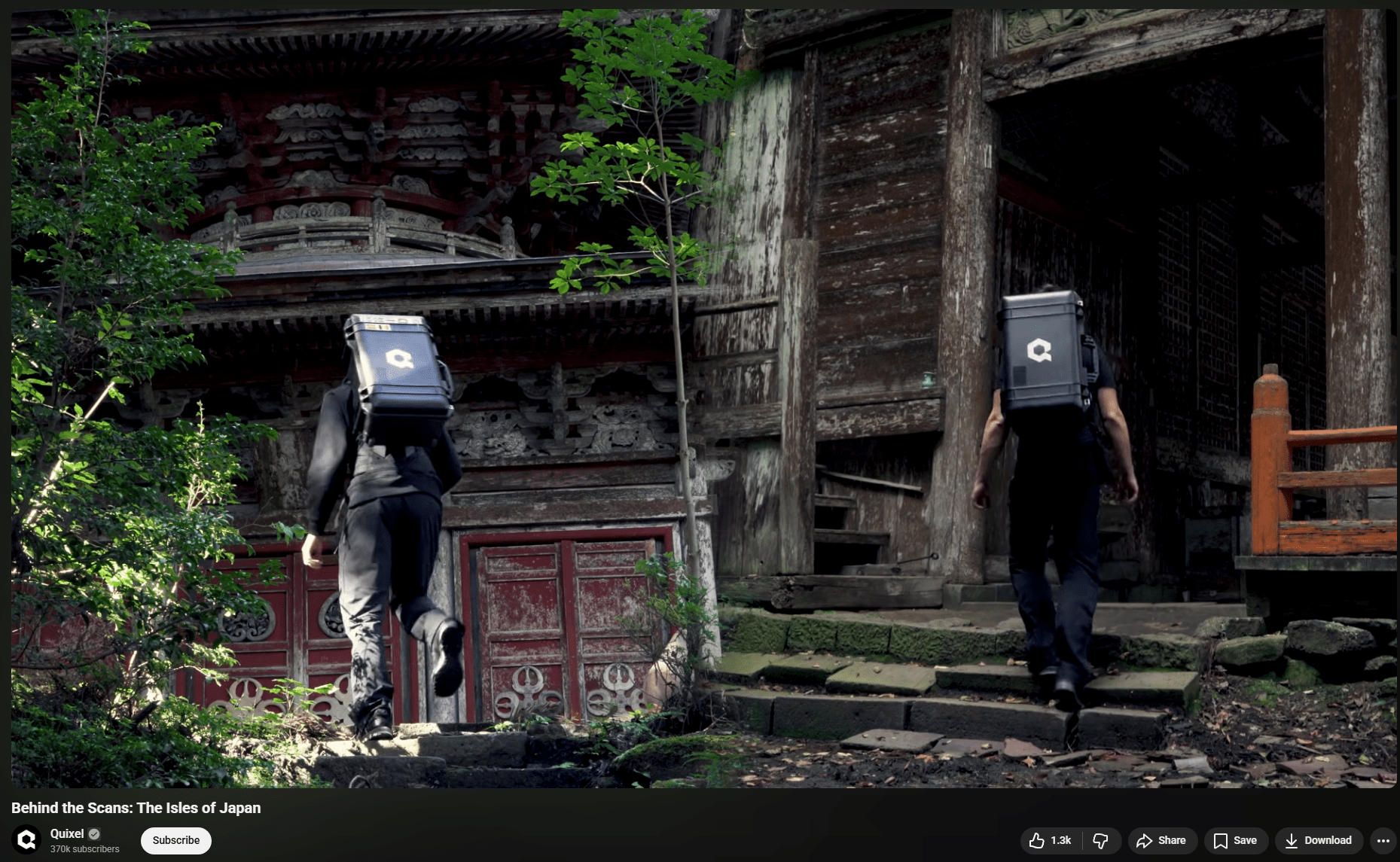
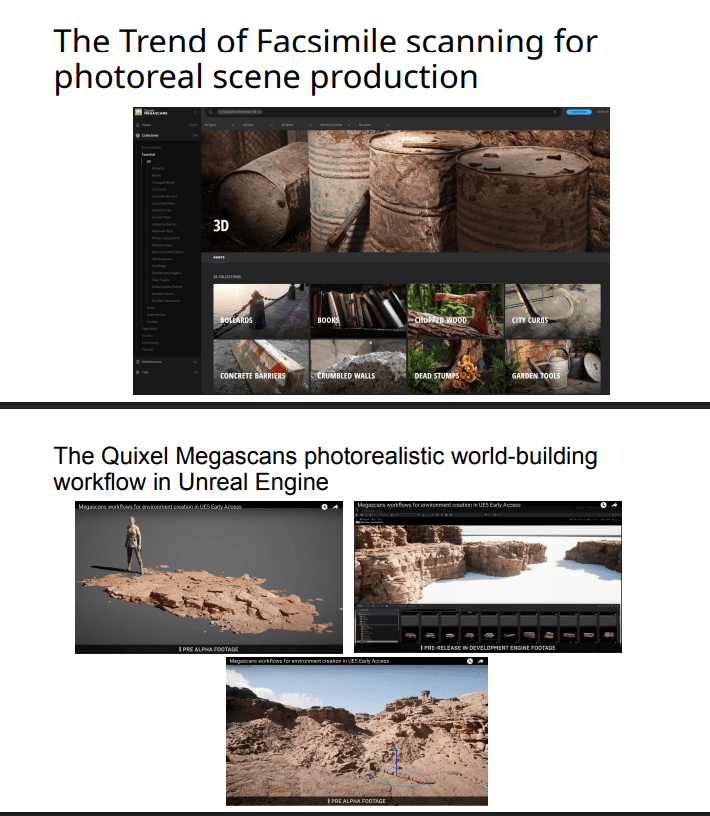
Quixel Megascans is a large library of high-quality, 2D and 3D assets like textures and 3D models created using photogrammetry. The company behind it, Quixel, was acquired by Epic Games, and the Megascans library is now accessible for free to Unreal Engine users. These assets are used by game developers, filmmakers, and visualization specialists to create realistic environments for their projects.
The Digital Michelangelo Project (1997–2001), led by Marc Levoy at Stanford University, aimed to digitally capture Michelangelo’s sculptures using 3D scanning technology. It focused on high-resolution preservation and research for cultural heritage. High-resolution digital photography captured textures, and custom software merged scans into detailed 3D models. The goal was to preserve the sculptures in digital form to protect them from environmental damage and wear. Key objectives included Digital Preservation of Michelangelo’s works, Advancing 3D scanning technology, with a focus on large-scale, high-accuracy scanning. Providing wider access for scholars and the public through digital models and testing scanning technologies for use in cultural heritage conservation.
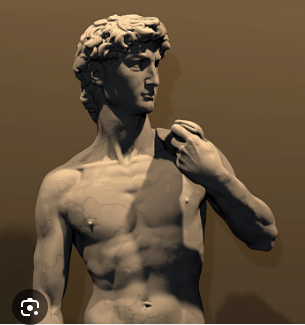
Reflect: Why was this project significant for digital heritage and 3D scanning? What challenges might the team have faced?
The Digital Michelangelo Project was a ground-breaking initiative that laid the foundation for future digital heritage efforts and 3D scanning applications. Despite the numerous challenges ranging from technical limitations in early scanning tools to dealing with the intricate nature of the sculptures the project significantly advanced the preservation and accessibility of cultural treasures.
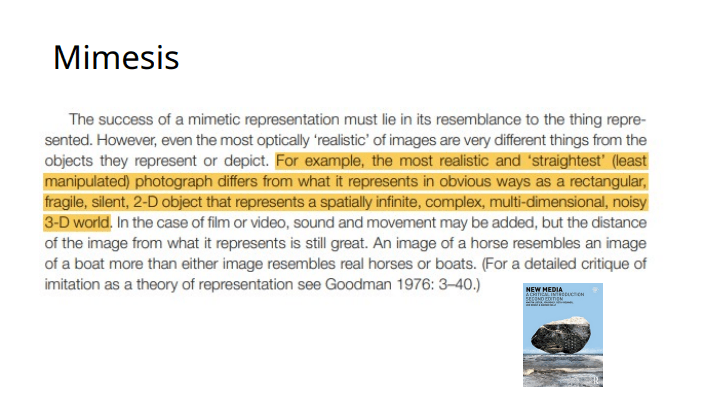
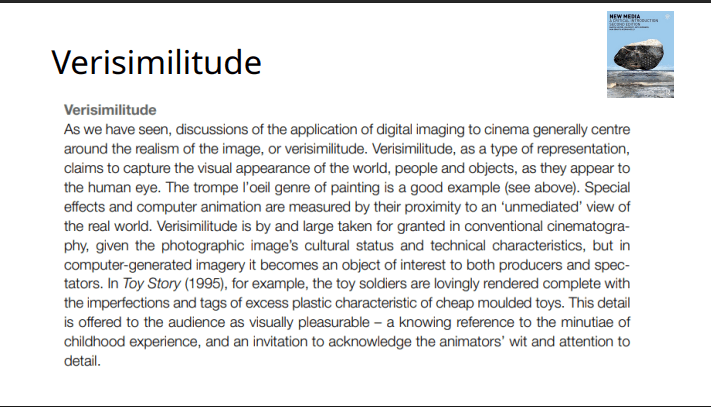
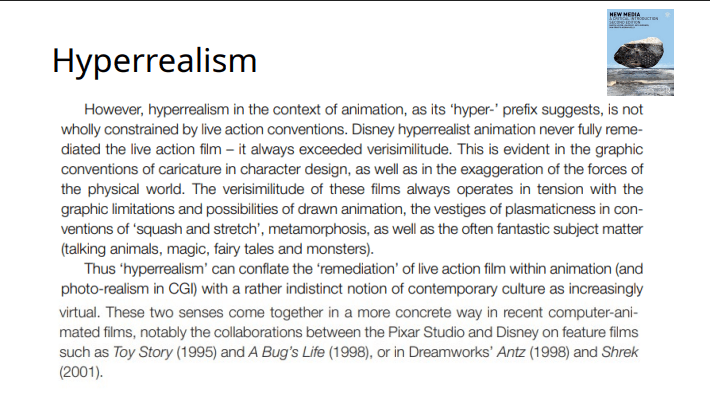
Theory Task: What are the aesthetic definitions of Mimesis, Verisimilitude, and Hyperrealism? What do these terms mean?
On your pages, demonstrate you understand key theoretical ideas from the lecture and apply them to Reality Capture.
Review the Lecture Slides
- Look at the slides on Mimesis, Verisimilitude, and Hyperrealism (Slides 45–74).
- Pay attention to definitions, examples, and differences between these concepts.
Define the Terms
On your digital sketchbook, write short definitions (2–3 sentences each) for:
- Mimesis
- Verisimilitude
- Hyperrealism
Find Examples from the Slides
Choose one image from the lecture slides and one of your own that illustrates each concept.
Add these images to your sketchbook and label them.
Think about how these ideas relate to photogrammetry and digital facsimiles? Does a scan aim for mimesis? Does it achieve verisimilitude? Could it ever be hyperreal?
Week 8: Simulacra, Simulation and the Hyperreal
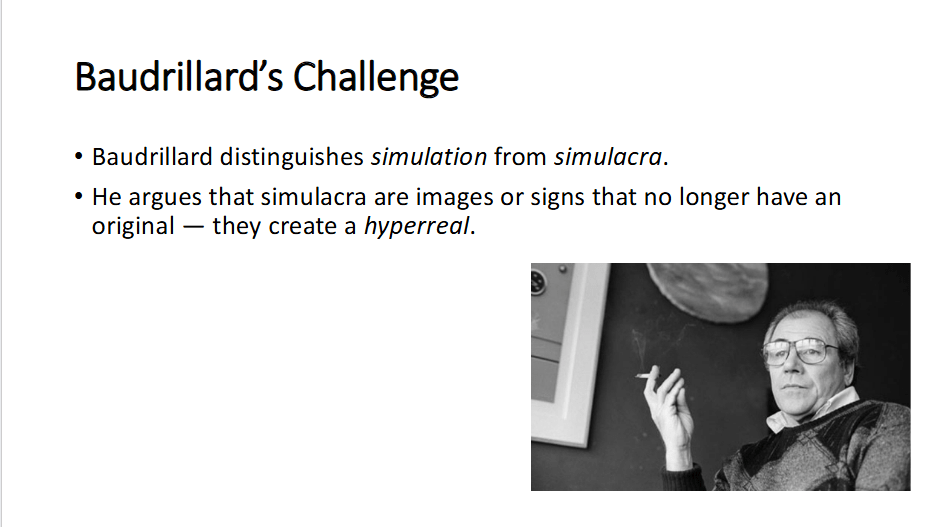
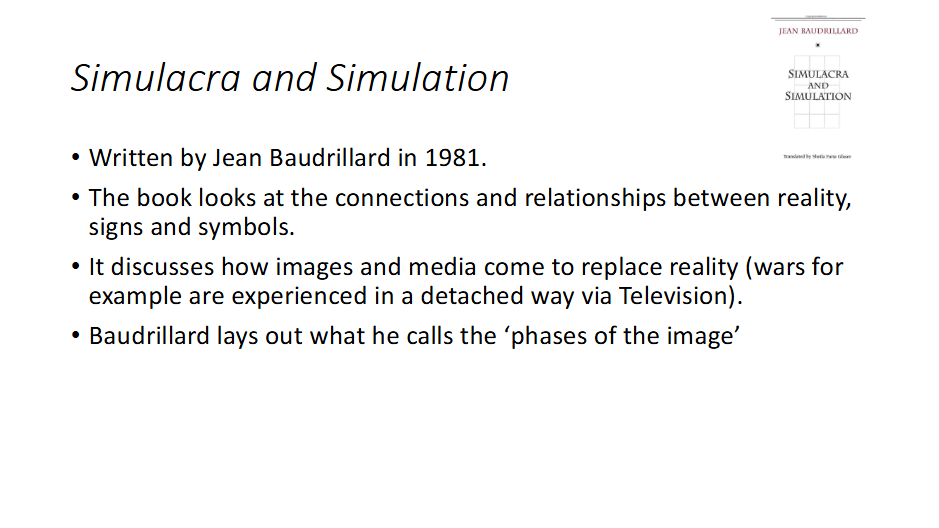
This week, we will explore the differences between simulacra and simulation, focusing on the writings and theories of philosopher Jean Baudrillard. Baudrillard argues that simulacra are images without an original, what he terms the hyperreal, whereas a simulation seeks to imitate a real-world scene or process.
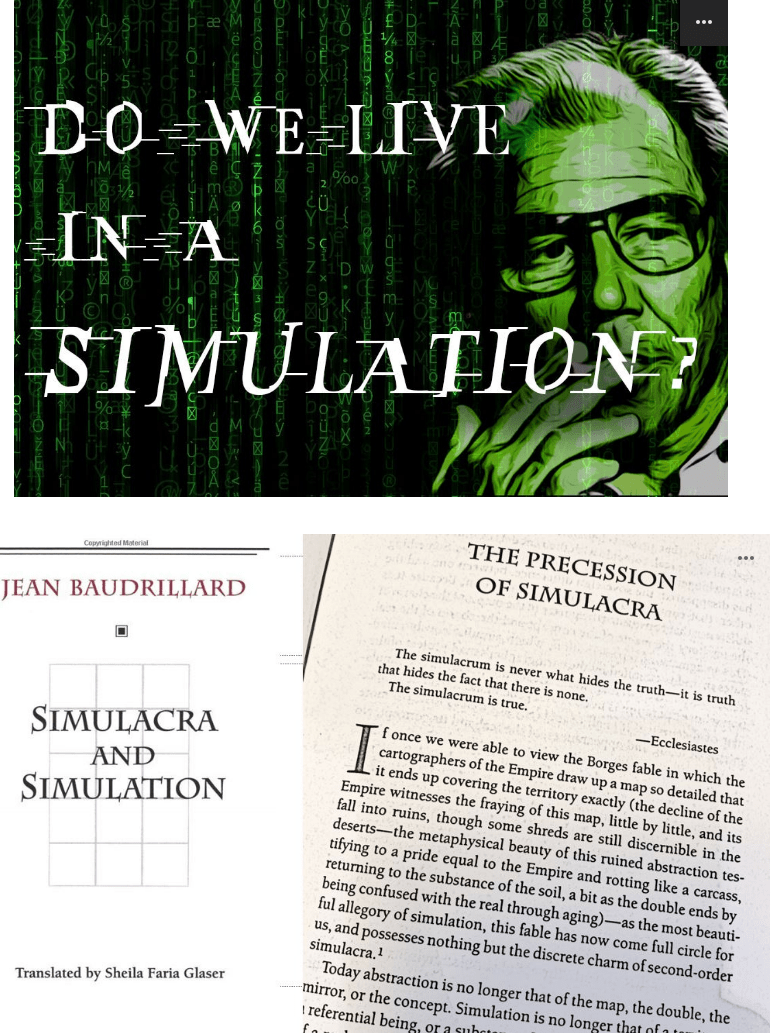
To start with we are going to watch the youtube video called “What did Baudrillard think avout the Matrix?”
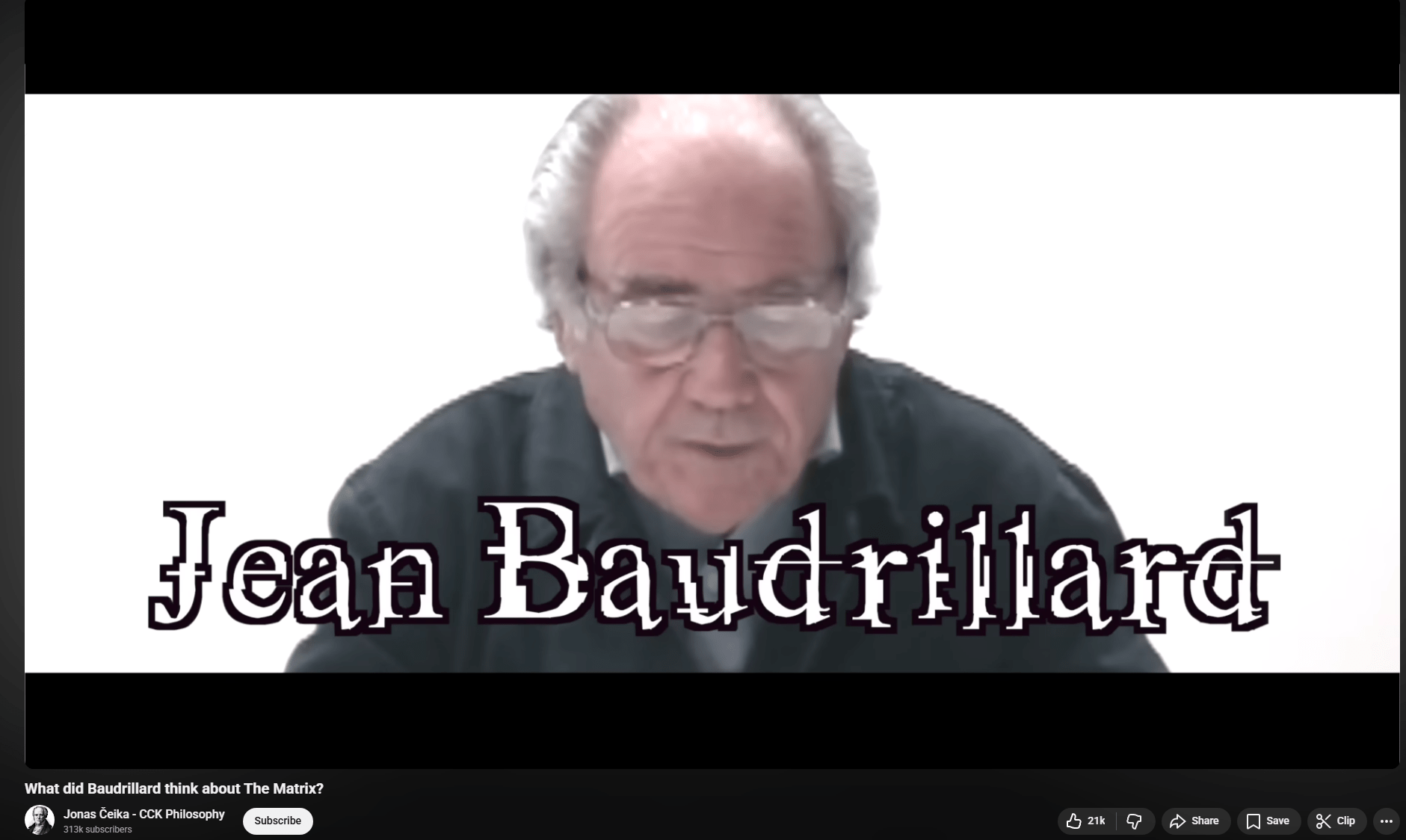
Jean did not like The Matrix, as he believed the film fundamentally misunderstood and misrepresented his ideas on simulacra and simulation. He thought the movie was hypocritical for both criticizing technology and using it for spectacle, and that it failed to portray his view of a system where reality and simulation are indistinguishable. Baudrillard felt the film confused the classical problem of illusion with the postmodern problem of simulation, and that it simply produced a spectacle that was the kind of film the “matrix” itself would make.
After watching the video now we are going to go thought the slides we looked in class and out in the sketchbook the most important.
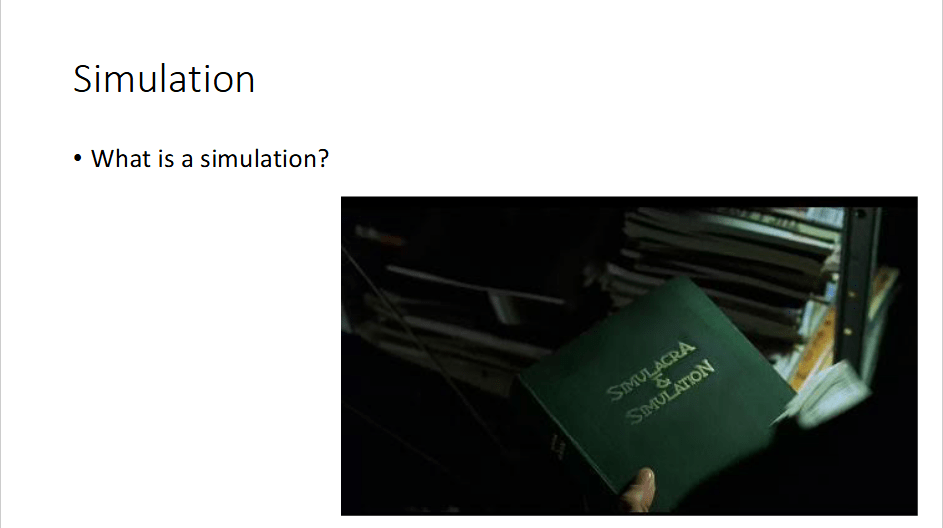
A simulation is a model that imitates a real world process or system.
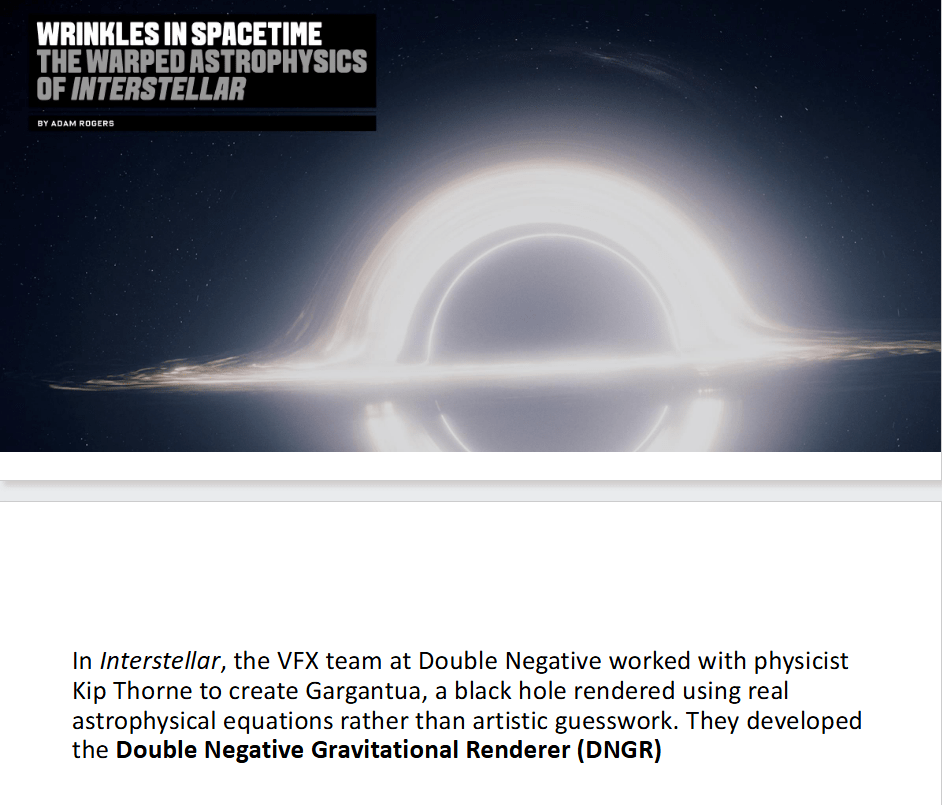
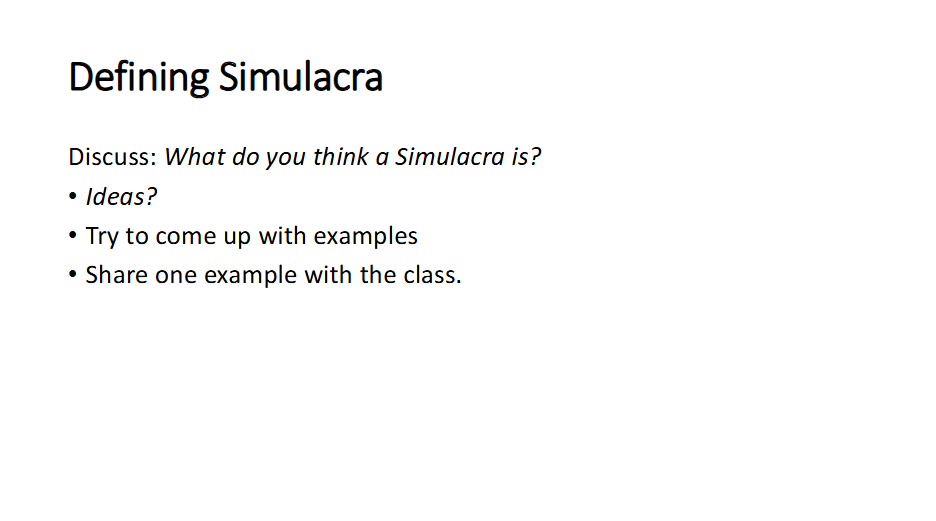
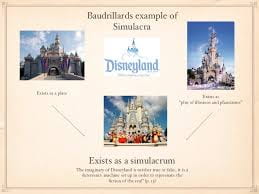
A simulacrum is a representation or imitation of a person or thing that has either lost its connection to the original reality or never had one to begin with.
Here is an examples of simulacra:
In class task: What is the sign-order or Phases of the image
Have a look at the slides below:
Put this slide on your sketchbook page.
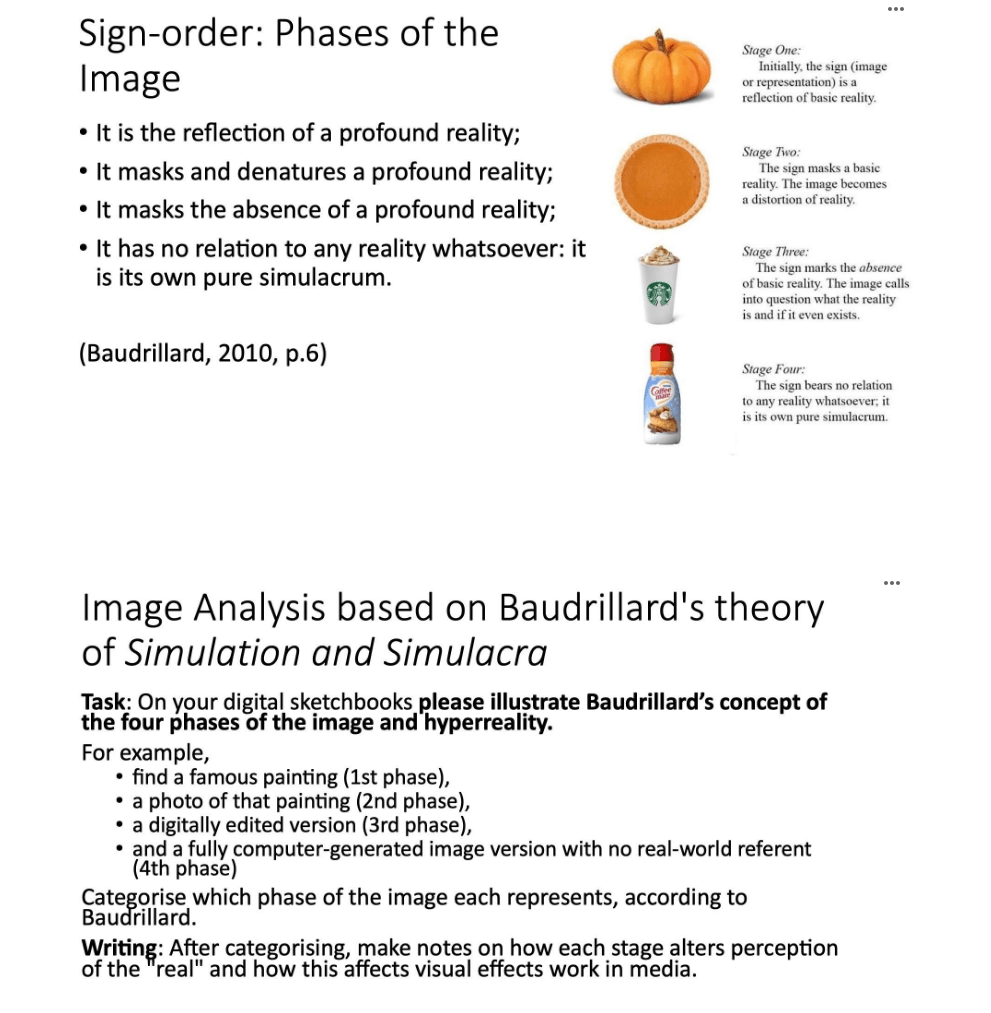
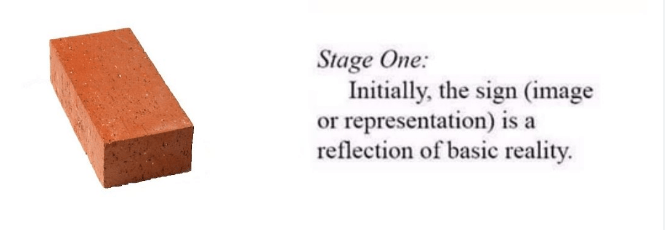
Stage 1:
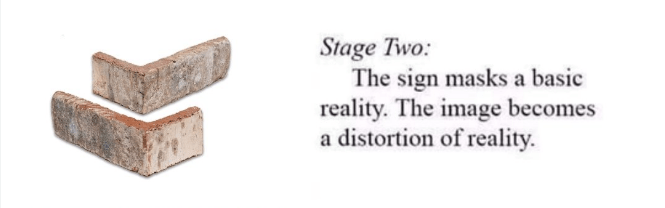
Stage 2:
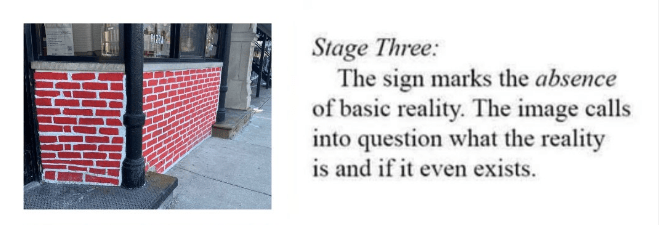
Stage 3:
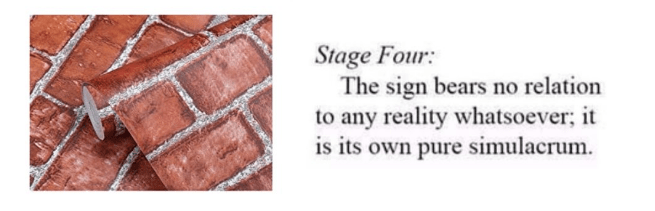
Stage 4:
Follow on task:
VFX Breakdown: Exploring the Phases of the Image
Have a look at how visual effects move through Baudrillard’s four phases of the image, from faithful representations to pure simulacra.
Task: Choose film scene that utilises VFX (e.g., the city folding in Inception or the digital landscapes in Avatar).
Break the scene you have chosen down into elements that represent each of Baudrillard’s phases.
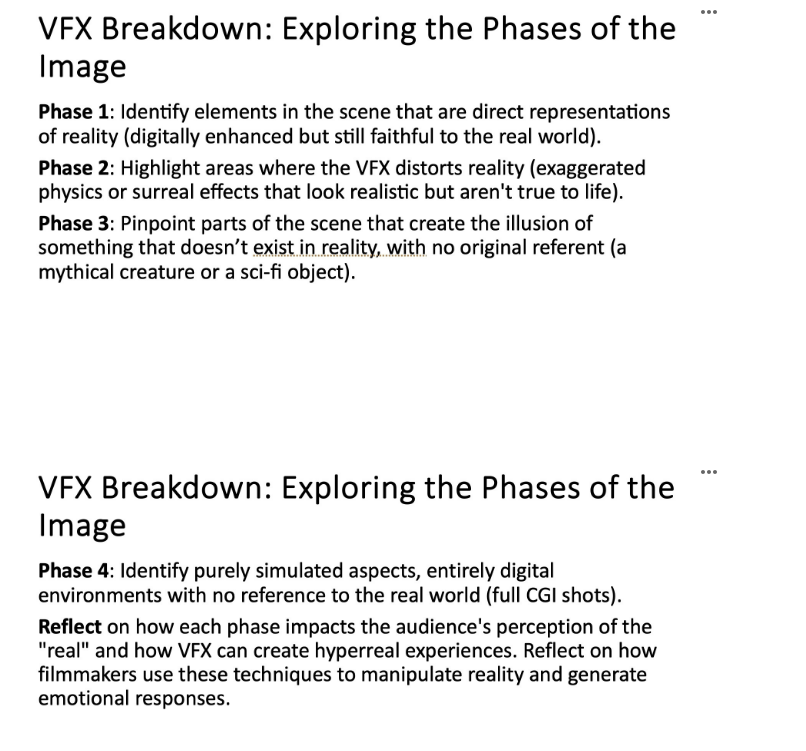
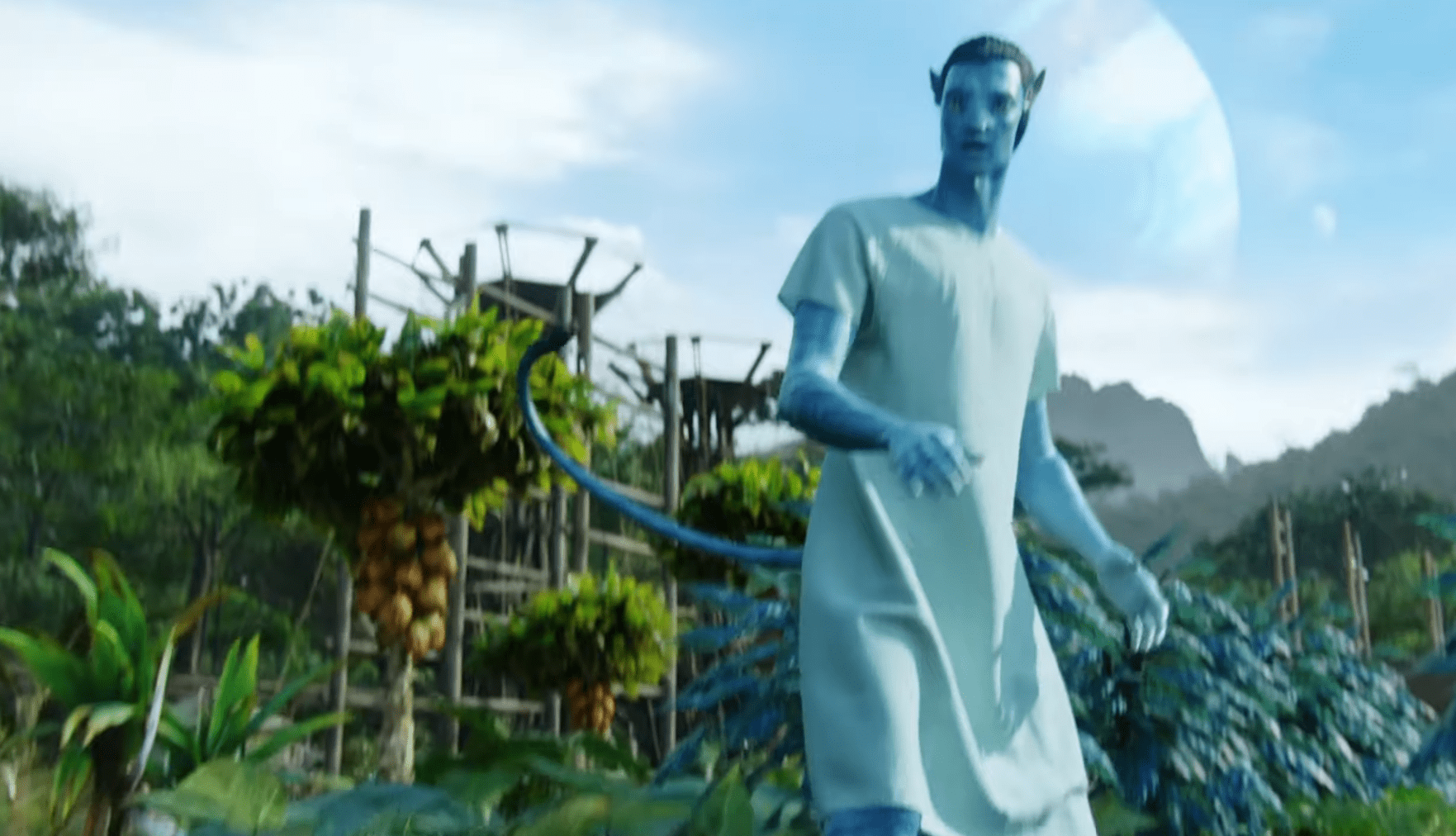
Jake’s first time waking up and walking in his avatar body
This single moment encapsulates all four phases of the image if you analyse its layers of meaning.
Phase One: The image reflects a basic reality
Jake wakes up in the avatar body and the scientists monitor him.
The avatar body simply represents Jake’s real human body, the scientists treat it as a biological mirror: heart rate, motor control, brain signals.
Why this phase fits:
The avatar is functioning as a direct extension of Jake. It reflects an underlying reality: Jake is human.
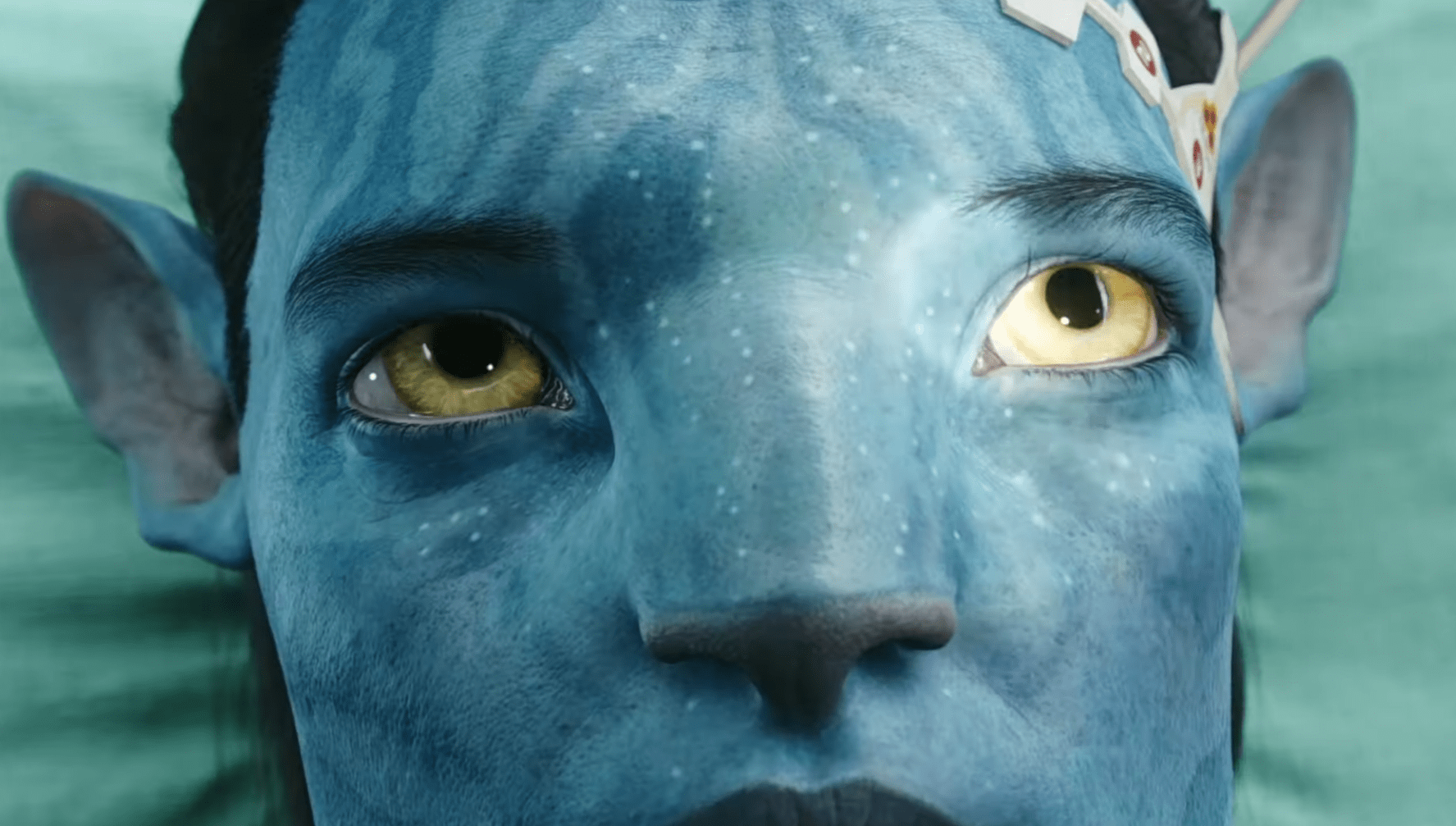
Phase Two: The image masks or distorts a basic reality
Jake stands up, ignores instructions, and walks outside with excitement.
The avatar body gives him the ability to walk something he can’t do in his real body, this distorts his underlying human condition (paralysis).
Why this phase fits:
The avatar now hides the truth: Jake’s disability. The image makes him seem physically whole, masking the real limitations of the human body in the tank.
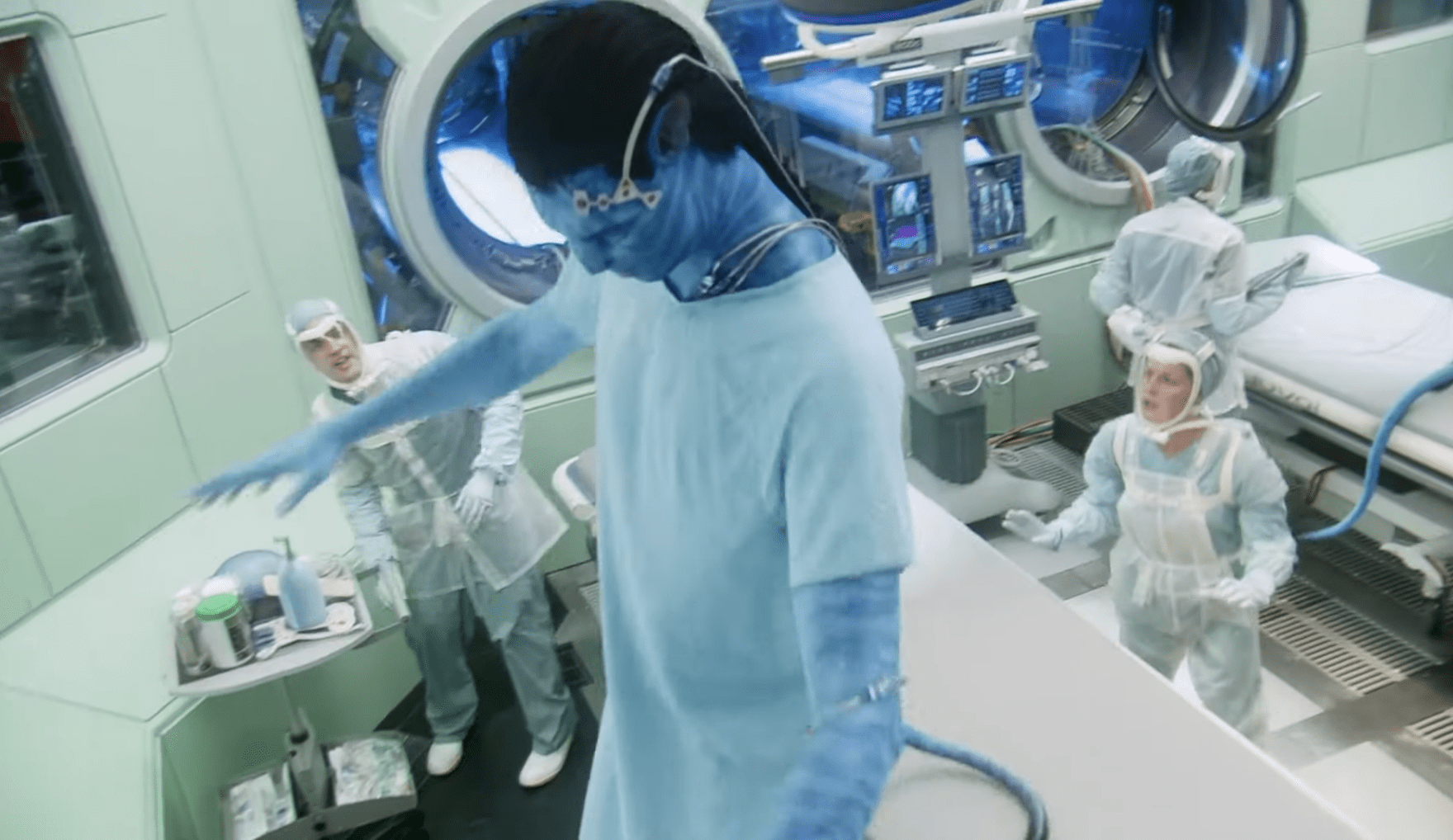
Phase Three: The image masks the absence of basic reality
Jake runs, touches plants, interacts with workers, and feels free in a way he hasn’t felt in years.
His human body’s condition (weak, disabled, confined) becomes psychologically irrelevant, he identifies more with the avatar body than with the human body.
Why this phase fits:
Now the avatar no longer masks a human reality it masks the absence of a meaningful reality for Jake’s human body. His human identity is already fading.
The “real Jake” starts to feel like the copy.
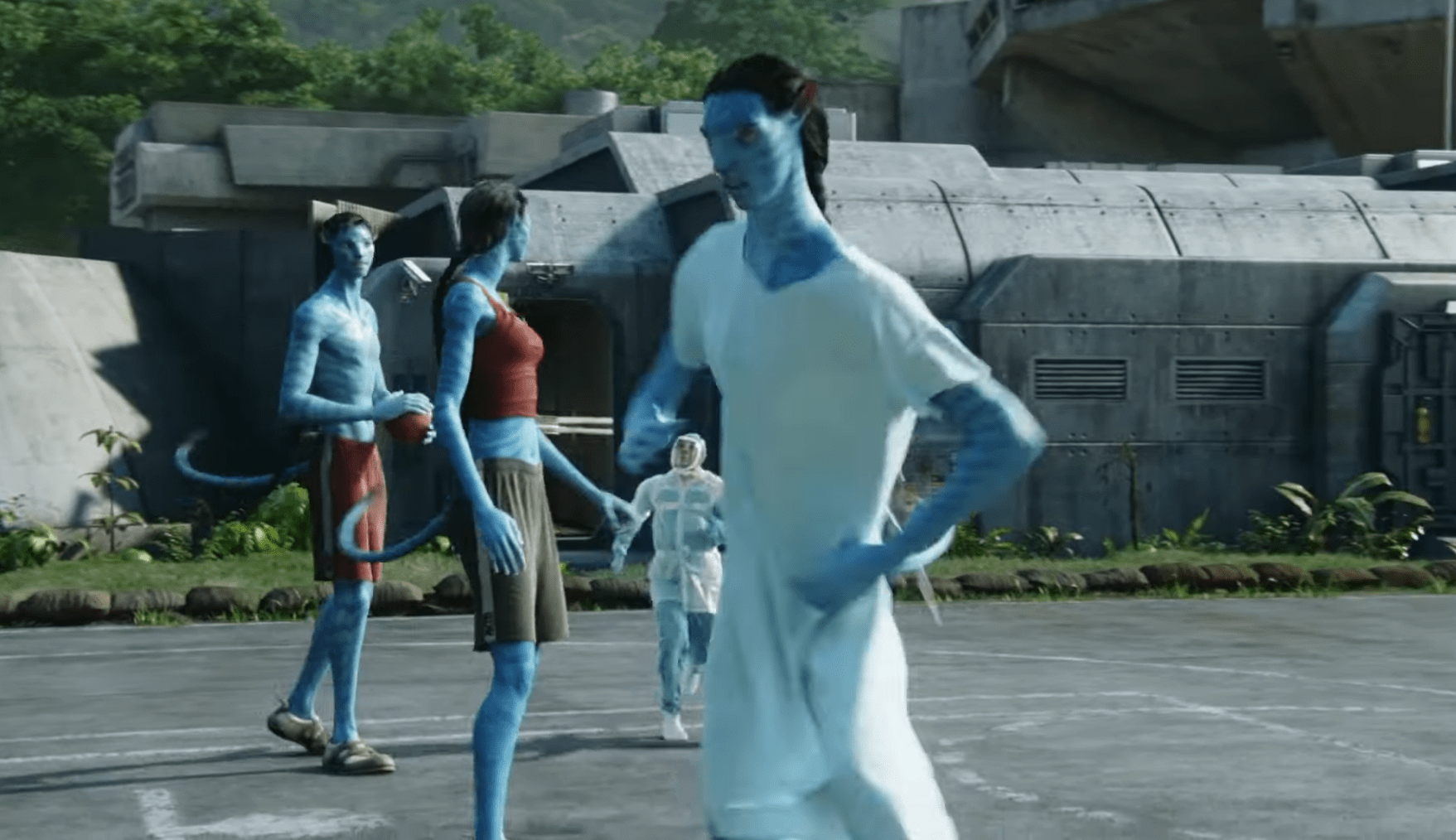
Phase Four: The image has no relation to any reality; pure simulacrum
Jake runs through the courtyard with complete exhilaration, as if the avatar body is his true self.
For Jake, the avatar becomes more real than his real body, the representation replaces the original.
Why this phase fits:
In this moment, the avatar ceases to be a copy, It becomes Jake’s preferred reality, a self-contained identity with no need to refer back to the original human body.
This is pure simulacrum the copy becomes the “real.”
End of week 8
Week 9: Virtual production
Virtual production is a fast-growing technique in the film and television industry. It offers filmmakers new ways to create engaging content with greater flexibility and efficiency. It combines traditional filmmaking methods such as motion capture and facial recognition with digital visuals. And this ground-breaking technology opens up exciting possibilities for directors and producers looking to produce something completely unique. This blog will explore how it works, and the benefits that it offers to those creating content in today’s landscape.
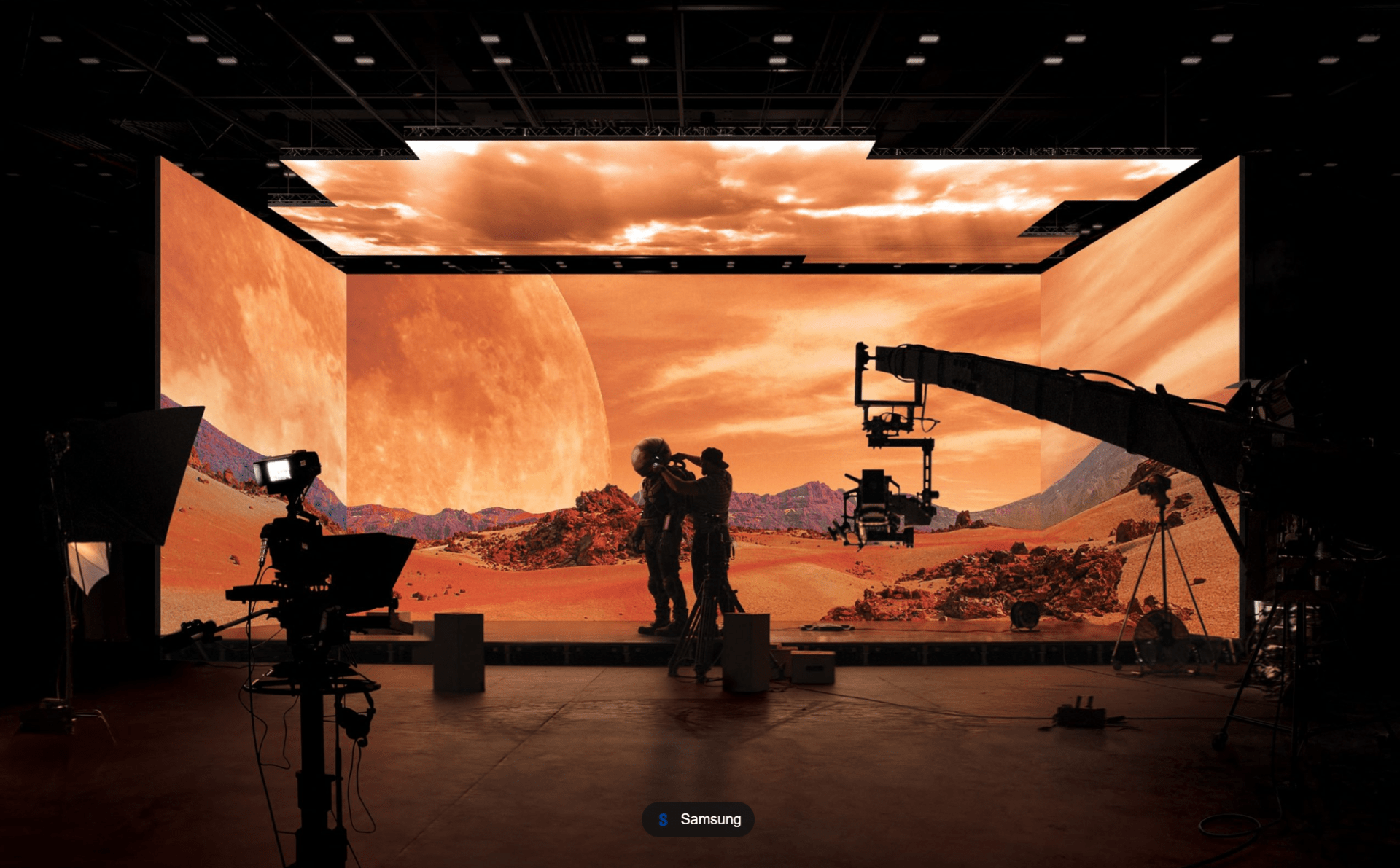
Pick a virtual production exploration or case study
Objective: To explore and understand the application of virtual production in a real-world project.
On your digital sketchbooks
Select a Project: Choose a project that utilises virtual production techniques.
This could be a film, TV show, commercial, or any other media production.
Background
- What is the project? Include the title, production company, and key people involved.
Virtual Production Techniques used
- Which techniques were used? Examples: previsualisation, in-camera VFX, real-time rendering.
Challenges and Solutions
- What problems did the team face?
- How did virtual production help solve them?
Outcomes
- What were the results?
- How did virtual production improve quality, speed, or creativity?
The project I selected is The Witcher (Netflix) series. which showcased the potential of virtual production in creating epic fantasy worlds on a television budget. The series employed virtual production sets to create elaborate and immersive environments, seamlessly blending practical sets with computer-generated elements.
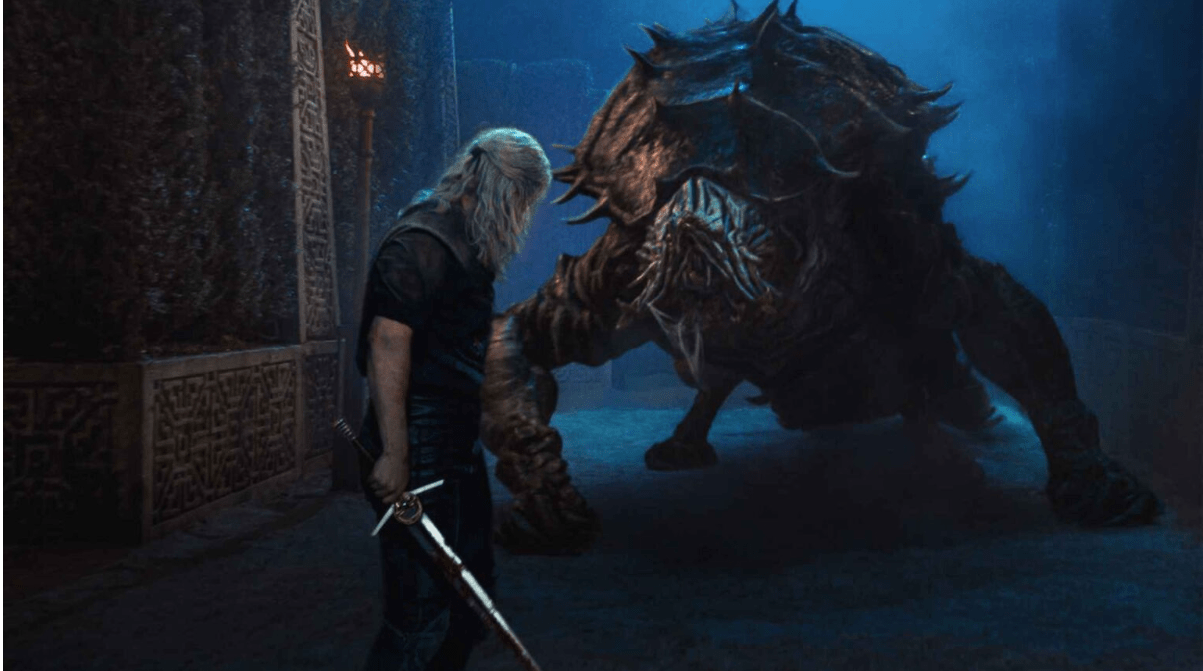
The series uses different virtual productions techniques such as CGI, Real time rendering, motion capture and virtual sets.
Assignment 2 part 1: Power Point Presentation
Here is attached the presentation I did in class for the essay of assignment 2 :
Assignment 2 part 2: Essay of the chosen question
End of assignment 2

