The Uncanny Valley
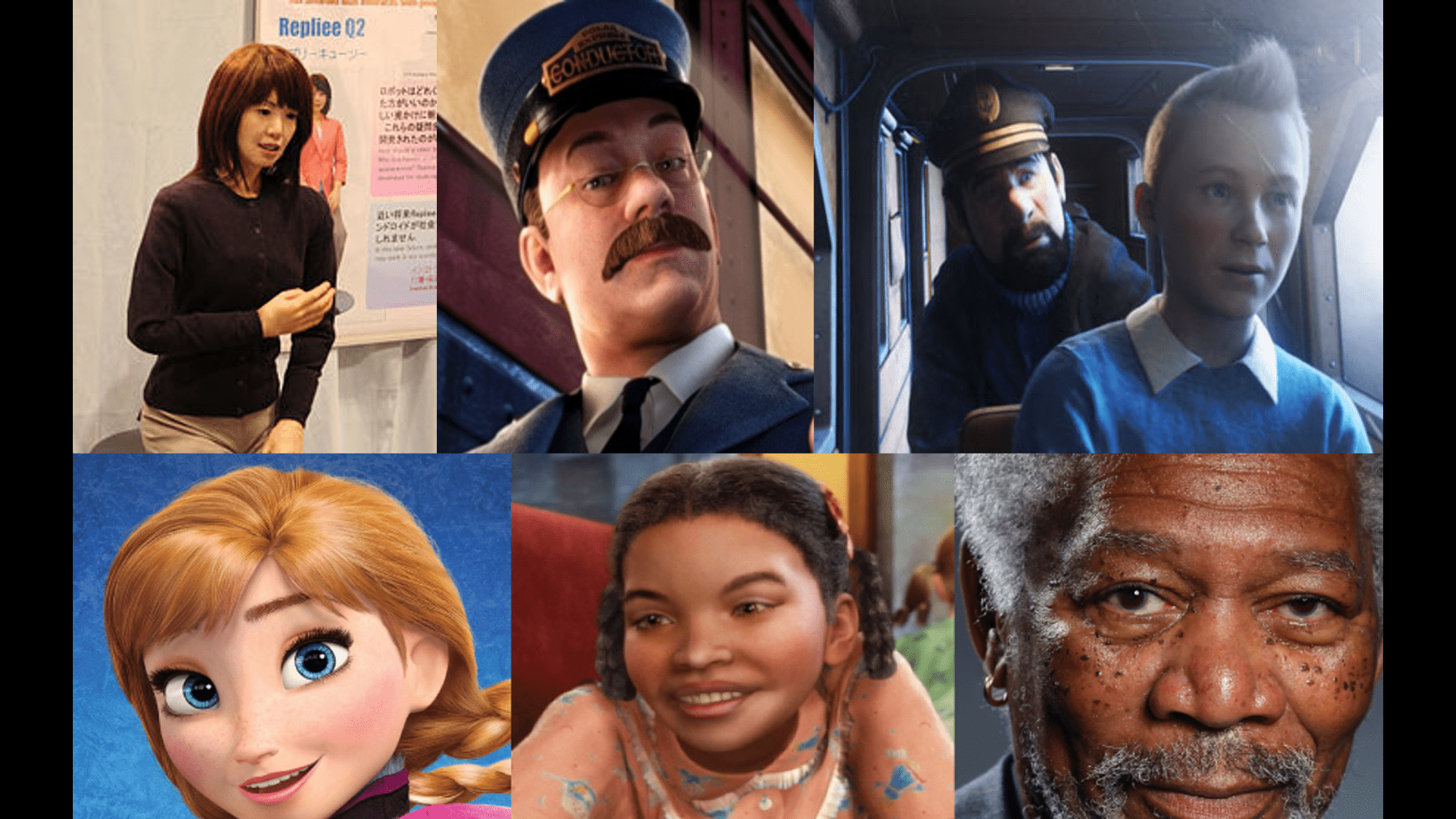
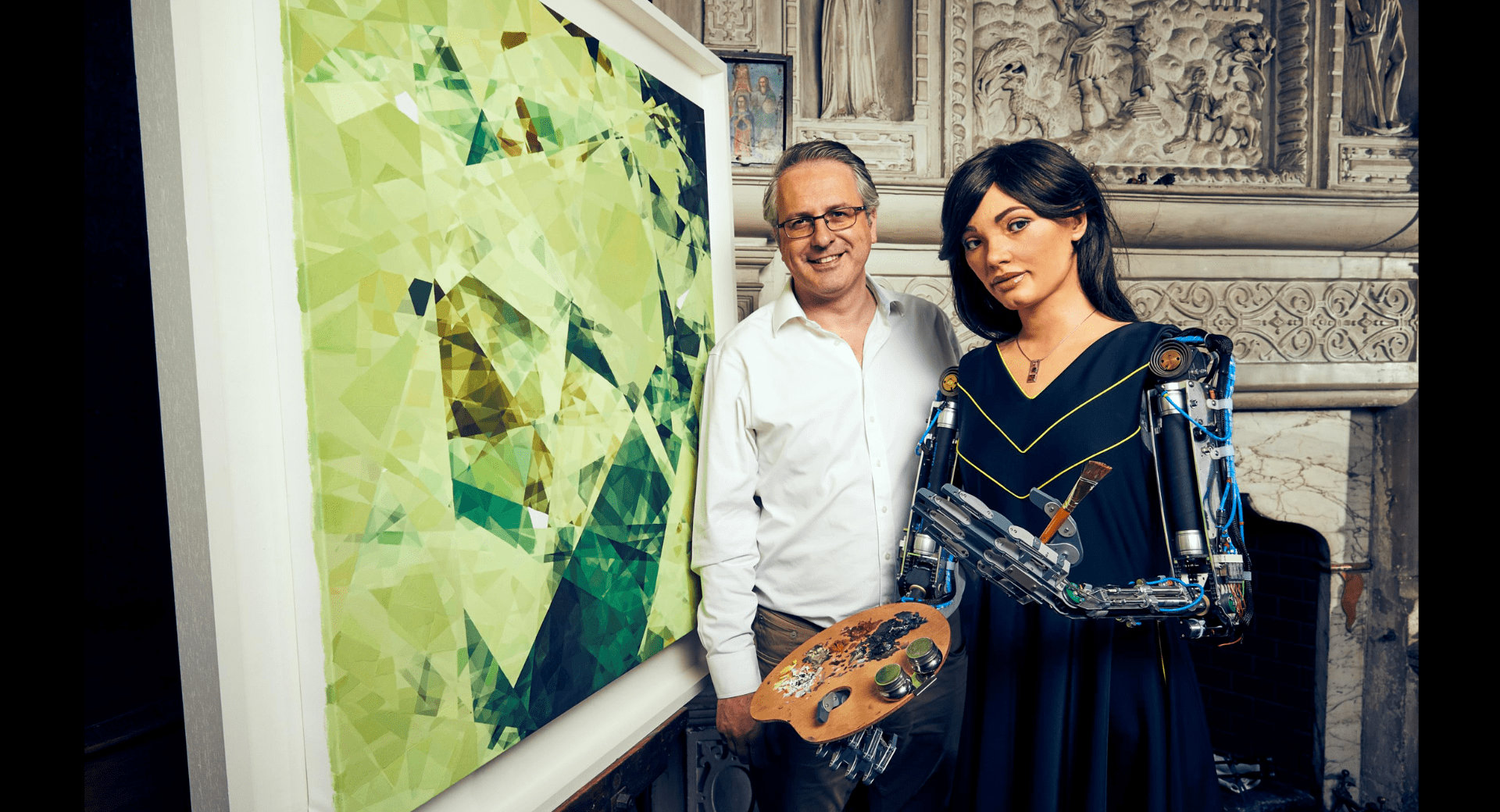
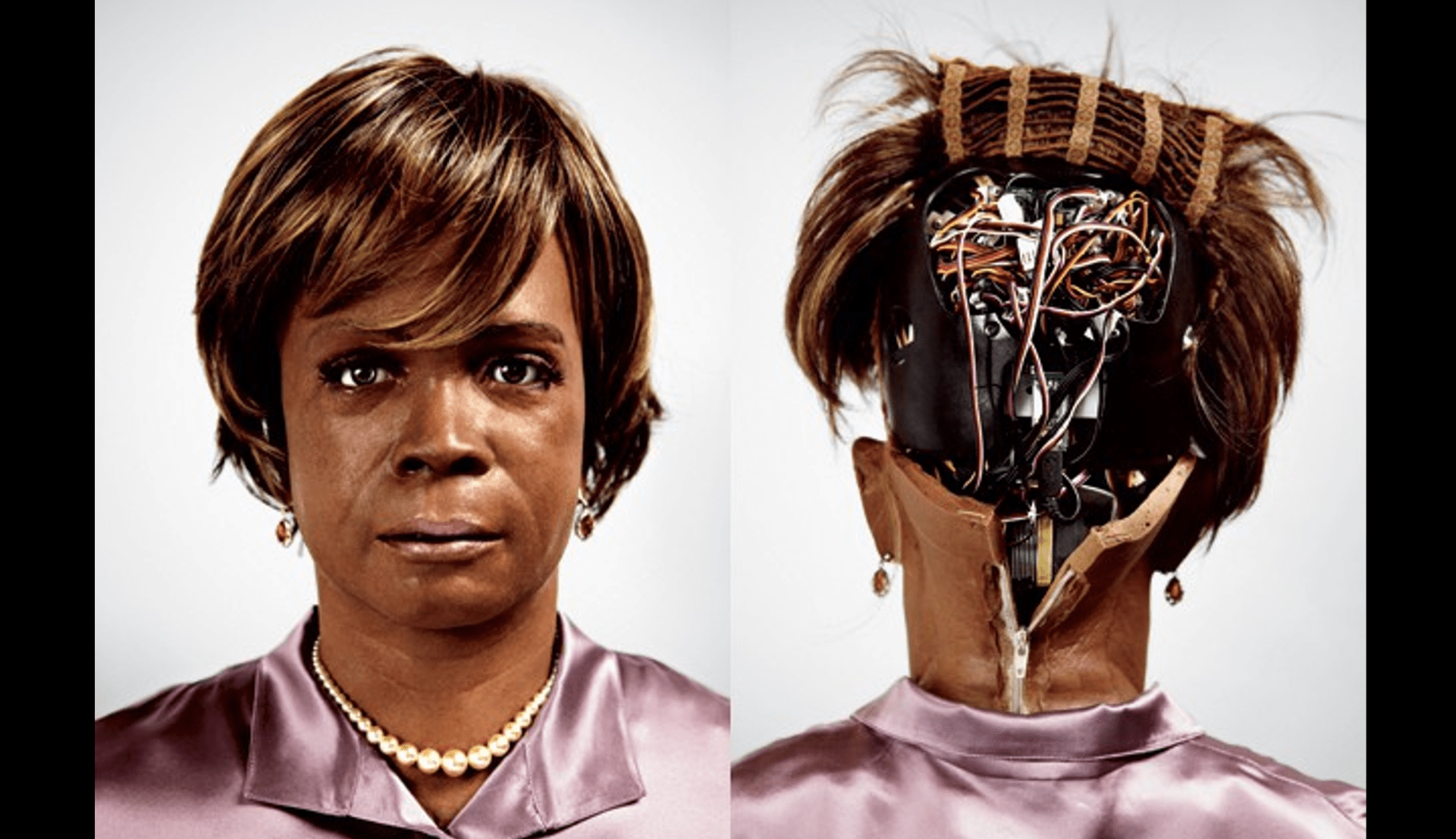
Examples:
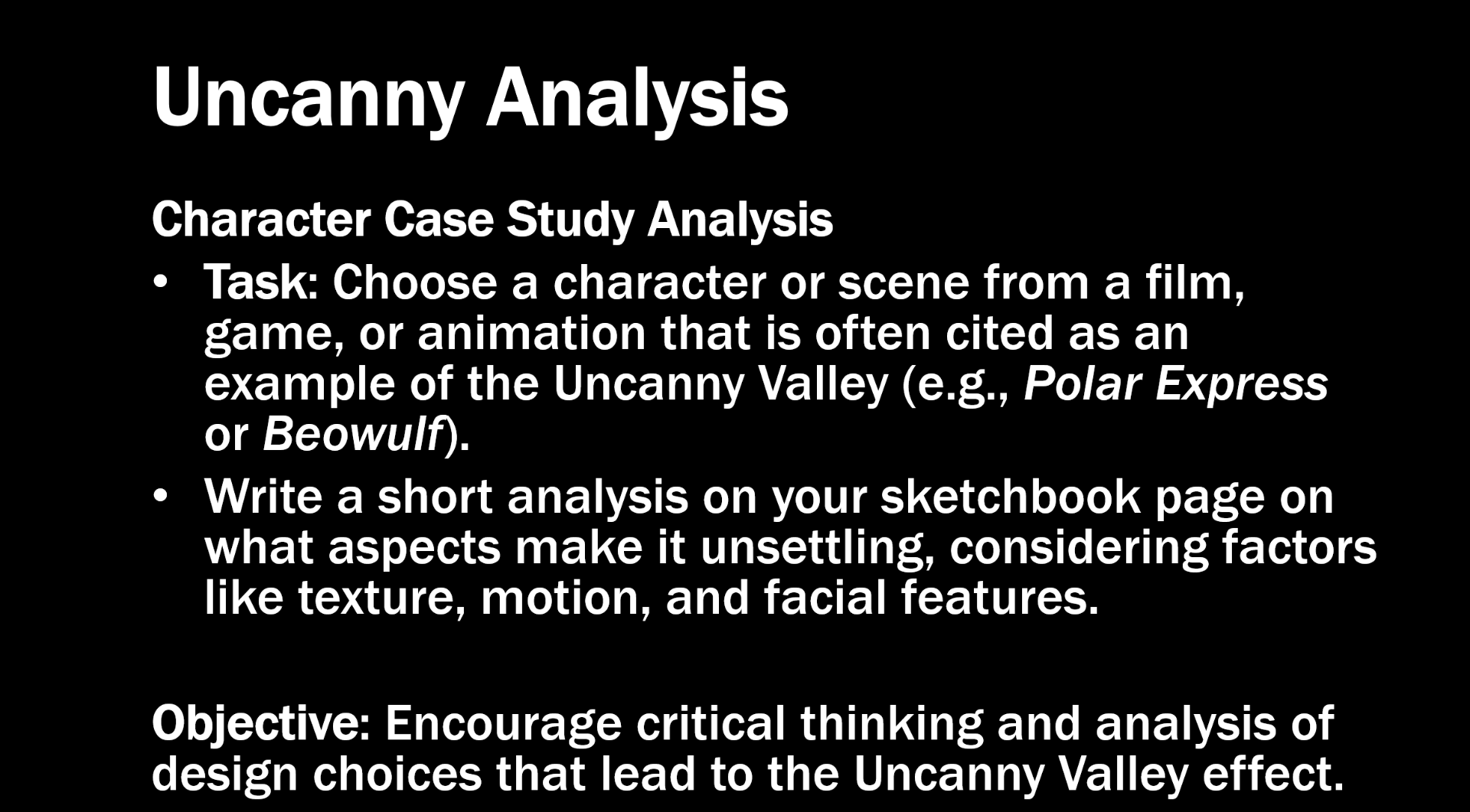
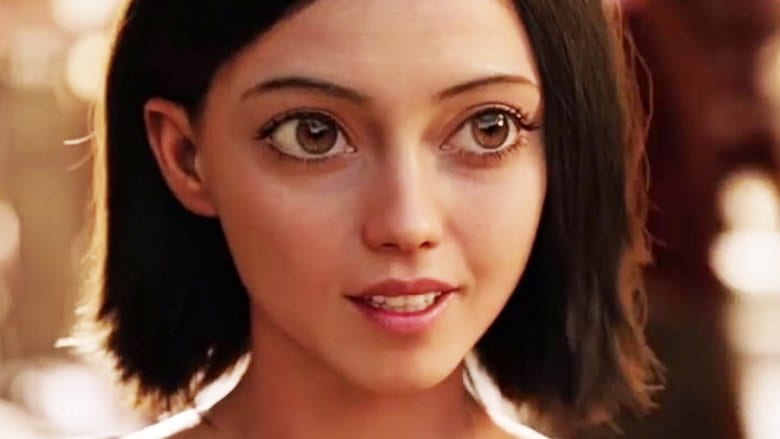
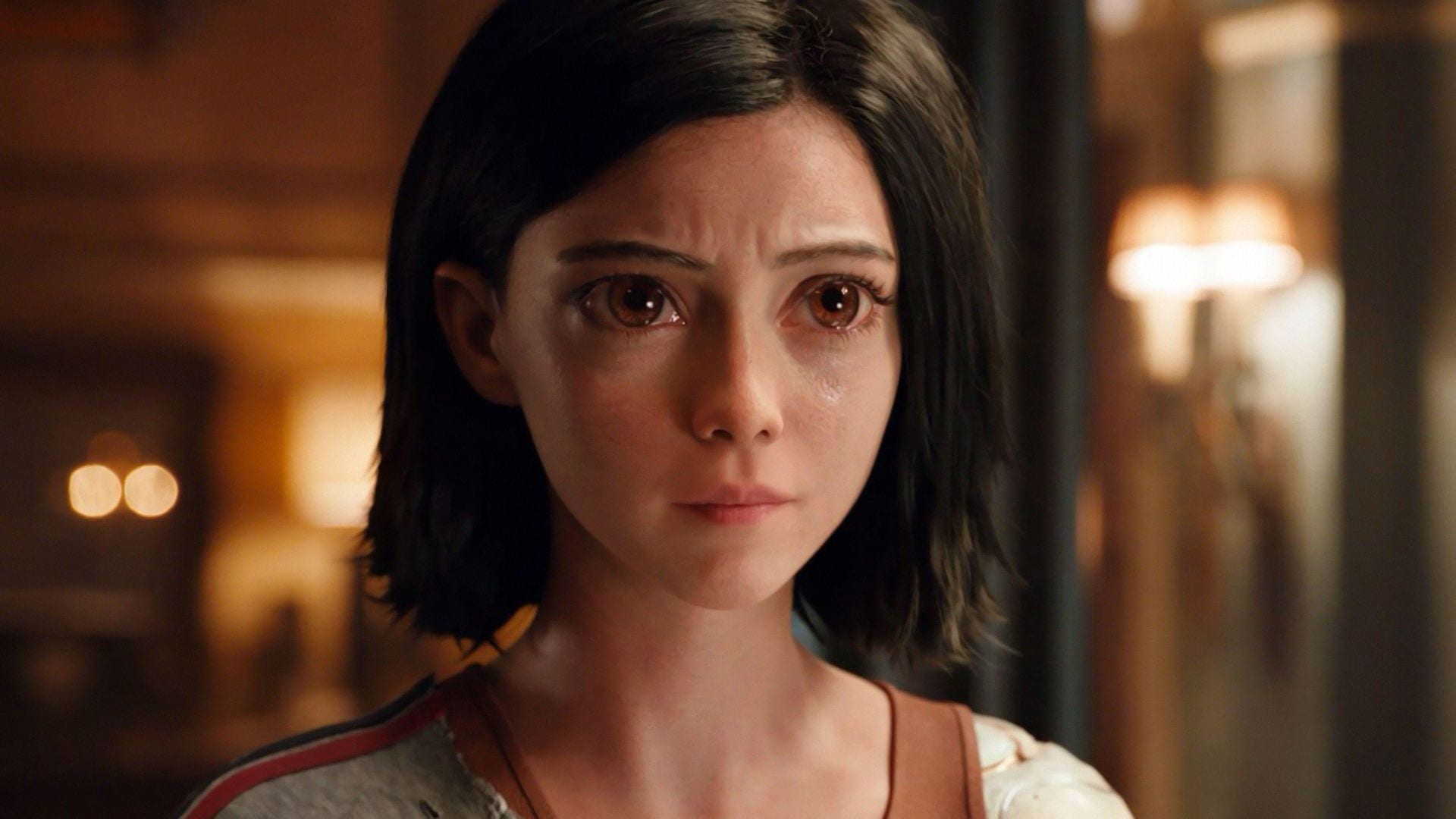
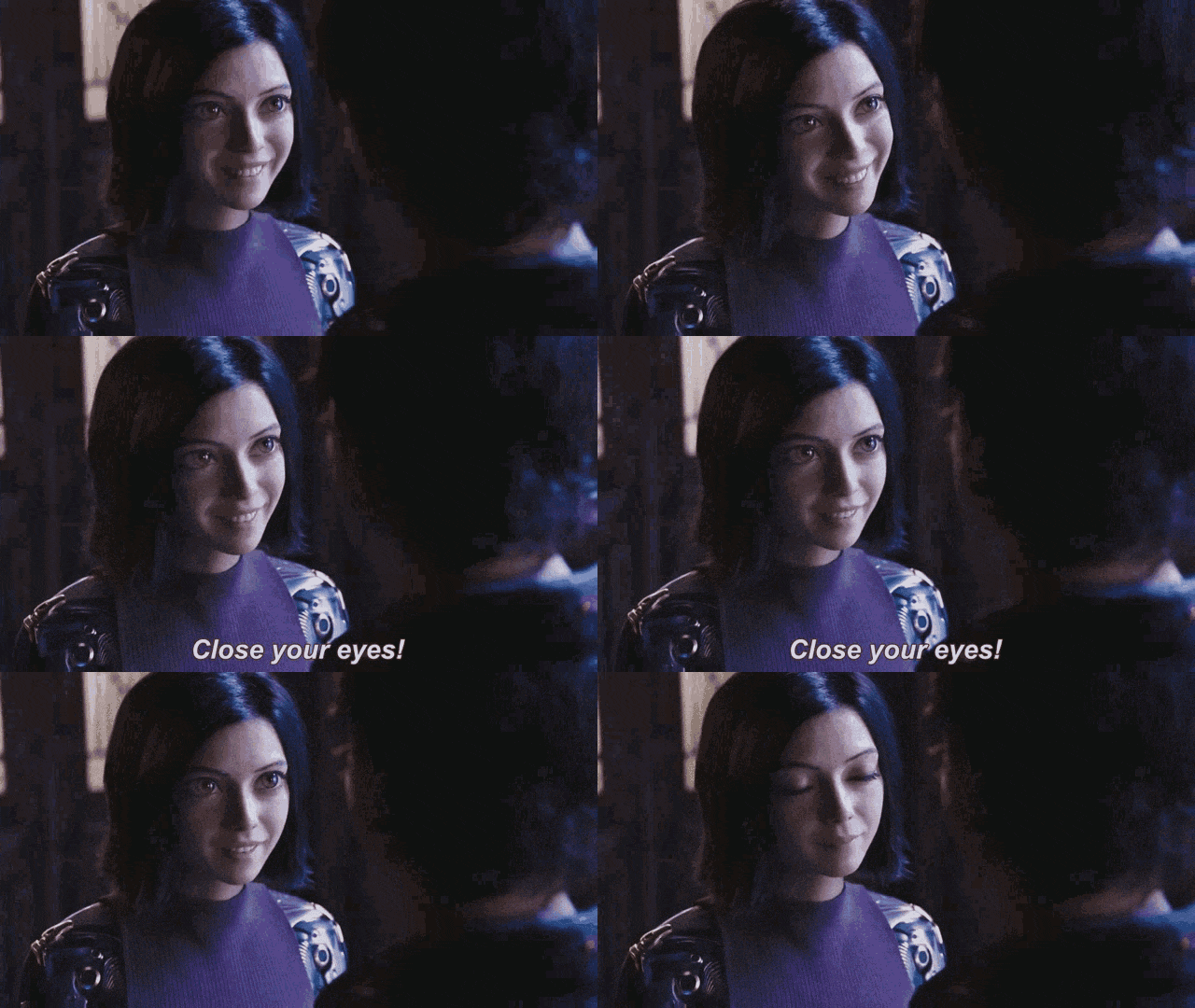
This character is designed to look human-like, but the proportion on the face are a little bit off, such as the eyes which are too big, this is because the character is inspired on a manga character type, also the facial expression somehow look unnatural to me, because they are exaggerated, finally the texture of the skin is too reflective and perfect-like, so it feels unnatural, this probably due to the fact that the character is a robot so the skin, is made out of silicone to resemble a human.
Lecture: The Uncanny Valley
Have a look through this powerpoint. It is the same presentation that will be given in class and it contains the following:
- Review of last weeks consolidate homework.
- Review / Recap of assignments.
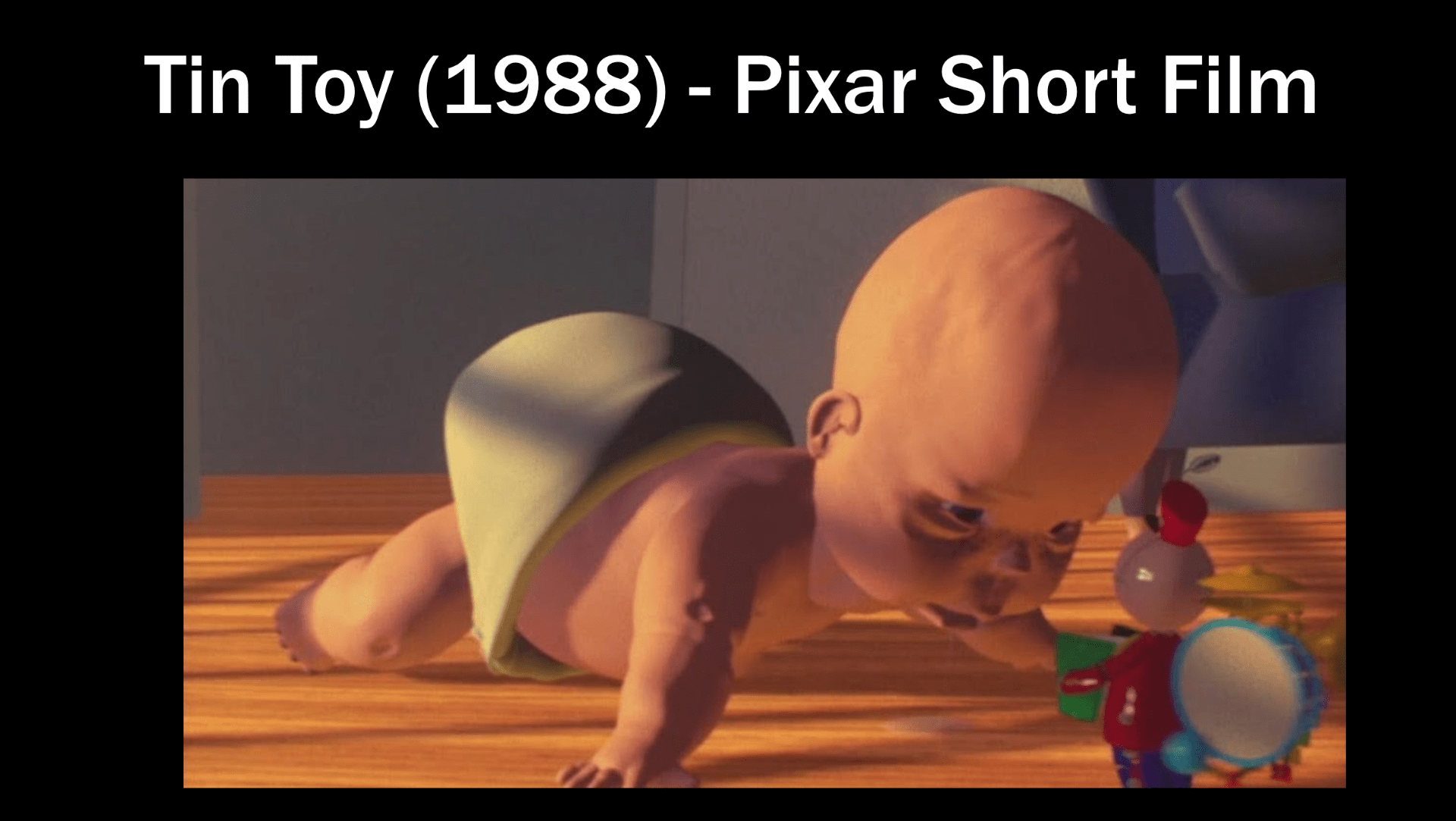
- Have a look at the clips, what differences do you note between the earlier films and the more recent examples of that type of effect?
- New topics through the lecture.

Create your own Uncanny Valley Graph
In class task:
Look at Mori’s original paper on the Uncanny Valley (in the folder below). Mori was talking about human-like robots, but frequently this concept is applied to digital characters.
It is now generally accepted that computer animated characters can appear Uncanny as well.
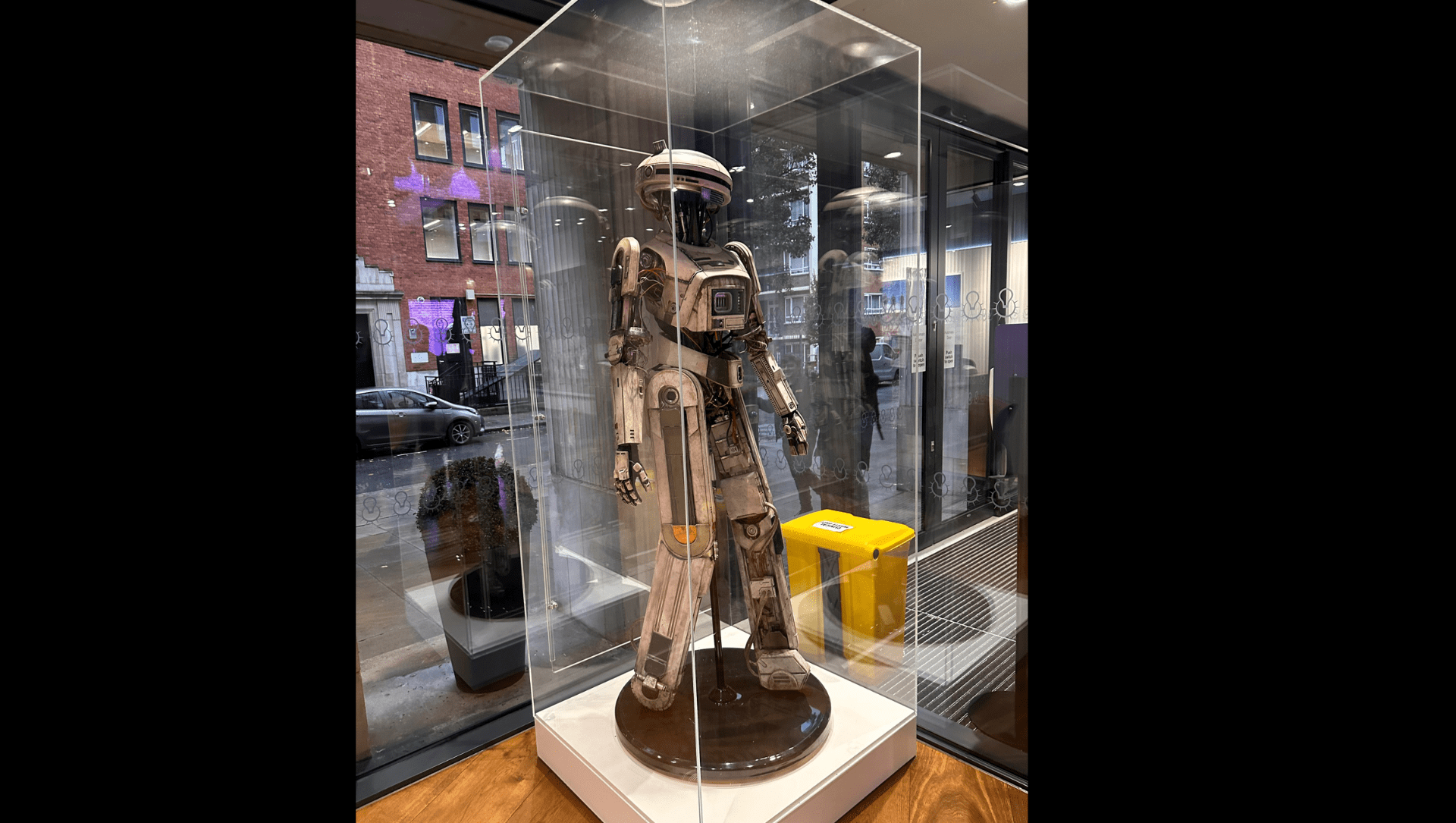
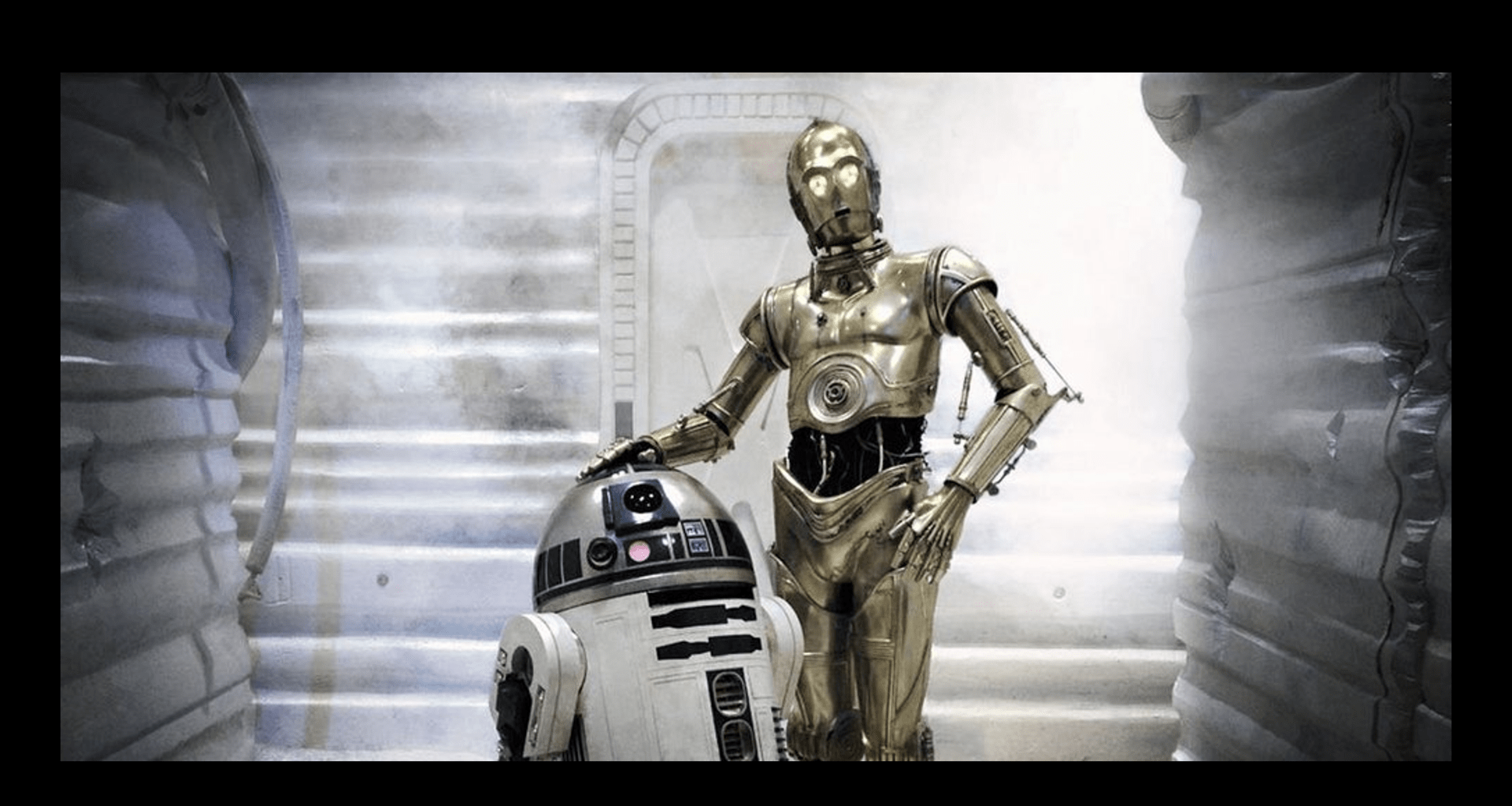
Can you adapt the original graph (below) to include digital characters? Where would you place a robot character like C3PO or a CGI human character like Gran Moff Tarkin? Try to stick to biped rather than quadroped creatures.
You can create your graph using Photoshop.
My uncanny graph
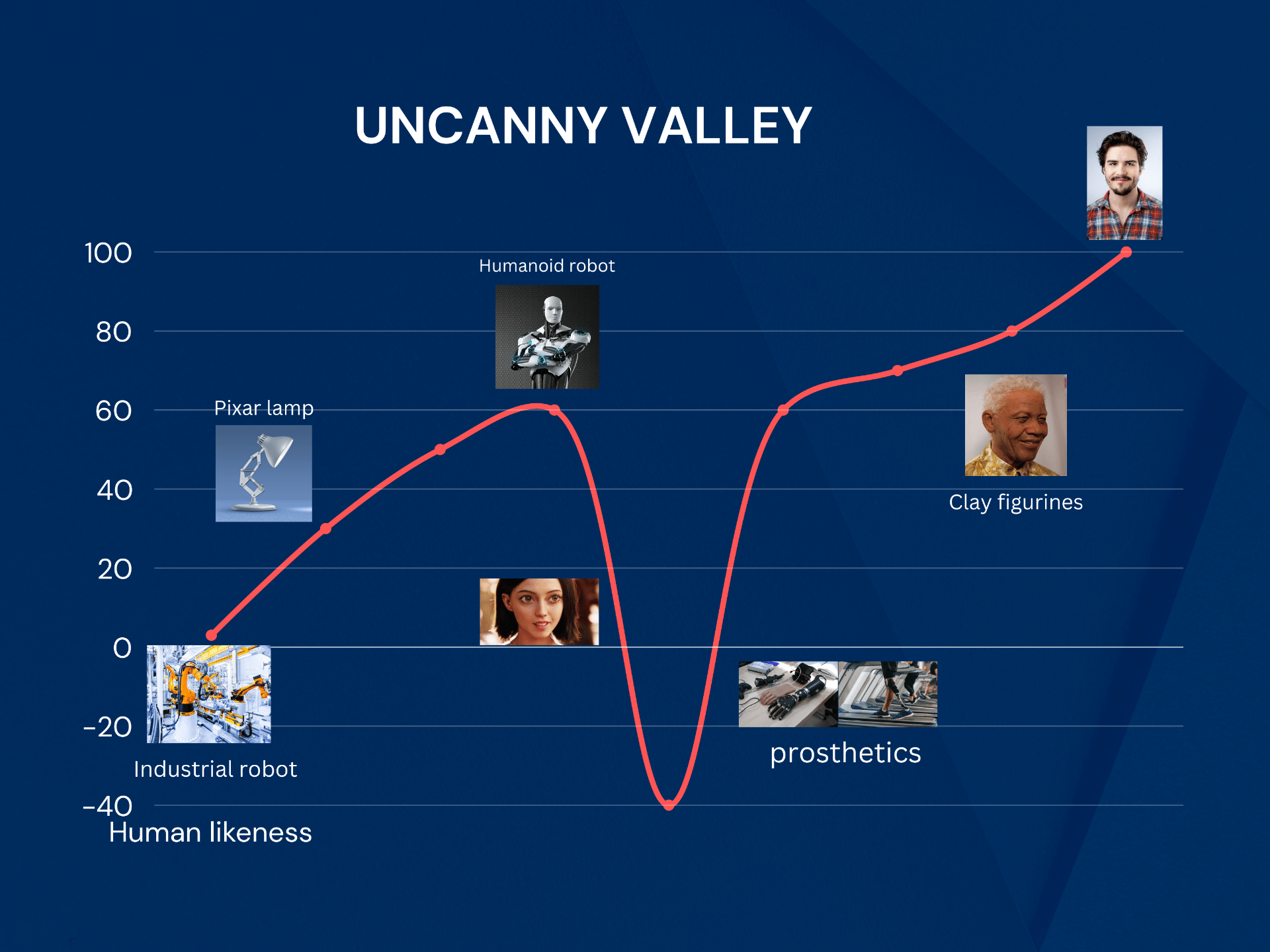
Please write an Annotation related to the Uncanny Valley. You can choose one of the articles from the class or select your own.
Mori, M. (2012) he Uncanny Valley’, IEEE Robotics & Automation Magazine, pp. 98-100.
In this essay, Mashahiro Mori writes about his theory about the uncanny valley.
The author explains that there seems to be a relation between the affinity and the human likeness we have towards certain human-like figures; he also speaks on how the goal for robotics is that a robot would be indistinguishable from a human. He mentions that humans do not have any affinity with robots that don’t resemble a human at all, such as an industrial robot, but as we approach a more human-like model, we start to gain certain affinity with the robot, such as a robot toy for children, but if we approach too much to a human likeness without achieving the actual precise resemblance, we feel an eerie sensation towards the robot, calling this the ”uncanny valley”.
He represents the uncanny valley with a graphic where we have the industrial robot as a zero level of affinity and a healthy person as a one hundred level of affinity. He writes about prosthetics and how we can approach a disabled person that is wearing a prosthetic arm, but once we notice that the arm is fake, we get this eerie sensation again, and if movement is applied, the sensation intensifies, but this not only applies to prosthetics; it also applies in other cases, for example, a humanoid robot that keeps in a safe level of human likeness gets its affinity improved if it moves smoothly. It also applies to a person that died when the corpse is not moving, has a lower level of affinity, and if that corpse for some reason moves, the effect of the uncanny valley triggers, this last example being used in zombie horror movies where there are moving corpses.
Finally he mentions that it will be fantastic if we create robots/prosthetics that do not trigger this effect, but until then designers should try to intentionally approach a less human-like resemblance in their designs so they can obtain a safe level of affinity to avoid triggering the uncanny valley.

