Principles of VFX
Assignment 2 – Essay question option
Dont forget to have your digital sketchbook up to date by the end of week 14
You will also need to put together a short presentation for week 14 to show which question you have chosen and the research you have done for the essay.
The essay is accompanied by a short presentation in-class in week 14. You will need to show what essay question you have chosen, the research you are doing for it and some visual examples. The presentation will be using PowerPoint and up to eight slides. Maximum of six points per slide.
Choose only one of the essay following options.
Essay:
Assignment 2 – Essay question option
In this essay I am going to write about the twelve principles of animation, their importance in the creation of 2D animation, and how these principles continue to influence modern animation, such as 3D CGI films and other forms of modern storytelling.
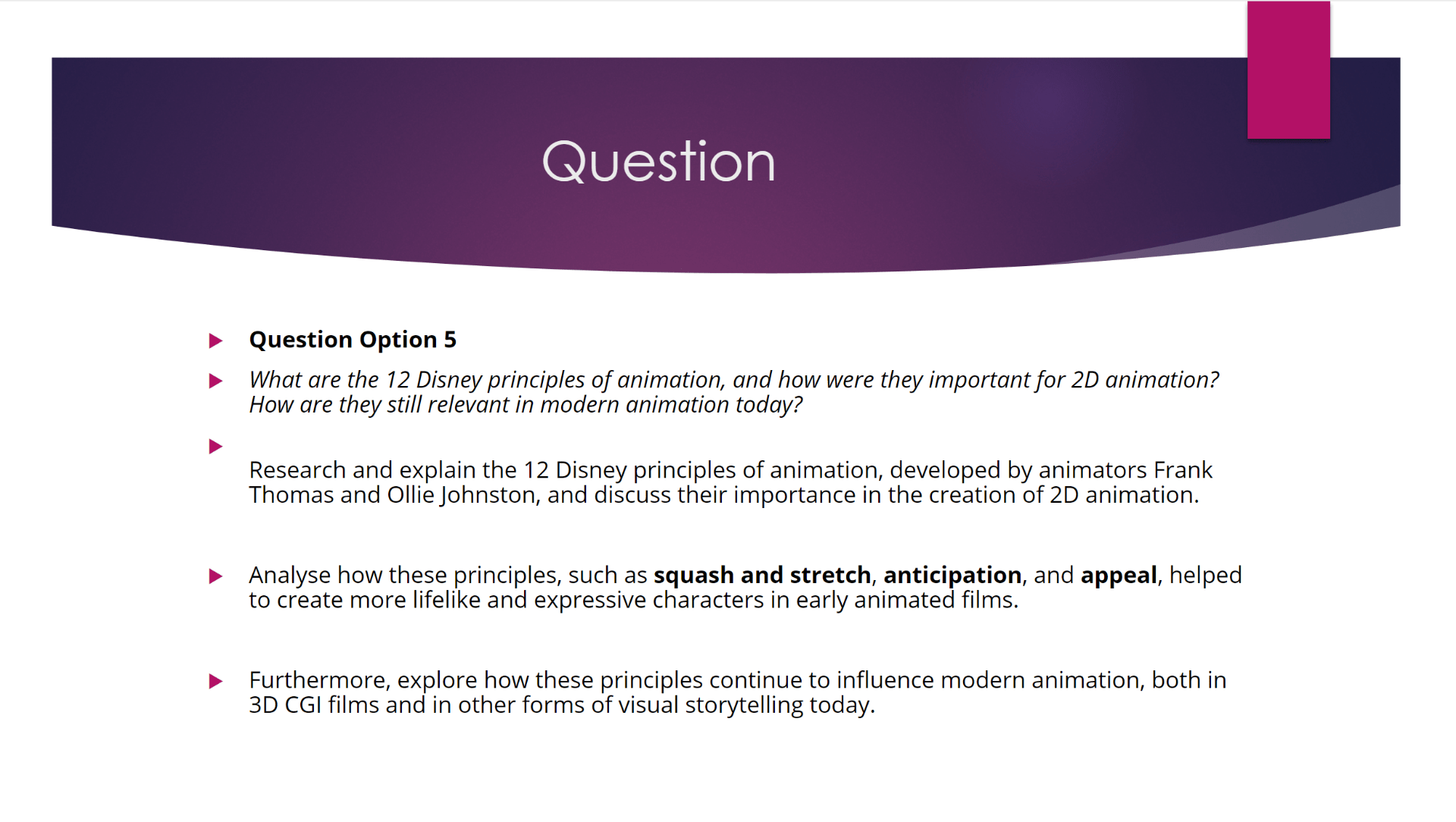
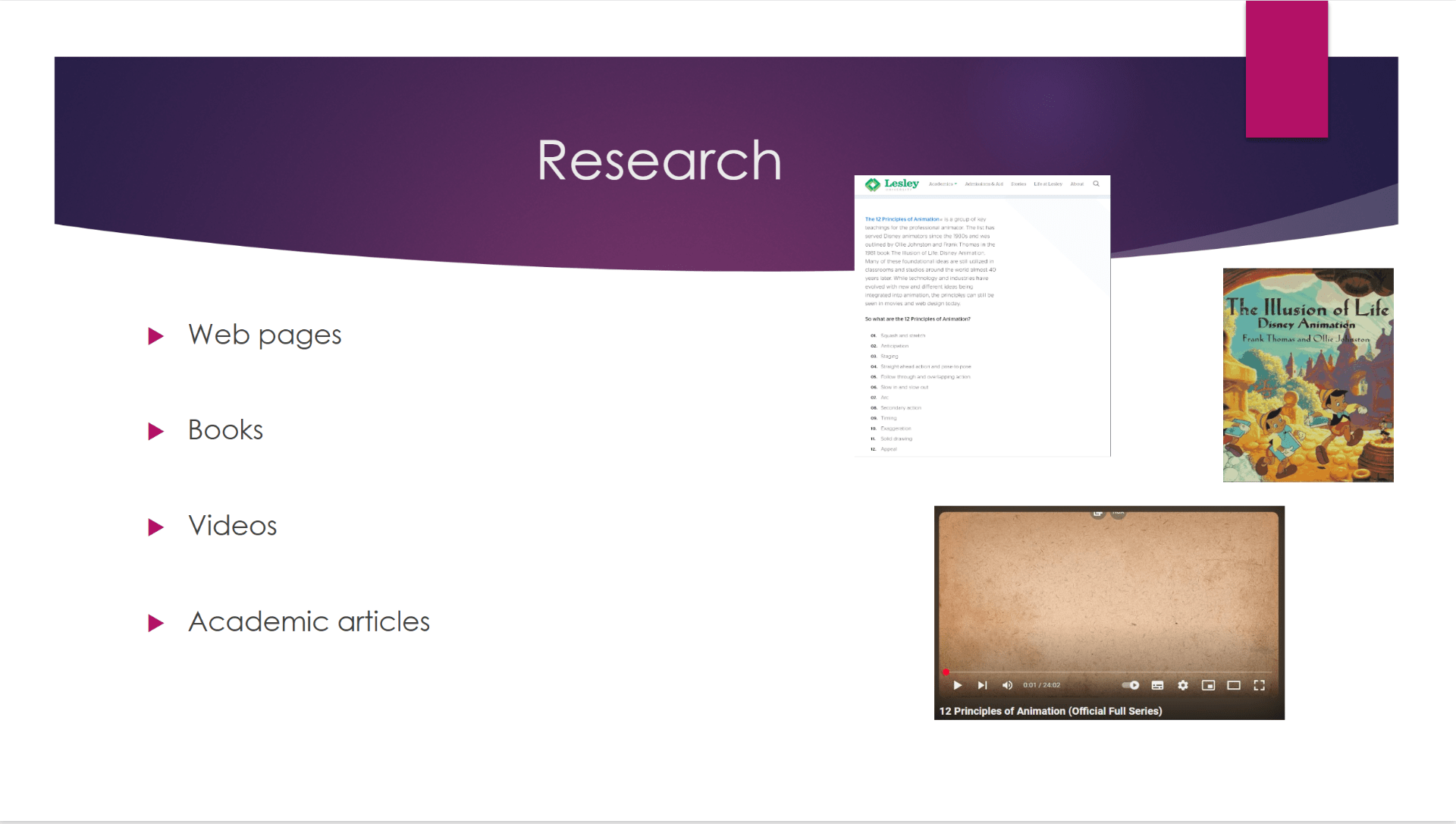
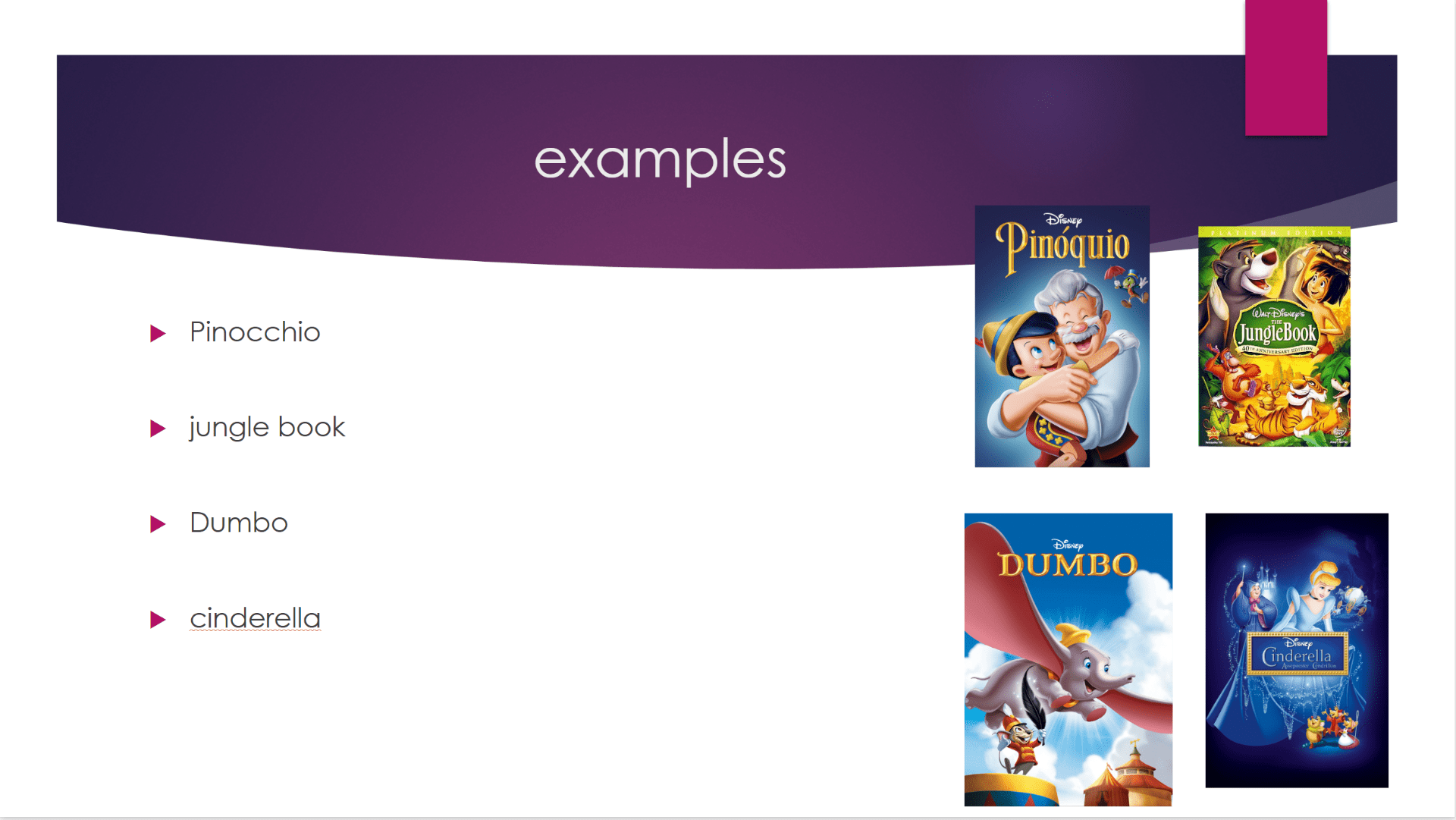
First, let us start with the most important part of the topic, “The Twelve Principles of Animation.” The Twelve Principles of Animation are a key guide for the professional animators; this list of principles has been used by Disney since the early 1930s, but these principles were outlined by two of the key animators at Disney, Ollie Johnston (motion picture animator) and Frank Thomas (an animator), in the 1981 book of Illusion of Life: Disney Animation, a very famous book that explains the history of Disney animation, featuring the processes involved in clear terms (this means that they did not use any technical language, so it is very understandable even if you do not have any previous knowledge of animation); here we can find the twelve principles as a philosophy to animation. We can also find live examples of these principles by looking at the movies from Disney, such as Pinocchio, The Jungle Book, Mickey Mouse, and so on which are some old Disney animations were these principles were used the most.
These principles were very important for the creation of 2D animation because they allowed the animators to produce realistic animations of cartoon characters by simply using the basic laws of physics and thereby creating the illusion of realism and emotional timing. Here is the list of said principles: Squash and stretch, anticipation, staging, straight-ahead action and pose to pose, follow-through and overlapping action, ease in, ease out, arcs, secondary action, timing, exaggeration, solid drawing, and appeal. And now I am going to describe the ones that I think are the most important: the “squash and stretch” principle, which is fundamental since it is applied to give a sense of weight and flexibility to inanimate objects or even characters. This principle follows the laws of physics, creating the illusion of objects being distorted by external forces, like in real life, but this is usually exaggerated for entertainment purposes. Another fundamental principle could be the “anticipation,” which, as the one before, adds some kind of realism to our animations, providing our character with a preparation for some actions so the audience can focus more on the actions. This principle is very notable when a sport scene is presented, such as when a character is playing golf or basketball, but its use is not limited to sports; it can also be used for basic movements such as walking or jumping. One of the last principles, but also one of the most important, is the “appeal” principle, as in real TV shows and films where we want the actors to have charisma. The same formula is used on the animations to create our characters; this one should be interesting and unique enough to make viewers want to know the story behind them. These are just some of the principles, but every single one contributes and helps to create more lifelike and expressive characters. It is very important to highlight that Disney found out that if they copied film too closely, the animation would look odd, since the movement was realistic, but the figures lost the illusion of life.
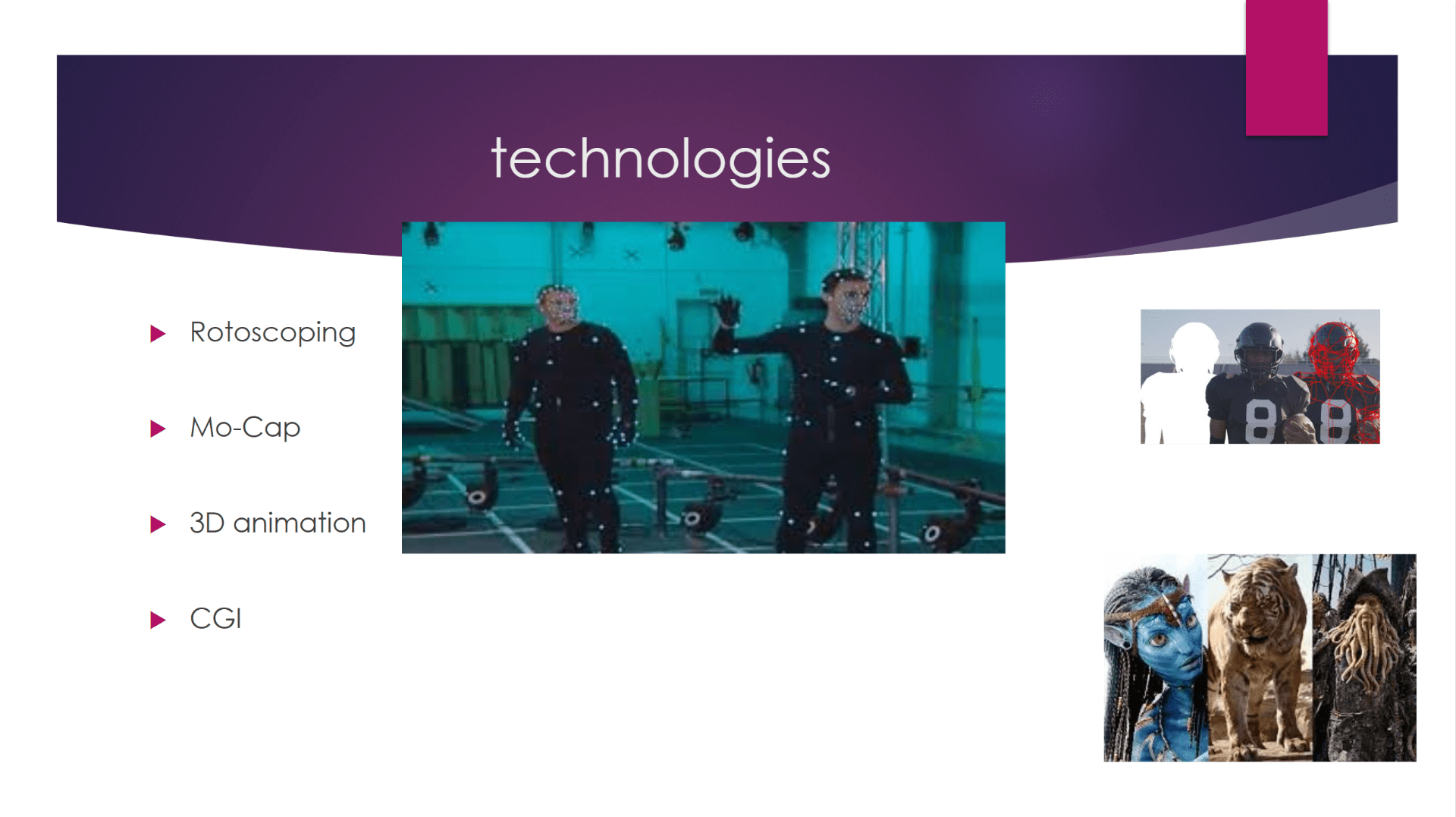
Later in time, we found newer techniques of motion capture such as rotoscoping and photostats, rotoscoping was adapted to photostats, which consisted of photographs developed from film frames that could be used with the pegs on the animation desk. This process of tracing live-action frames revealed many insights into human and animal movement for the Disney animators. Even then they noticed that there were indeed many of the characteristics of the twelve principles hidden in the broken-down frames. Later we evolved to Mo-cap (Motion capture), which is a technique that consists in recording the movement via reflective points on the suit of an actor, since this capture is three-dimensional and the motion being captured from a human, the movement captured is more realistic and natural.
Nowadays we are still using some of these principles, and not only in 2D animation but also in modern 3D animation because these principles can be applied to almost any type of animation, some clear examples could be “Toy Story 4 (2019)” a modern 3D animation were we can easily see some of this principles such as squash and stretch for some characters since there are character that are very cartoony, we also can clearly see this same principle in another film, like “Shrek 4 (2010) were some characters overstretch the movement on their mouth to be more comical and expressive, one of the 12 principles that is commonly used, is the “appeal” since, all of the characters require to be interesting to catch the viewer, also in any kind of modern animation the “anticipation” is very important, even in a more realistic ones, since this principle emphasizes the movements of the characters and made they look more interesting. And not only stops in 3D animation but also extends to digitally animated CGI films and digitally generated dance music. I have spoken with many friends who study animation, and all of them still also use the twelve principles as a fundamental guide, remarking on the importance of them even in the modern digital world.
Finally, I wanted to reflect on what I have learnt with this research; this helped me to extend my knowledge on this topic, improve my research skills, opened the doors to explore more and satisfy my curiosity, allowed me to discover new techniques, and meet new people, improving my social and technical skills, so I am looking forward to the next projects during the course.
Bibliography:
Adobe (2024) Understanding The 12 principles of animation [online] Available at : https://www.adobe.com/creativecloud/animation/discover/principles-of-animation.html [Accessed: 30 Dec 2024].
D23 (2024) Frank Thomas [online] Available at : https://d23.com/walt-disney-legend/frank-thomas/ [Accessed: 25 Dec 2024].
D23 (2024) Ollie Johnston [online] Available at : https://d23.com/walt-disney-legend/ollie-johnston/ [Accessed: 25 Dec 2024].
Hashemi, C. (2023) Computer—generated imagery (CGI) [online] Available at : https://www.techtarget.com/whatis/definition/CGI-computer-generated-imagery [Accessed: 1 Jan 2025].
Johnston, O. (1981) The illusion of life: Disney animation. United states: Abbeville Press.
Lesley university (2024) The 12 principles of animation [online] Available at : https://lesley.edu/article/the-12-principles-of-animation#:~:text=The%2012%20Principles%20of%20Animation%20is%20a%20group%20of%20key,Illusion%20of%20Life%3A%20Disney%20Animation. [Accessed: 23 Dec 2024].
Rokoko (2021) What is motion capture, and how does it work in 2022? [online] Available at : https://www.rokoko.com/insights/what-is-motion-capture-and-how-does-it-work-in-2022 [Accessed: 6 Jan 2025].
Sebastiano, M. (2023) What is rotoscoping: a complete guide to the popular animation technique [online] Available at : https://borisfx.com/blog/what-is-rotoscoping-complete-guide/ [Accessed: 1 Jan 2025].
Shreshtra (2023) 12 principles of animation explained! [with examples] [online] Available at : https://www.animaker.com/hub/12-principles-of-animation/ [Accessed: 10 Jan 2025].
Toney N. (2020) Toy story 4 film review [online] Available at : https://medium.com/cinemania/toy-story-4-film-review-6494e6c814e4 [Accessed: 30 Dec 2024].
Turnbow, G. (2022) The 12 principles of animation, updated for the modern age [online] Available at : https://scifi.radio/2017/09/07/12-principles-animation-updated-modern-age/. [Accessed: 23 Dec 2024].
End of assignment 02

